Faith

A humble ploughman walks across the countryside with a radical preacher and a former nun, with thousands of livid farmers and laborers following behind them. Together, the three travelers ponder the reason for the recent pandemic that swept across the land and killed half of the people they’ve ever known.
“The sickness was [God’s] punishment for the crimes of the rich,” remarks the preacher, John Ball, rather matter-of-factly.
“So why do we suffer also?” asks the ploughman.
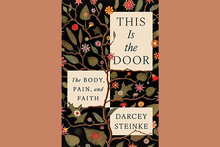
AS SOMEONE WHO has experienced life-altering, faith-shaking physical pain, when I see a book with a subtitle like The Body, Pain, and Faith, I find myself automatically asking: Can I trust this author? Do they speak of pain from personal experience or as a mere intellectual exercise? Five-time novelist Darcey Steinke answers this question right away. In the foreword to her new nonfiction book This Is the Door, Steinke details her experience of several months of back pain so intense that it caused her to “walk a tight-rope between raging against [her] pain and trying to search for any scraps of meaning that might be left in its wreckage.” Those of us who have endured pain like this can likely relate. As the book continues, Steinke explores her own pain, the pains of her family members, the pains of various historical artists and thinkers, and the pains of people she interviewed who suffer in different ways. Is there meaning to be found?
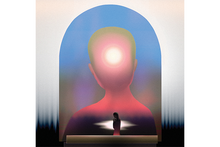
Who knows why you’re praying with such openness—
maybe it’s the bell’s calling, maybe it’s the rising
of quiet new faith.
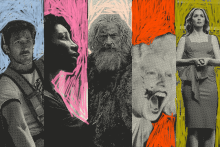
2025 was a banner year for movies nestled at the intersection of faith and justice. Many of those films that Sojourners authors covered, from Sinners to One Battle After Another to KPop Demon Hunters, will continue to be in the cultural conversation this year, especially with the Academy Awards looming.
Below is a list of films that Sojourners can’t wait to watch this year. It is by no means exhaustive; as excited as I am for The Mummy and Supergirl, for instance, I won’t know if those blockbusters have a faith angle until they hit the screen. You never know, Supergirl’s terrier Krypto might turn out to be a caped Christian pacifist. What follows, then, isn’t a catalogue of certainties, but a watchlist shaped by hope, curiosity, and the expectation that questions of faith and justice will keep finding their way onto the big screen—sometimes from the most unexpected places.
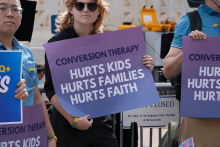
The Supreme Court seems likely to overrule a law banning conversion therapy for minors, horrifying queer faith leaders and their allies after years of fighting to protect queer children.
Colorado’s minor conversion therapy law prohibits state-licensed mental health workers from seeking to change a minor's sexual orientation or gender identity, including attempts to reduce or eliminate same-sex attraction or change “behaviors or gender expressions.” Violations are punishable by a fine of up to $5,000. The petitioner Kaley Chiles is a Christian counselor who argues that the law violates her First Amendment right to free speech by censoring what can be discussed with consent in therapy sessions.
Chris Damian, a gay Catholic lawyer, told Sojourners that the case hinges on whether talk therapy is considered a form of speech or whether it’s considered conduct.
“Obviously this case is about conversion therapy,” Damian said. “But it’s also about much more. It’s about whether and how state legislatures can hold mental health professionals accountable for their practice.”

For as long as Lecrae has been a public figure, he has been a lightning rod for white evangelical racism.
A spearhead for the movement that turned Christian hip-hop from a misfit genre to a powerhouse industry, Lecrae has consistently endured racism thinly veiled as theological critique. While he was earning deep respect from hip-hop luminaries—Sway In the Morning and Kendrick Lamar, for example—he was fighting a Christian industry that only begrudgingly came to accept that CHH was here to stay.
Early on, critics claimed “Christian” and “hip-hop” were contradictory terms, and Christian rappers like Lecrae were putting godly messages second to godless culture. Then, as the U.S. began another reckoning with racist police violence, Lecrae was accused of division, partisanship, and putting “political issues” like racism before “biblical issues” like abortion. When he attempted dialogue, white pastors told him to his face that chattel slavery was a “white blessing.”

Oscar season hasn’t even started, and 2025 is already shaping up to be a strong year at the movies. We’ve seen small-budget standouts, from the thought-provoking body horror of Together to the empathetic dramedy of Sorry, Baby. Even the superhero blockbusters—Superman, Fantastic Four—had more to say about justice and community than I’ve come to expect from spandex cinema. And then there was Sinners, which was perfect.

The Piano Lesson is a film about what we pass on from one generation to the next: family heirlooms, deeply embedded wounds, and — as is the case for the Charles family — deeply embedded spirituality.

President-elect Trump, according to the Associated Press, has won the White House. He won the election in part by courting conservative religious communities — and appealing to their anxieties — on the campaign trail. His policy agenda will likely be shaped by these groups, influencing the White House on a range of issues from education to reproductive rights.

At their strongest, films and TV shows can help us pay attention to — and by extension, love — the people and the world around us.
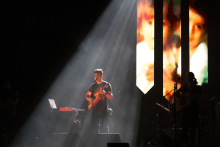
It’s clear why fans created the once popular but now defunct Facebook page,“Is This Sufjan Stevens Song Gay Or Just About God?” But Stevens’ music has never been either gay or about God. It’s indivisibly gay and about God.
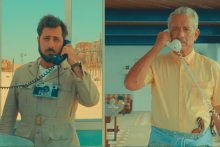
In Asteroid City, Anderson buries ineffable grief under layers and layers of artifice.

In a blow to LGBTQ+ rights, the Supreme Court on Friday ruled that the constitutional right to free speech allows certain businesses to refuse to provide services for same-sex weddings, ruling in favor of a web designer who cited her Christian beliefs in challenging a Colorado anti-discrimination law.
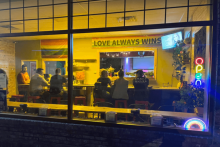
The working-class town of Bellefontaine (pronounced “bell-FOUNTain), nestled among the farm fields and hills of rural Ohio, in the heart of Rep. Jim Jordan’s legislative district, is not the easiest place to grow up queer. The churches are much more likely to hold to conservative views on sexuality than be LGBTQ+ affirming, and “Trump Won” flags far outnumber rainbow Pride flags.
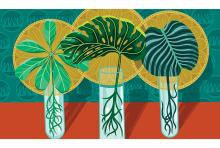
BEFORE THE PANDEMIC hit, I could have told you the precise number of my indoor plants: zero. But then lockdown started and, like countless people around the world, I became obsessed with all things leafy and green. Once I learned how to keep a plant alive, I began to nurture cuttings. To see that first fresh leaf grow — an assurance that new roots had taken hold — filled me with a kind of joy heretofore unknown.
I needed to feel like life could not just survive, but flourish and thrive. “Give this at least six weeks before repotting,” I would text a friend from her porch as I dropped off the gift of a budding leafy monstera, “just to let the roots settle.” Then I’d trudge back to the sidewalk to watch my friend open her door, wave to me, and take this small extension of myself into her home. Months later, when we could visit in person, I’d get to see how much these little ones had grown. Great leafy extensions of love.
Most of the gospel readings this month contain horticultural parables — seeds and soil, wheat and weeds, sowers and reapers. Before the COVID-19 years, I had never read these parables through the eyes of someone who had nurtured plants to life. Their images had been abstractions, ideas, metaphors with no roots. But now that those seeds have grown, I see each one anew. Perhaps you do too?
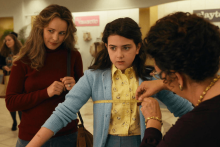
Children are already exploring sexuality and religious skepticism in complex and important ways — so our films and books should, too.

On Mother’s Day in many congregations across the U.S., churches will hand out flowers, host breakfast and tea, or offer applause for women in attendance. While the goal is to honor women and mothers, Elizabeth Hagan, a minister at Georgia’s First Christian Church Athens and author of Birthed: Finding Grace Through Infertility, told Sojourners that the celebrations can cause discomfort, pain, or even disillusionment for many in the pews.
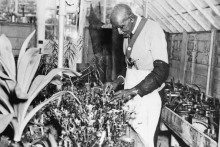
Over his career, Luther Williams has seen the impact of racist education standards and a lack of Black representation in science.

“I’ve realized that the current state of economics is violence, since it violates human dignity,” said Dani Bodette, senior coordinator of Catholic Campaign for Human Development in Chicago. “But cooperatives are a form of nonviolence — they’re a nonviolent economics.”
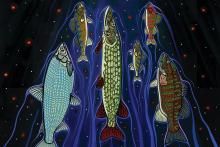
TO THE LEFT of a buffalo photograph on my wall, a rosary hangs from a thumbtack. Frequently, my eyes linger there. It came to me a couple of years ago on my birthday as part of a gift from my mother — looped through the ribbon of a wrapped box that contained a tea set. When I held the rosary before my face, I found it curious. My mother explained that it had been my late father’s, and that it was one of his most prized possessions. I was a little stunned because I had never seen it before. It was a gift, my mom continued, made by his grandmother who died two years before I was born. Now, it had come to me.
My great-grandmother’s parents were part of a group of 25 Red River Métis families who settled on Spring Creek in central Montana in 1879, an area now known as Lewistown. They, like all the tribes of the region, were pursuing the final dwindling herds of buffalo. It was a tumultuous time to be Indigenous, with settlers flooding the landscape from all points east and gobbling up land, whether it had been promised to Indians or not.
The origins of my Métis people can be found in the late 1600s, and likely earlier, when the first European traders first began establishing trading posts in the Red River Valley. This region, named for the mighty Red River of the North, is centered at what is now Winnipeg, Manitoba, and extends into today’s Minnesota and North Dakota. These early Europeans, mostly from France — with some coming from Scotland, Wales, and England — married into the Indigenous people already inhabiting the region: Cree people and Ojibwe people. From these unions sprang descendants who created their own unique, mixed-culture people — the Métis.