Women and Girls

Last week, a controversy erupted over Twitter when it came to light that a prominent evangelical conference with 110 speakers only had four women on stage.
Journalist Jonathan Merritt, did a quick informal study and discovered that out of 34 prominent evangelical conferences, only 19 percent of speakers at plenary sessions were women.
This is a problem.
As a white male evangelical and a black female evangelical who spend a lot of time speaking at conferences, events, and college campuses, we know from experience this is a problem.
Conference spaces have become one of the primary discipleship spaces for evangelicals. These are the spaces where evangelicals go to learn all that it means to be a follower of Jesus.

The Church of England’s governing body has approved new proposals that would allow women bishops to be ordained by this time next year.
Meeting in London on Wednesday, the church’s General Synod passed a motion by 378-8, with 25 abstentions, that paves the way for the endorsement of women bishops. Bishops also approved a declaration that sets out guidance for parishes that reject female consecrations.
The package would end nearly two decades of bitter and damaging conflict, and the vote is a victory of sorts for the new Archbishop of Canterbury, Justin Welby, who was appointed last year just as the General Synod came within six votes of allowing women bishops.

As countless men grow mustaches this month to raise money and awareness for men's health issues, women and girls of all ages have put away their blush and mascara, seeking to remember they are beautifully made by God — even without the makeup.
"I think a lot of times we get so caught up in 'God made the world and the trees and the beauty and nature' and we see God's handiwork in the leaves changing in the fall, or we see his handiwork at the beach," said Becca Daniel, team leader at Rave Ministries.
"What we forget is we're told in all those other Scriptures that God made us, down to the last detail too."
Women and girls from 37 states and seven countries are participating in "No Makeup November," which is coordinated by Rave Ministries, a Christian girls ministry associated with the Churches of Christ.

A school assembly speaker is gaining national attention. In Richardson, Texas, a high school brought in “motivational speaker and dating expert” Justin Lookadoo to speak to the students about relationships and dating. Lookadoo traverses the country speaking to students about the ins and outs, the perils and pitfalls of dating. Lookadoo gives teens a definitive answer on their status in the realm of dating. His quiz parallels with his “Dateable Rules,” some of which are textbook gender stereotypes and Christian theological distortions.
To be honest, I think his “rules” are bogus. They come from a place where boys and girls are divided into classes and in the end boys win. Making girls out to be “damsels in distress” and boys are “heroic warriors looking for an adventure” doesn't equate a relationship.
Relationships are built upon respect and mutuality not antiquated thinking when it comes to gender roles.
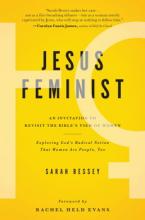
Using a strong scriptural and historical foundation, self-described “happy-clappy Jesus lover” Sarah Bessey relates in her book, Jesus Feminist,how the church has responded “to the movement of the Spirit throughout the centuries, and [how] gender inequality is only one more example of justice seeking in progress.” Bessey tells of God’s redemptive love through the ages, and how women have served and are serving their homes, churches, communities, and the world at large to bring forth that love. The power of women coming together — or acting alone — for God is clear: Women, she writes, can move mountains, even if one stone at a time.
If a world devalues half its members, for every woman who moves a mountain, there will be another woman suffering. Bessey notes the disturbing fact that “Many of the seminal social issues of our time — poverty, lack of education, human trafficking, war and torture, domestic abuse — can track their way to our theology of, or beliefs about, women, which has its roots in what we believe about the nature, purposes, and character of God.” And with that sentence, conviction begins.

In the United States, more than 1 in 3 women (and 1 in 4 men) havereportedly experienced sexual assault, physical violence or stalking by an intimate partner during their lifetime.
These are not numbers that disappears when you walk in to a church. Christian women are subject to sexual and gender-based violence, too – but when is the last time you heard about this issue in a church?
Talking about the pain and fear of intimate partner abuse can seem daunting, but there are resources to help faith communities get started. On Sunday, Nov. 24, faith communities have an opportunity to speak out against sexual and gender-based violence in the aptly named Speak Out Sunday.
Check out these resources to help you and your faith community address the sin of domestic violence.
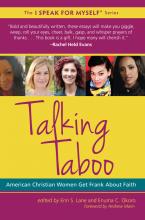
In this age of third-wave feminism, many Americans may not realize that Christian women continue to struggle with what many would deem outdated gendered notions. This includes things such as a woman’s calling being second to her husband’s, women as unwitting temptresses who therefore must hide their bodies, and that women may not lead (or sometimes even speak) in church. Both external and internal pressures and fears have historically kept women silent on these matters.
In the recently released Talking Taboo: American Christian Women Get Frank About Faith, 40 women under 40 address head-on many of the taboos remaining at the intersection of faith and gender, and how they are stepping out of historical oppression to make real change within the church.
In her book Lean In, author Sheryl Sandberg notes that while women are outpacing men in colleges and graduate schools, one cannot see this translate to positions of power within corporations. For this imbalance to be righted, Sandberg asserts that women must take charge of their circumstances: “The shift to a more equal world will happen person by person. We move closer to the larger goal of true equality with each woman who leans in.”
This is no less true of women in the church, and leaning in is exactly what the essayists of Talking Taboo are doing.
While Sandberg focuses on issues such as long work hours, daycare, and more flexibility for working moms, the common, though not exclusive, themes of Talking Taboo are sexuality and biblical interpretation.
IN THE PAST, programs like Menergy were often described as “batterer intervention.” Today we prefer to situate battering behavior within the broader definition of abuse, and work with our participants to change abusive behaviors, big and small.
In 30 years of work with men and women who act abusively toward an intimate partner, Menergy has had thousands of people of faith go through the program. Sometimes their faith community helped them get to our door; other times they came in spite of messages they received at church.
A faith community that seeks to encourage change for abusive members can have a dramatic impact. Here are a few suggestions for how to start:
1. Embrace the secular programs in your community. “Groupthink” often supports abusive beliefs. Don’t try to keep it in-house. In Menergy’s counseling groups, we see that diversity in life experience, culture and ethnicity, economic class, and religious belief aids group members in challenging each other’s ideas.
2. Learn more about domestic abuse. Contact the National Coalition Against Domestic Violence (1-800-799-SAFE) to get a list of local victim-advocacy programs. Send several members of your church to a training for people interested in learning more. Effective support that allows a survivor to grow stronger and safer can often be the fastest path toward holding the abusive partner accountable.

JULIE OWENS had no way of knowing that, within days of saying her marriage vows, she would become a victim of domestic violence. She grew up in a Christian home. Her father was a pastor. Her brother was a pastor. Her uncles were pastors. Her parents had a beautiful and enduring marriage. She was well educated. She was well traveled. And she was deeply in love.
During her honeymoon, Julie quickly realized that her husband now believed he owned her, a belief that would soon be followed by verbal abuse and, toward the end of their marriage, physical abuse.
The abuse began with an irrational jealousy. Then the name-calling began, along with accusations of infidelity. He isolated her from her friends and family. He showed up at the school where she worked as a special education teacher to “check on her.” Later, he started taking the car keys away from her. He even cut the spark-plug wires in their car so that he would always know her whereabouts. He threw dishes at her, disconnected the phone in their rural home, and threatened to harm her, their pets, friends, and even their unborn baby.
Three months into the marriage, Julie knew that his behavior was not normal and the couple separated.
Over the course of the next three months, she went to marriage counseling while her husband went to substance-abuse counseling. In search of help, she spoke with counselors, pastors, and others—yet not one of them ever uttered the words “domestic violence.” Instead, she was told that her husband was dealing negatively with “stress” and that he was “acting out” because he was raised in an abusive family.
IT IS EASY, and a lot more comfortable, to identify and name dysfunction outside your family. It’s an entirely different endeavor, however, to label inappropriate behavior in your own home.
That’s the situation I find myself in as a lifelong member of the black Baptist tradition—one that, by and large, refuses to ordain women ministers and call them into the pastorate. I can no longer keep silent. My spirit won’t let me be quiet about a system where injustice is nurtured.
Women are the backbone of African- American Baptist congregational life, yet they traditionally have been blocked from ordained ministry. I’ve watched this for years in Kentucky where I was born, raised, and currently live; experienced it in other places where I have resided; and heard the same story from Baptist female colleagues in ministry around the country. The same is also true in many white Baptist congregations, such as those affiliated with the Southern Baptist tradition. But I’m speaking here about the world I know personally.
Ironically, some of these black congregations and pastors who are unwilling to honor God’s call on the lives of women seeking ordination are the same ones who are quick to name a plethora of injustices perpetrated against black people as a race, and to demand quick resolution.
Doors for women called to preach the gospel of Jesus Christ have opened a little in recent decades. More women are being licensed, the precursor to ordination in the Baptist structure. But the process usually stops there, and women are left patiently waiting to be blessed into the fold. These “ladies in waiting” are allowed to lead ministries, teach, and occasionally preach, but rarely permitted to go beyond that.

AshleyMadison.com is an online dating site that boasts millions of users worldwide. While online dating has become commonplace in today’s wired society, AshleyMadison has added a shocking twist to what has become mundane. Rather than promising to join together singles of similar faiths and interests, AshleyMadison.com is an online site for married people seeking extramarital relations. Its tagline is simple: “Life is Short. Have an Affair.”
The majority of Americans view adultery as wrong, which, by extrapolation, means that most Americans can see the glaring immorality in AshleyMadison’s business model. There are, however, many more reasons beside adultery to be concerned with AshleyMadison’s creation and far-reaching success.
The founder and CEO of AshleyMadison.com, Noel Biderman, has been “happily married” for ten years to his wife, Amanda, and they have two children. Both he and his wife confess they would be “devastated” if the other used the website’s services. When asked how she felt when Biderman first presented his idea for the website to her, Amanda recalled feeling concerned, thinking the idea implied something unhealthy about Biderman. However, once Amanda realized that it was a “sound business, that there was an [underserved] market,” she was “totally behind” the website’s creation.
The Bidermans actually see the website as altruistic: they believe that an affair can save a marriage.

A few weeks ago, I asked folks on Twitter, and specifically, my colleague Amy Simpson, who has recently published a book on mental illness and the mission of the church:
What do you think about the way people use words like “bipolar,” “crazy,” and “manic” when they really mean “moody,” “energetic,” “quirky” and even “fun?"
It’s part of a pattern I’ve noticed lately — and maybe you’ve noticed it too.
People with beautiful head shots, flawlessly designed websites, and enviable accomplishments insist that they are really just a ‘mess.’ Or that their families are ‘crazy.’ Or that their homes and lives are every bit as complicated and frustrating as everyone else’s … meanwhile, their Instagram feeds show nothing but beauty; if ‘chaos’ is there, it’s only ever of the picturesque kind.
There are no birdcages sprouting stalagmites and stalactites of bird droppings. There are no snotty-nosed, unwashed, half-dressed, hungry children who’ve never visited a dentist in their lives. There is food in the fridge and on the table, and it isn’t even growing mold or crawling with roaches or undulating with maggots. In fact, it’s from Trader Joe’s and may even be organic! There is no broken glass or police officers showing up because the neighbors heard screaming. There is electricity and running water and indoor toilets.
Yeah, there’s raised voices and tempers and conflicts. But that makes you human. Not crazy. Not dysfunctional. Not “a mess.”

Last week I found out about the unfolding cases of sexual harassment by a respected science blogger and the head of Scientific American’s blog, Bora Zivkovic. It shocked me because I’ve met the man, though I don’t know him well. And so I read the accounts of the three women science bloggers who exposed him. Thefirst one shocked me and made me angry. And the second one shocked me further, because she wrote of the harassment continuing at a conference I attended. It happened right under my nose.
Women are an important part of the science community, but there’s a group of powerful men who are gatekeepers, and some of them use this power as a tool to be overtly sexual with female bloggers looking to advance their writing careers in the science community. The allegations regarding Bora Zivkovic seem to be hard for many in the science community to swallow because he has been a vocal supporter of women’s importance in the field and has actively nurtured the careers of many bloggers.
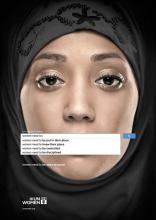
Gender inequality is an international issue. Striving to empower women and call attention to the sexism of popular opinions worldwide, U.N. Women released a series of ads using text from Google real searches. The ads show women's face with their mouths obscured by the text of the searches, visually silencing their voices.
From unwomen.com:
“When we came across these searches, we were shocked by how negative they were and decided we had to do something with them,” says Christopher Hunt, Art Director of the creative team. The idea developed places the text of the Google searches over the mouths of women portraits, as if to silence their voices.
“The ads are shocking because they show just how far we still have to go to achieve gender equality. They are a wake up call, and we hope that the message will travel far,” adds Kareem Shuhaibar, copy writer.
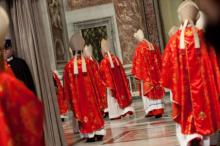
Could a woman vote for the next pope?
Pope Francis has said repeatedly that he wants to see greater roles for women in the Catholic Church, and some argue that he could take a giant step in that direction by appointing women to the College of Cardinals – the select and (so far) all-male club of “Princes of the Church” that casts secret ballots in a conclave to elect a new pope.
Whether it’s even possible is a matter of debate. But that hasn’t stopped the feverish speculation, which was sparked last month by an article in a Spanish newspaper in which Juan Arias, a former priest who writes from Brazil, wrote that the idea “is not a joke. It’s something that Pope Francis has thought about before: naming a woman cardinal.”

I had a chance to play the role of Bad Pastor Phil last week.
The occasion was a conference at St. Mary’s Hospital in Madison, Wis. called “Your Congregation: A Port in the Storm for a Victim of Domestic Violence.” Bad Pastor Phil did not provide a very good port in the storm.
The group of people from some 25 parishes and congregations in the greater Madison area had just witnessed a squirm-inducing scene where Sam came home from work the day after he had hit his wife, Mary. She had prepared his favorite meal, hoping she could make him happy.
Nothing could make Sam happy, of course, other than feeling that he was totally in control of Mary. So he demeaned her, ordered her around, threw the drink of imaginary Scotch and water she had prepared for him across the room, and finally stomped out of the house.
Sam was played by Darald Hanusa of the Midwest Domestic Violence Resource Center, a social work therapist with three decades of experience treating men who batter women. Mary was played by Terry Hoffman, who earlier in the day told a gripping story of the real-life abuse she experienced at the hands of her now former husband.
So now Sam and Mary were on their way to see their pastor. We have a problem communicating, they told me. Sam said it was all Mary’s fault. Mary tried to explain that she was trying to do the best she could, but I asked her what she was doing that was pushing Sam’s anger buttons. She tried to reply, but I kept turning the conversation back to Sam.
I reminded Mary that in the New Testament of the Bible, there were two letters from Paul that said a wife should be submissive to her husband. I ignored the fear that was all over her face.
I was acting out the role that all too often churches have played in real life. Perhaps they are not as crude as I portrayed it, but getting faith-based communities to focus on domestic violence is a growing theme these days.

One morning each week, I ascend the outdoor staircase on the side of our little church and enter the Upper Room – a cozy, loftlike space above the pastors’ offices set apart for prayer.
Once inside, I turn up the volume on my phone, choose “Taize” or “Gregorian Chants” from the iTunes playlists, pull out my knitting and begin to pray.
The subject of my silent prayers is usually the person for whom I’m making the scarf or blanket or shawl. The prayers are as simple as the stitches and after a minute or two, they become as steady and unconscious as my breathing:
“Lord, I lift to you your child.” And then I say his or her name.

Malala Yousafzai has captured our love and imagination.
Malala was recently a guest on the Daily Show with Jon Stewart. By the end of the interview, Stewart was so enamored with Malala that he asked if he could adopt her. The remark was hilarious because it was true. After 5 minutes with this girl, who wouldn’t want to adopt her?
Malala is the 16-year-old Pakistani girl who fought for education in the face of persecution from the Taliban. She explained on the show that, “Education is the power for women and that’s why the terrorists are afraid of education. They do not want women to get education because then women would become more powerful.”
In the face of persecution from the Taliban, Malala says she “spoke on every media channel I could and I raised my voice on every platform that I could and I said, ‘I need to tell the world what is happening in Swat and I need to tell the world that Swat is suffering from terrorism and we need to fight against terrorism.’”
But it was what she said next that stole our hearts. She reflected upon what she would do if a member of the Taliban came to take her life.
If you hit a Talib … then there would be no difference between you and the Talib. You must not treat another with that much cruelty and that much harshly. You must fight others, but through peace and through dialogue and through education. Then I’ll tell him how important education is and that I even want education for your children as well. And I’ll tell him, ‘That’s what I want to tell you. Now do what you want.’