Women and Girls
TORU HASHIMOTO, the mayor of Osaka and co-leader of the Japanese Restoration Party, has been known for his provocative statements. In May, while speaking with reporters on Japanese wartime behavior, he endorsed rape and sexual enslavement, saying, “When soldiers are risking their lives by running through storms of bullets, and you want to give these emotionally charged soldiers a rest somewhere, it’s clear that you need a comfort-women system.” These comments drew international condemnation, but they also revealed the all-too-familiar interlocking of sexism, militarism, and sexual violence. Far too often, the idea of a greater “noble cause” is used to justify the sacrifice of women to a military sexual slavery system.
During World War II, historians estimate that 100,000 to 200,000 Korean women and girls, ages 11 to 30, along with women and girls from China, the Philippines, Indonesia, and Taiwan, were kidnapped or falsely promised jobs and taken to various locations to serve as “comfort women”—the euphemism for sexual slaves. They “served” an average of 30 to 40 soldiers a day and suffered through beatings, venereal disease, forced abortions, mental anguish, and often death. At the end of the war, these women and girls were killed, forced into suicide, or abandoned. Of the few who were able to return to their homeland, many suffered social alienation, humiliation, poverty, STDs, and endless mental anguish.
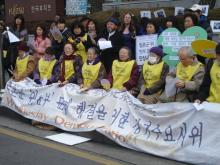
The Japanese government had largely denied the existence of Japanese military sexual slavery until 20 years ago, when it offered a statement of apology. The apology was seen as empty by many people, as Japanese politicians and revisionist historians not only reneged on the apology but sought to omit the tragedy from the telling of Japanese history. In response, surviving Korean “comfort women” or halmulni (a term of endearment and respect meaning grandmother) have gathered every Wednesday since 1992 in front of the Japanese embassy in Seoul as a reminder that they demand to be seen, heard, and offered a genuine apology.
The Global Fund has a plan to win the fight against the three major diseases of poverty—and it's working.

More than 1,200 people have signed an online petition decrying the “silence” and “inattention” of evangelical leaders to sexual abuse in their churches.
The statement was prompted by recent child abuse allegations against Sovereign Grace Ministries, an umbrella group of 80 Reformed evangelical churches based in Louisville, Ky.
“Recent allegations of sexual abuse and cover-up within a well known international ministry and subsequent public statements by several evangelical leaders have angered and distressed many, both inside and outside of the Church,” reads the three-page statement spearheaded by GRACE (Godly Response to Abuse in the Christian Environment).
“These events expose the troubling reality that, far too often, the Church’s instincts are no different than from those of many other institutions, responding to such allegations by moving to protect her structures rather than her children.”

On October 9, 2012, Pakistani teenager Malala Yousafzai was shot in the head by Taliban for advocating for girls' right to attend school. Malala survived the attack, and earlier this month she celebrated her 16th birthday by giving an impassioned speech to the United Nations, advocating for equal rights to education.
This 16-year-old girl was as eloquent and passionate as a seasoned statesman. Her words rang with truth and power. She reminded us that the world is full of vitriol and violence, hate and ignorance — that this is true for people of all faiths, all backgrounds, all political parties. That there is no corner untouched by darkness.
But at the U.N., celebrating her sweet 16, Malala was a light.
I listened to Malala’s story and got chills. As children, before we learned to use politics and policy to defend the lesser inclinations of the heart, we asked: why do people hate? Why do they do harm?
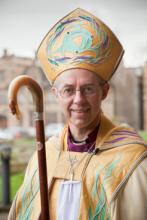
CANTERBURY, England — The Church of England’s governing body reaffirmed its commitment to consecrate women bishops with the aim of reaching final approval on an issue that has for so long split the church’s ranks no later than November 2015.
Meeting in York July 5-9, the General Synod agreed to consider new draft legislation by November this year.
This is the first time synod members have met since November 2012, when to the surprise of most of the British public, draft legislation to create women bishops narrowly failed to secure the requisite majority.

Unfortunately, sexual violence on college campuses is a widespread reality. As many as 20-25 percent of women will face attempted or completed assault over the course of their college tenure. Contrary to popular myths about “stranger-danger,” 9-in-10 of those victims will know their attacker.
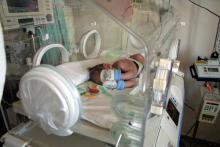
After I blogged about expensive American childcare earlier this week, my daughter Molly directed me to a March of Dimes web page showing the extremely high rate of preterm births in the United States. "Born Too Soon," a 124-page report issued in 2012, "ranks the U.S. 131st in the world in terms of its preterm birth rate of 12.0 per 100 live births, almost tied with Somalia, Thailand, and Turkey. Nearly half a million babies are born too soon in the U.S. each year."
According to a 2009 report from the Centers for Disease Control, "the main cause of the United States’ high infant mortality rate when compared with Europe is the very high percentage of preterm births in the United States" — in spite of the fact that "infant mortality rates for preterm (less than 37 weeks of gestation) infants are lower in the United States than in most European countries." In addition, "infant mortality rates for infants born at 37 weeks of gestation or more are higher in the United States than in most European countries."

"American Way of Birth, Costliest in the World"
That's the headline of an article by Elisabeth Rosenthal in yesterday's New York Times. The article includes a chart comparing childbirth costs in seven countries. In the United States, the average amount paid for a conventional delivery in 2012 was $9,775; for a Caesarean section, it was $15,041. Those are the highest prices for childbirth anywhere in the world.
To get an idea of just how high, I made a chart using the figures in the NYT chart. Childbirth costs in the other six countries range from 21 percent to 43 percent of U.S. costs even though American women typically spend far less time in hospital.
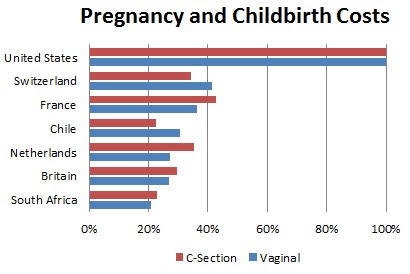
South Africa is so dangerous for childbirth that its graph line would not fit on this blog page. For every 1,000 births, there are 56 infant deaths. For every 100,000 births, there are 400 maternal deaths. [Chart by L. Neff; data from WHO]

The Internet is abuzz with Miss Utah. Marissa Powell was asked at Sunday night’s Miss USA Pageant:
“A recent report shows that in 40 percent of American families with children, women are the primary earners, yet they continue to earn less than men. What does that say about society?”
Powell responded: “I think we can relate this back to education, and how we are continuing to try to strive … to … figure out how to create jobs right now. That is the biggest problem right now. I think, especially the men are … um … seen as the leaders of this, and so we need to see how to … create education better. So that we can solve this problem. Thank you.”
Her answer was painfully incoherent, and as you can tell in the video, the poor girl knew it. There’s a bit of irony in the question that has been missed. Maybe we should be asking, “What does it say about our society that we still have these kinds of beauty pageants?”

Editor’s Note: As we continue reporting on the important topic of sexual abuse and violence, Sojourners has opened up the Sexual Violence and the Church blog series for submissions. This piece is one such submission. If you are interested in submitting a post for the series, please email the Web Editor HERE.
"From the beginning …" began my pastor, rising slowly from his armchair. With his next words, he broke my world apart. From the beginning, he had been attracted to me as a woman. From the beginning, his interest in me had been personal. He told me the reasons why, and then he said these words: "If we were both single, and if I weren't your pastor, we'd be going out to dinner." He paused a long beat. “And we’d see where it went from there."
Were my pastor's words an act of sexual violence?
When we hear the words "sexual violence," we may envision a forcible rape or a sexual act with a person incapable of consent. Many of us would consider unwanted groping or uninvited embraces to be acts of sexual violence. Some of us would include "consensual" sex between persons of different rank, because we understand that power disparity makes meaningful consent impossible. But what about the manipulative behavior that gives rise to the delusion of consent? Was my pastor's not-quite-a-proposition an act of sexual violence? Could a lingering handshake, a compliment on spiritual gifts, or an offer of pastoral support be acts of sexual violence? Most of us would say no. And most of us would be missing the boat.
A radio documentary with Susan Burton, Michelle Alexander, and five residents of A New Way of Life Reentry Project.

A movement of lay advocates speaking out against sexual violence is gaining steam in the faith communities. But are similar efforts happening inside church doors?
When it comes to leading denominational conversations on sexual violence, clergy across traditions express twin reactions: encouragement over the protocols already in place and the efforts of fellow advocates; and frustration with a culture of silence around sexual violence in the church. Despite strikingly different experiences across denominations — and church by church — the clergy, church staff, and seminarians who spoke with Sojourners are in agreement that addressing this issue in one’s own house is complicated at every level.
The result: a loss of potential by the American church to be a leading and vibrant institution of radical vulnerability and transformative healing.
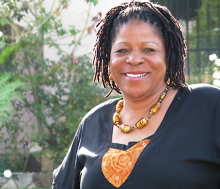
Bio: Founder of A New Way of Life Reentry Project in California, which has provided housing and support for more than 500 formerly incarcerated women. anewwayoflife.org
1. What motivated you to start A New Way of Life in 1998?
Through the kindness of a special person, I was able to access treatment services in Santa Monica [Calif.] after the sixth and final time I was released from prison. This was a new phenomenon for me. I am originally from South Los Angeles, and I was amazed that such resources were available in this more-affluent part of the city. I began to wonder why those same resources were not available in my home community—an area so heavily impacted by the “war on drugs.” I knew the need was desperate, and I wanted to bring those resources to South L.A. My work since then has been, and continues to be, a work of faith. I step out in faith, and God shows up.
I can’t think of a way that it’s good for anyone. The current system treats everyone inhumanely. It puts them into the category of slaves. It exploits their families. It kills their hopes and dreams. Our mission is to address the needs of people who have been negatively and cruelly treated by the criminal justice system and to restore their hopes and dreams by treating them with dignity and respect.

A recent Pew poll revealed a significant shift in American families. Four in 10 of this country’s households now rely primarily on the income of women.
This is both good news and bad. For many women, new opportunities are allowing them to be the primary breadwinners in their families. In some careers, women are chipping away at the very real glass ceiling so many have and continue to face. Our efforts towards equality have made some strides. Some strides.
At the same time, a significant majority of households who rely primarily on women’s incomes are single-mother households living in poverty or near-poverty. Structural barriers lead almost inexorably to more complicated and difficult lives for these families. From health care and food costs to child-care and educational expenses, they face greater challenges because of structural obstacles we so often unwittingly endorse and from which we even benefit.
Some things never change.

We have learned from the crisis at Penn State University and other incidents that have gained national attention that it is not only religious authorities that turn a blind eye to abuses of power. The educational, legal, social service, and policing systems are broken when it comes to protecting children, and others who are vulnerable, from abuse.
Lest we forget our history and think that this is a uniquely 20th and 21st century problem, we need only turn to the Bible. In II Samuel, we are reminded that abuses of power, lust, and rage have always been part of the human experience.
An incident described II Samuel happens not in a religious or educational institution but in a family. It is not an isolated incident; it does not develop out of thin air. It is a case of “like father, like son.” Amnon’s father is King David, who in II Samuel 11, sees Bathsheba bathing and uses his power to have her brought to him so that he may “lay” with her.
It is only two chapters later that we read that Amnon, David’s son, is tormented by the beauty of his half-sister, Tamar. Amnon does not have the authority that his father David has, so he must use trickery instead of sheer power to get what he wants. After Amnon violently “lays” with Tamar, he is filled with hatred for her and forces her to leave his sight. In doing this, he shames her even further.
The scandal is not just that Amnon violates Tamar and the law of Israel, but when Tamar cries and ritually mourns her pain and disgrace she is told to be quiet. Her brother Absalom tells her to stop brooding over the episode. And while Absalom and their father, King David, are angry with Amnon for what he has done to Tamar, neither David nor Absalom even talks to Amnon about it. David does not punish his beloved firstborn son.
Perhaps one positive thing we can say about this story is that Tamar has a name; she is not anonymous like so many other powerless women in biblical stories. Tamar is named and remembered.

When she was 24 years old, in 1979, Fahima Vorgetts left Afghanistan. By reputation, she had been outspoken, even rebellious, in her opposition to injustice and oppression; and family and friends, concerned for her safety, had urged her to go abroad. Twenty-three years later, returning for the first time to her homeland, she barely recognized war-torn streets in urban areas where she had once lived. She saw and felt the anguish of villagers who couldn’t feed or shelter their families, and no less able to accept such unjust suffering than she’d been half her life before, Fahima decided to make it her task to help alleviate the abysmal conditions faced by ordinary Afghans living at or below the poverty line — by helping to build independent women’s enterprises wherever she could.

Though the church remains stuck in a culture of silence on sexual abuse, advocates are steadily building the platforms for individual voices to change the narrative. The depth of reconciliation that plays out upon these platforms can be profound. Rachel Halder, founder of Our Stories Untold — a blog that hosts stories from survivors of sexualized violence within the Mennonite church — has witnessed such moments happen in real time.

Editor’s Note: As we continue reporting on the important topic of sexual abuse and violence, Sojourners has opened up the Sexual Violence and the Church blog series for submissions. This piece is one such submission. If you are interested in submitting a post for the series, please email the Web Editor HERE.
I know now, what I wish I knew then. Only after speaking up, did I learn how common stories like mine are to women across the globe. I know the warning signs and have a clearer picture of what is and isn’t acceptable behavior. I long for each of us to wrestle with the truth that we are never to blame — no matter how we dress, what we look like, or how much we’ve had to drink.
We never, ever deserve to have our bodies treated as objects of shame.
“An obstetric fistula,” I said, standing in the pulpit of my 200-year old church, “is a hole between a woman’s vagina and her bowel, or between her vagina and her bladder.”
The congregation’s discomfort was palpable. Later someone told me that they couldn’t believe that I’d had the nerve to say the “v-word” twice! It wasn’t exactly the effect I’d hoped to have, but it wasn’t entirely surprising.
Fistula is a childbirth injury that’s unknown today in the developed West, though before the advent of modern maternity care, it affected women — especially poor women — in America as well as Europe. It was likely the reason, at least in some cases, for a woman being euphemistically spoken or written of as an ‘invalid,’ or as having been ‘invalided’ by the birth of a child. Fistula’s story has always been one of (usually secret) suffering; even the surgery to repair the injury, developed by American gynecologist J. Marion Sims in 1840s Alabama, was performed experimentally upon slaves that Sims purchased for the express purpose of perfecting his technique before turning to white patients.
It’s women of color who still all but exclusively suffer fistula’s life-destroying effects.
Fistula happens when a baby gets stuck while being born, often because a girl is either underage, has a pelvic deformity, or has had her genitals deformed by female genital cutting — and there’s no trained person to help. She’ll labor for days without success. Only after the baby is dead and partially softened does it slip out from the exhausted mother, whose suffering has only begun. Days of pressure from the baby’s head have killed blood vessels in her vaginal tissues, which now decay, leaving a hole — or holes — from which urine and feces leak. She has become incontinent. Her husband divorces her. Her family makes her leave the house because of her stench. She can’t even keep herself clean enough, because the water she walks some distance to collect each day is just enough for basic use. The village children mock her for her stench; her neighbors ignore her.
Her story is multiplied between 50,000 to 100,000 times each year.

I remembered after the first lecture I came home and told my husband about the pronoun, but as I read through all 20-something lectures, I noticed it again and again. I was the theologian; I was the believer.
Was this difficult for my professors to do? Did it take lots of conceding to women’s different or special needs? Or, rather, was it a possible and reasonable upsetting the “status-quo” that still often tells us that “he” or “man” means everyone and that I’m just too touchy if I refuse to accept that.
This small kindness was, I think, one of the best things about my first semester of seminary. These two white men — one in his early 60s and one in his early 30s — were incredibly intentional about the female pronoun being the “default” for the generic personal pronoun.