Women and Girls

The Vatican issued an urgent appeal Thursday for the release of more than 200 Nigerian schoolgirls kidnapped by the Islamist militant group Boko Haram.
“The denial of any kind of respect for life and for the dignity of human beings, even the most innocent, vulnerable and defenseless, calls for the strongest condemnation,” Lombardi said.
He added that the kidnappings aroused the most heartfelt feelings of compassion for the victims and a sense of horror for the physical and spiritual suffering and the incredible humiliation they have suffered.
Islamic religious police in Indonesia plan to publicly flog a 25-year-old widow and a married man for adultery after vigilantes gang-raped her as punishment for having extramarital sex, according to media reports.
The woman and her paramour, a 40-year-old father of five, were surprised late Wednesday by seven men and a 13-year-old boy who barged into her home in Aceh, which is the only province to enforce the system of Islamic law known as Shariah, the Sydney Morning Herald reported Tuesday, citing The Jakarta Globe.
The group tied up and beat the man, repeatedly raped the woman and poured raw sewage over them before taking the couple to the local Shariah police.
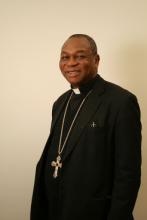
The kidnapping of 300 teenage schoolgirls by the Islamist group Boko Haram has shamed Nigeria, Cardinal John Olorunfemi Onaiyekan said Wednesday.
Vatican Radio reported that at least 53 of the girls had escaped from their captors but 276 were still believed to be in captivity.

The Vatican has effectively addressed the “worldwide scourge” of clerical sexual abuse over the past decade and promoted the reporting of allegations to both church and legal authorities, a United Nations panel heard on Tuesday.
Tomasi faced intense questioning from members of the U.N. committee investigating whether the church upholds the U.N. convention against torture beyond the walls of the world’s smallest country, the Vatican City state.

Khatoon Shaikh had no formal education, never worked outside the home, and lived in the kind of neighborhood that many people might call a slum.
But when Shaikh witnessed her sister-in-law victimized, first at the hands of a violent husband, and again by a patriarchal justice system, she took charge.
Shaikh started her own Shariah adalat, a court based on Islamic law, just for women.
“We needed a place where women’s voices could be heard,” the mother of seven said.
That was 20 years ago. Since then, the court has moved from Shaikh’s home to a two-room office in the north Mumbai neighborhood of Bandra. And it now operates within a broader organization called BMMA, or Indian Muslim Women’s Movement, which Shaikh helped form in 2007.

The Vatican could face a wave of new sexual abuse claims dating back decades if a United Nations inquiry finds that the Roman Catholic Church has violated an international treaty against torture and inhuman treatment.
“For too long, sexual violence and acts of rape by the Catholic Church have been minimized,” said Katherine Gallagher, senior staff attorney at the New York-based CCR, after the U.N. panel that enforces the torture convention held hearings in Geneva.
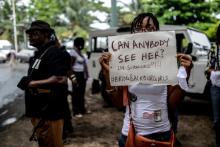
The first time I heard the news about the 270 Nigerian school girls who had been kidnapped by Boko Haram was last Sunday. I was sitting with the rest of the band at St. Augustine's Catholic Parish during worship. Fr. Gabriel, a priest from Nigeria, was preaching. In his sermon, he offered a litany of events, incredibly difficult events that had transpired in the preceding week as examples of how God does indeed respond when we are in our darkest moments. No matter how we may doubt, fear, or struggle, Jesus will walk through walls to get to us.
All the other events he listed I had heard of. There had been media coverage. People had been given the opportunity to respond to the needs of others.
The girls were kidnapped by Boko Haram on April 14. I had not heard the news until April 27. And it still wasn’t in the papers.
This week I heard the words of Cleopas, “Are you the only stranger in Jerusalem who does not know the things that have taken place there these days?”
So, like the stranger in our story, I asked, “what things?”
According to reports in The Guardian and Smithsonian Magazine 's website , the girls are being sold as brides across the border in Cameroon and Chad for the equivalent of $12 each. This means, of course, that the girls are being sexually assaulted.
Boko Haram is a loosely knit organization. There appears to be no specific hierarchy, only the desire to carve out of Nigerian territory a so-called "pure" Islamic state. Their vision is beyond radical. Violence against other Muslims is not uncommon. They target churches and mosques with the same viciousness. This time they targeted the last school left in the region. They targeted the girls. Translated, Boko Haram means "western education is sinful." To educate girls, then, is a form of Western education. To educate girls is a sin. To sell them across the border is not.
And they need women. They need brides. The girls are being sold. Sold.

The first ominous sign that the Relisha Rudd case was slipping from the local Washington, D.C. imagination was when the police alert signs posted on the roads into the city had their messages changed, or were removed entirely.
For weeks after the news that the little eight-year-old girl was missing broke on March 19, the digital display boards had broadcast the Amber alert in their amber lettering, its grim message truncated in a style all too appropriate for the digital age: “BLK Female, 8 YRS, 4’0”, 70-80 LBS,” along with a contact number to report sightings. Radio stations had urged citizens repeatedly to be on the lookout.
Because I tend to leave WTOP news radio on a little too often when the children are around, my ten-year-old son grew preoccupied with the case, and because he cannot admit to himself that tragedy is ever actually happening, came to me and said, earnest with his watery blue eyes, “Mom, you know they found that girl.”
Hoping, hoping.
As part of yesterday's announcement of new initiatives to combat sexual assault on college campuses, the administration released this public service announcement, joining forces with leading actors Benicio Del Toro, Dule Hill, Steve Carell, Daniel Craig, and Seth Meyers.
Today Vice President Joe Biden announced a series of new initiatives aimed at addressing sexual violence on college campuses and launched NotAlone.gov — a website that pools campus reporting data and points both students and school officials to sexual assault resources.
The administration is also releasing the first report of the White House Task Force to Protect Students from Sexual Assault, which was established in January.
Under Title IX, college campuses that receive federal funding are already required to take steps to prevent sexual assault on campus and respond promptly when sexual assault is reported. Further, the Clery Act requires those that receive funding to report their crime statistics and provide policies for prevention. The website NotAlone.gov will be a central repository for these reports and clarify for students their rights under the Clery Act and Title IX.
What is unclear, however, is what has changed for Christian college campuses and other private institutions.
Too many women and men are sexually assaulted in college. We must put an end to this violence. → http://t.co/9QH89qCLvd #1is2Many
— Office of VP Biden (@VP) April 29, 2014Christians began a three-day prayer and fasting period after Islamist Boko Haram militants kidnapped hundreds of schoolgirls in Nigeria and desperate parents joined the search in a remote forest.
The girls were abducted last week while at school in the Chibok area of Borno State. Initial reports said about 200 were kidnapped, but government officials lowered the figure to 130. On Monday, school officials said 234 were abducted and 40 girls had managed to escape.
“We know no religion [that] prescribes abduction or infliction of pain as a way of devotion,” said the Rev. Titus Pona, an official with the Christian Association of Nigeria. “We are calling on them to sheathe their arms and pursue their case in dialogue with the government.”
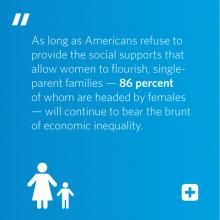
"Unmarried moms are rarer in America than France, Sweden, New Zealand, the UK, or the Netherlands" screams yesterday's headline by Matthew Yglesias on vox.com.
"And honestly, it's no big deal," sighs an exasperated Swiss friend of mine, weary of conservative American Facebook memes. Unmarried mothers apparently do just fine in Switzerland (though admittedly the Swiss rate of 20.2 percent of births to unmarried women is considerably lower than the American rate of 40.7 percent).
Actually, though, it is a big deal in the United States, for several reasons.

New York Mets second baseman Daniel Murphy recently took some heat from a few peers of his in sports media for taking the first few games off of the new baseball season to be with his wife while she gave birth to their baby. In particular, former NFL quarterback Boomer Esiason said on the WFAN radio show that Murphy needed to “get his ass back to work,” and that Murphy's wife should have undergone a C-section before the beginning of the season so he would not miss any games.
This kind of language is insensitive enough, but it is especially shocking coming from Esiason, who is a father to a child with special needs himself. Boomer has since retracted his comments, apologizing not only for his insensitivity, but for dragging Daniel's personal life, and that of his wife, Tori, into the public conversation. But if anything good can come from this, it is that it has raised the issue of a father's role in the birth in the early months or years of his child's life.

AN UNQUENCHABLE demand for sex, coupled with an endless supply of vulnerable children, creates a seemingly endless cycle of child exploitation.
During the Vietnam War, the U.S. Department of Defense contracted with the Thai government to provide “recreation and relaxation” for U.S. soldiers. Sex tourism was organized and expanded into a major industry. Today, sex tourism is a huge source of income for Thailand: The country remains a hub for tourists who can get anything they want at a very low price. Many children are trafficked into Thailand from surrounding countries or are fleeing military genocide. Others are pressured by their own family members to contribute to the household income. Uneducated and hopeless, these desperately poor boys and girls help feed the sex trade industry’s insatiable hunger for children.
A friend of mine recently traveled to Thailand. “I’d read books and watched documentaries about the sex industry in Thailand,” says Jennifer Laine VanBeek. “But nothing prepared me for Bangkok. Even beyond the red light districts, the sex trade is impossible to ignore. I was defeated by the sheer volume, the visible presence, the young ages of the exploited girls and boys, and how engrained it seemed to be in Thai culture.”
Jennifer visited Thailand—often called “Disneyland for Pedophiles”—with her Westmont College friend Rachel Goble, president of The SOLD Project, an organization that works to prevent child exploitation. Early in 2008, Rachel moved to Thailand’s Chiang Rai region, whose lush landscape and laughing children belie the harsh reality: Generations of women from this village have been and continue to be exploited by Thailand’s sex trade.

Currently there are more people in slavery than any other time in history. In response to this, there are hundreds of anti-human trafficking organizations throughout the world. People are working tirelessly for justice and restoration for the victims.
There are the men and women who are rescued, some are just children. There are also the rescuers, the judges and lawyers who bring justice, and the psychologists who help to rebuild wholeness. Countless numbers of people support the end and rescue of those enslaved by trafficking – especially sex trafficking. But where are the “Johns” - the men[1] who play the role of Demanders in the Supply and Demand economics of this billion dollar international industry? I’d like to put some money toward restoring them.
Aren’t they an important aspect to this equation? Women and girls would not be victimized sometimes 40 times a day without those who pay for it. The captors would move on to more lucrative business ventures if there weren’t men willing to fork over money again and again for something that the world has decried as both illegal and immoral.
I’m surprised that this plays little to no role in our larger conversations about being serious in ending the sex slave trade. What is it that these men are seeking? Why are they paying for sex? Why are they choosing to have sex with someone who is clearly not there willfully? How much is power at play in this situation? What about the men’s ability to be in stable relationships? Why is there still a demand for enslaved persons?
Buying sex from enslaved people does not happen in a vacuum. There is a progression that includes various aspects. If we are serious about ending the sex slave trade we will need to address some serious issues within every nation in the world, particularly those with male-dominated societies that promote male aggression, provide women with limited or no educational and economic opportunities, and deprive men of solid and symbiotic relationships where they can find genuine intimacy and self-expression for their feelings.
Might I suggest 10 ways we can fight sex-trafficking:

I don’t know about young girls, but I know from experience that young boys obsess about sex.
They crave it, fantasize about it, do everything in their meager power to obtain it, worry about their adequacy, get confused by their longings, and for the duration of adolescence — and often beyond — see people in terms of “getting laid.”
I suppose this obsession is natural, and that it serves some fundamental purpose, such as perpetuating the species or giving us something to think about besides our gangly bodies, weird thoughts, and being young and insecure.
I don’t know any adult who would willingly repeat adolescence. Yet here we are — we Christians seeking hope, grace, mercy, and purpose, we believers in a God of justice — treating our faith as an endless adolescence centered around sex.

Women of faith have moved hearts, minds, and mountains. They have changed the world by their faithful witness – and changed lives. Through our Women and Girls campaign, Sojourners is working to gather and lift up the voices and stories of these women to inspire a new generation of women to lead on faith and justice.
Sojourners’ Women and Girls campaign is our newest initiative in our ever-expanding work for justice in our world. Through creative advocacy, education, outreach, bridge-building, and a variety of other ways, we are affirming and empowering the God-given leadership abilities of women and girls in their congregations, communities, and the world.
To celebrate Women’s History Month, we asked some of our supporters to make a gift in honor of a woman of faith in their life. Below are the stories of a few of these women of faith.
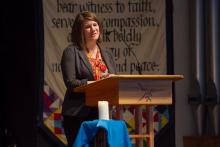
You can certainly get community outside of church, says bestselling author and blogger Rachel Held Evans, but that doesn’t mean it’s not worth being part of a church community.
“Church forces us into relationship with those who are different than us,” Rachel told Sojourners. As a follower of Christ, she said, I have to be ready and willing to be in community with those who are different than me.
I recently caught up with Evans at Eastern Mennonite University in Harrisonburg, Va. It was her ninth public appearance in the eight weeks as she bounced from Texas and the Midwest to the East Coast and back to Texas, with a foray to Michigan.
Rachel has made her career out of vocalizing what others are feeling, but can’t articulate quite as clearly.


One of the most commonly sexted biblical texts comes from the 5th Chapter of Matthew’s Gospel, when we hear the following words attributed to Jesus: “You have heard that it was said, ‘You shall not commit adultery.' But I tell you that anyone who looks at a woman lustfully has already committed adultery with her in his heart” (5:27-28). At first glance the biblical text appears quite straightforward, as Jesus is speaking to a small group of men, and it seems that he simply proclaims the need to keep their sexual temptations in check. “Fellas, keep it in your pants and out of your minds, or else!” is a standard religious reading. However, such an overtly sexted interpretation of the biblical text limits the extensiveness of what Jesus actually attempted to communicate through it. In other words, the text in question is about far more than physical sex, as it serves Jesus’ much larger liberative purpose to strategically and radically revolutionize the totality of how women and men related to each other.