Christianity
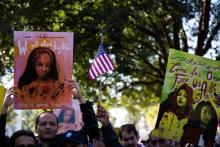
And this is the America I believe in. No matter how we differ in our beliefs or practices, this country is meant to be a place where all of us feel safe and have the opportunity to thrive. So — despite demeaning rhetoric, stigmatizing policies, and acts of hatred and violence — I have hope, because I choose to see the many ways that people of faith and goodwill are pushing back. I hope that you do, too.

Pluralism is valuable because Jesus is the sovereign lord of everything — all places, people, religions, and cultures.

Of course, the two political parties are not morally equivalent; it makes a great difference how we vote, as we will have the opportunity to do later this year. The Republican Party’s political sellout to Donald Trump — and the lack of a clear moral alternative by the Democrats many people of faith are excited to support — leaves many of us feeling politically homeless.

Jesus actively participated in the lives of everyone whom he met by offering them love, acceptance, and healing. He particularly sought out and served those whom religious folk deemed to be great sinners.

The idea that government has an important role to play in human flourishing was made by Pope Leo XIII in his 1891 encyclical Rerum Novarum. In it, the pope argued that governments should promote “the common good.” Catholicism defines the “common good” as the “conditions which allow people, either as groups or as individuals, to reach their fulfillment more fully and more easily.”
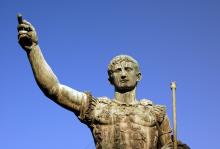
God’s kingdom is a place of unlimited love and unending compassion. It’s a place where everyone is welcomed — especially the marginalized — and nobody is treated like an outcast.
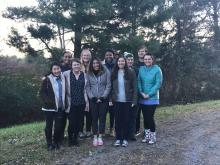
I was the first intern of Cycle 34 to arrive at the Sojourners intern house in Washington, D.C., in August. An incredibly generous staff member picked me up from the airport, drove me the hour back to the house, and left me to settle into my new home (later I learned that this type of generosity was just a part of the job at Sojourners, but that is another story altogether).
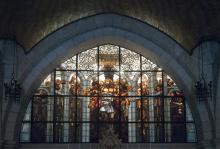
Among the victims of police brutality was none other than Christ himself. While this notion conjures up mixed emotions — including unbearable sadness — we should also take heart. Jesus experienced and overcame police brutality — so can innocent, powerless black women and men. To do so, churches with those most affected by police violence in attendance must cultivate a liberating praxis of anti-oppression retaliation, which includes teaching the characteristics of Christ’s response to law enforcement victimization. The writings of the great theologian James Cone, and others after him allowed us to rip the misguided veil of blasphemy and usher black people into a newfound solidarity with Jesus of Nazareth.

"We must talk about poverty, because people insulated by their own comfort lose sight of it."
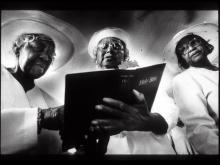
One issue black people have with Reformed theology is its Eurocentric roots. Reformed theology came to America by way of European countries, including France, England, Scotland, and the Netherlands. White, educated men crafted the teachings, wrote the books and led the churches. They did not have black people in mind.
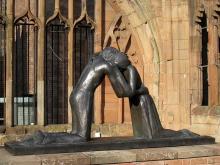
Which is why, lastly, I am certain that the road to restored unity among Christians will not take another 500 years. The signs are all here.

In the American church, where the right of the individual is sacrosanct, the ability to choose a church is protected with greater vigilance than the possible immoral consequences of that choice. The current segregation of congregations continues to be perpetrated and justified by the idolatry of choice.

“I have a religion — but you will call it blasphemy,” he wrote in a letter in 1865. “It is that there is a God for the rich man but none for the poor … Perhaps your religion will sustain you, will feed you — I place no dependence in mine. Our religions are alike, though, in one respect — neither can make a man happy when he is out of luck.”

Yet this administration’s guidelines would allow businesses and government employees to pick and choose who they will serve. As a pastor, I have to ask: What religion champions spitting in people’s faces rather than turning the other cheek? How is God’s love shown through public humiliation, hate, or depriving LGBT people of a job or services?
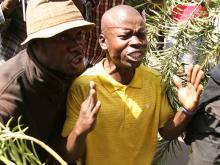
"They want their supporters to believe this is a divine call, which is not. I think they are manipulating their supporters," said the Rev. Wilybard Lagho, the Mombasa Roman Catholic archdiocese vicar general.

Mike Pence is following President Trump, but he is utterly failing at following Jesus.
Mike Pence’s actions during the football game had nothing to do with the love and justice Jesus calls his followers to strive for.
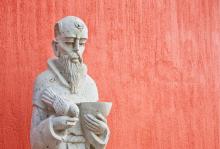
One day after celebrating the Feast of St. Fransis of Assisi, we are reminded that we need to hear the call Francis heard to repair Christ’s church. God has blessed the world today with some great leaders. Pope Francis has shown he truly understands the legacy of his namesake. He has chosen a simpler, less ostentatious lifestyle than previous Popes, and he has spoken out strongly for the poor and for peace. He is pointing the Church, Catholic and non-Catholic, in the right direction. But he can’t do it on his own. St. Francis didn’t. There were strong leaders in this era as well as their devoted followers. That’s what we need now. Reforming the American Church of today will take people who are willing to speak up for justice, both human and environmental. It will take people who will value a loving, dynamic fellowship over a stifled, silent one, afraid to “make waves”. It will take people ready to joyously and lovingly embody the values of Christ, as did Francis of Assisi.

Starting in the suburb of Ruiru, about 19 miles north of Nairobi, the train for the past five years has informally hosted a growing number of self-styled pastors and a makeshift, moving congregation eager to hear the gospel.
At least two coaches turn into “churches” each day, with Christians singing, dancing, and clapping as they prepare for a short sermon during the one-hour journey.
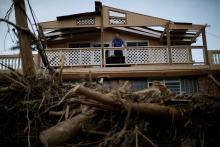
Meanwhile, Puerto Rico remains flooded and without power. The aftermath of the storm continues to unfold as the damage builds upon itself, forcing hundreds from their homes. Without electricity, cell service, or reliable communications, the situation on the ground is difficult to imagine for Americans living on the mainland.

mother! is a disturbing portrait of God that says nothing good about God's followers. Immediately after watching the visitors kill her child, mother hears Him say that these people must be forgiven — that they didn’t mean to do it, that they only want to be close to Him. The Christian theory of redemption is supposedly one of forgiveness and sacrifice, predicated on Christ’s death and resurrection, but the death of this child doesn’t read at all triumphant. From the mother's point of view, the visitors were never supposed to be in the house in the first place — if they hadn’t intruded on her life, they wouldn’t need forgiveness for killing her child.