Men

By now, you may know that men, broadly speaking, are suffering. Despite the structure of a patriarchal society where men still reap various financial and social benefits, men are regularly facing disparate outcomes on a wide range of measures. Nearly four times as many men as women died by suicide in the U.S., 1 in 7 men report having no close friends, and men see disparate outcomes in mental health, premature deaths, and education.
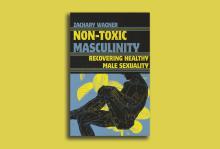
ENDORSEMENTS RARELY CATCH my eye, but some names that grace Zachary Wagner’s Non-Toxic Masculinity: Recovering Healthy Male Sexuality made my jaw drop. Amy Peeler and Kristin Kobes Du Mez — scholars renowned for tackling purity culture and male-centric theology — aren’t names you’d expect on a book like this. Most traditional Christian men’s thoughts on “biblical manhood” are not only flimsily dressed in culturally secular activities like playin’ sports and shootin’ guns, but also fatally based in unbiblical standards of hypersexual and violent behavior. Thankfully, Wagner swings over such pitfalls, laying out an expansive vision of masculinity rooted in the Jesus ideal: love for God and neighbor.
Wagner articulates how purity culture failed both women and men. “Many of the theological and cultural foundations of the movement were sub-Christian, even worldly,” he writes. “Dehumanizing theology leads to dehumanizing behavior” — behavior that includes fetishized virginity, body hatred, tolerated abuse, and sexual segregation. Purity culture, Wagner explains, calls men “animals” and “perverts,” confounding rhetoric I heard growing up in the church. This type of gendered, sexual denigration — especially when attributed, in part, to God’s design — only serves to further dishonor the imago dei of men and excuse sexual sin.
There’s a “pathetically low and impossibly high bar for masculine sexuality [that] trains men to resist, flee, and medicate (through marital sex) their untamable boyish immaturity rather than grow beyond it,” Wagner writes. The divinization of high libidos and heterosexual marriage can be doubly damaging for queer Christian men, who face additional stigmatization and erasure in the church.

WHEN REVIEWING FILMS, especially from a faith-based angle, it’s natural to look for concrete messages. Most mainstream films tell three-act stories, and those typically include a tidy resolution that presents a perspective or moral. But film is also an art form, and great art is more interested in creating atmosphere and asking questions than providing answers—not unlike faith, which teaches us to pose unanswerable questions and to sit with uncertainty.
For those who like tidy narratives, filmmaker Alex Garland’s work can be frustrating. Garland’s films are concerned with big concepts, many related to the characters’ desire for control at the expense of their humanity and others’ lives. However, his films rarely answer the questions they pose, leaving room for viewer interpretation. For audiences willing to engage with art that lives in an in-between place, this can be a thrilling, sometimes visceral, experience.
Garland’s latest film, Men, is his most tonally upsetting and his most abstruse. In it, Harper (Jessie Buckley) rents a country manor as a space to emotionally recover from the violent death—a possible suicide—of her husband, James (Paapa Essiedu). Her idyllic solitude is disrupted by a series of men (all played by Rory Kinnear) who threaten her emotionally, psychologically, and physically. The men appear in various forms, including a patronizing older man, a vulgar child, a manipulative vicar, a macho policeman, and a naked, silent stalker.
The concept itself is clear; Men is about the act of male intrusion on the lives of women. But it’s the way the movie communicates the theme that creates questions Garland would rather ask than answer.

Men uses imagery from Genesis 3 to reflect on the culturally assigned guilt of women and the patriarchal system that has perpetuated this guilt through a centuries-long history of interpretation.

She called for the end of "the boyfriend loophole," referring to the 20-year-old Lautenberg Act that barred individuals who are married, in a domestic partnership, or have children to own guns. Outside of that realm, domestic abusers are still allowed to own guns.

Women are showing that, despite being subject to the most violent and forceful manifestations of our patriarchal society and culture, they are willing to stand up in defiance and in solidarity to ensure that we as a society no longer allow incidents of sexual harassment and violence to go unchallenged, unnoticed, and unbelieved. And almost certainly, many other women who have experienced harassment or assault have decided understandably not to speak out. “Survivors don’t owe us their stories” explained Alexis Benveniste on twitter.
"Can women really lead in the church?" We still hear this question in our churches, often coupled with silly, irrational, or demeaning thinking. Would we put up with the same excuses for excluding men from leadership?

Rape. Domestic Violence. Acid Burnings. Female Infanticide. Human Trafficking. Emotional Abuse. Sexual Harassment. Genital Mutilation. These are just a few forms of sexual and gender-based violence (SGBV) that women and girls endure on a daily basis. But these assaults on the human spirit and sacred worth of women and girls will not have the last word.

From impossible standards of beauty generated by the fashion and make-up industry to the disproportionate number of women who are elected to political office, women and girls in America face a variety of obstacles in their journey of empowerment. But what also warrants attention are some of the less noticeable consequences when gender norms are so narrowly defined across the board. For instance, if we characterize women as submissive, emotional, or alluring beings, then what does it mean to be a man? And how might damaging myths and stereotypes about masculinity produce its own host of social ills?
These questions remain central to The Representation Project’s latest documentary The Mask You Live In, a film that ambitiously seeks to re-evaluate how masculinity is defined and expressed in America. According to director Jennifer Siebel Newsom, when mainstream culture views masculinity as a rejection of everything feminine, traits like kindness, healthy emotions, and constructive resolution of conflict become undervalued if not wholly disregarded for most men. Instead, the prevailing norms that young boys receive from their homes—as well as in movies, sports, and video games—push them to equate masculinity with domination, violence, stoicism, financial success, or sexual conquest.

There is room and need for men’s stories in the narrative of ending violence against women.
In blending our separate and shared experiences we find common ground. Together they lead us to what Dr. King described as "the fierce urgency of now." Every action we take today will save others the pain and suffering that is in our collective past. We need to add male voices and stories to those of women who have been speaking out about violence for decades.
Today I work as a co-coordinator in Oregon for the We Will Speak Out campaign. Our goal is to bring faith communities into the movement to end domestic and gender-based violence. This not a women’s movement. It is a movement of all people of faith to speak up and speak out to end the use of power over women and children. It is a movement that walks with survivors in their healing journey. It is a movement that strives to live into Jesus’ commandment to “Love one another as I have loved you.”
The "Broken Silence" report commissioned by Sojourners and IMA World Health indicates that the main issue in keeping pastors from speaking out about sexual and gender-based violence is a lack of knowledge on the issue. By speaking our truth and sharing our history we provide both the common ground and urgency to take action—together and now.

Sitting in Prajwala's small conference room adjacent to a chaotic market, I asked Sunitha where the strength came from to charge ahead into danger, violence, and sometimes even rejection by the women Prajwala served. I don't remember her exact words - but the gist was that the strength came not from herself, but from faith in her own experience of God. Not a God owned by some religious denomination, but the real One. That One who never let Sunitha down when it was time to pay the staff, deal with the mob, handle corrupt police, or remain resolute in the face of failure.
I have been blessed and humbled to have met these three women and remain inspired by what they do, particularly their commitment to empowering other women and girls. Sunitha told me to not just show up and feel sorry. Send money if you are inclined, but most importantly, speak about sexual slavery and trafficking to everyone you know. Don't allow anyone to pretend it isn't going on in your own community. Only when all men are vocal about this and intolerant of any abuse of women will things improve.
I pray that I may develop a sliver of the courage Anna, Anna, and Sunitha model.

Then there’s the more recent pragmatic argument: you should want gender parity because of how it will help your own family, business, or city. In short, inequality and violence harms the women who are your partners and friends. Some suggest that it’s mighty convenient that men are ready to take a stand when we finally see how it benefits us. But one female friend advised me that men should ease up on themselves: “Just deliver gender parity, and we’ll gladly forget HOW exactly you got there. Deal?”
According to the Global Gender Gap Report released at the latest World Economic Forum, it will take 80 years to reach gender parity in pay, status, governance, etc. In the year 2095, my daughters would be approaching 100 years old, and my mother, wife, two sisters, aunts and so forth would be long dead along with me and all the women that I care about today. Why wait 80 more years? It’s time for all men to lean in and help cut that number in half (and then some).
I’ve joked before that having two older sisters is what every boy needs to make the world spin around more equitably. If not biological sisters, then let’s find older sisters for every boy. Hopefully with gender parity cut down to 20 years from 80, my 7-year-old son will need to work twice as hard to “get ahead,” since he’ll finally be competing fairly with the other half of the sky. May it be so.

A valuable part of bystander intervention work in communities and schools, then, is helping men and boys understand how unhealthy social norms of masculinity can prevent them from intervening to stop sexual assault. Healthier forms of masculinity, however, can help boys and men become part of the solution by practicing prevention. As part of our Healthy Masculinity Action Project, we have developed some core values and actions to spread the message of healthy, nonviolent masculinity:
- recognizing unhealthy, risky, and violent masculine attitudes and behaviors that are harmful to the self and others
- replacing unhealthy masculine attitudes and behaviors with emotionally intelligent attitudes and behaviors that respect the self and others
- learning to empathize with the self and others
- supporting gender equity and other forms of equity
- learning and using emotional and social skills to constructively challenge unhealthy masculine attitudes and behaviors expressed by others
At MCSR, we don’t believe that men are naturally or biologically violent, or that somehow the need to kill, maim, rape, and more generally dominate is written into the language of our genes. If no genetic code binds us to violence, if no destiny of murder and mayhem irrefutably awaits us, we can choose to intervene when faced with unhealthy, harmful masculine attitudes and behaviors. We can choose healthy masculinity and present it as choice for men and boys. It’s on us to do so.

The roots of violence against women lie in gender inequality and the abuse of power, which in turn shapes our understanding of masculinity and femininity. What does it mean to be a man or woman in the 21st century? Many Christian authors argue that men should demonstrate leadership and competitiveness, often at the expense of women. Instead, we need to emphasize understandings of masculinity that recognize the diversity of men and allow space for women to also exercise leadership and fulfill their potential.
For Christians, our most important model of masculinity is that of Jesus Christ. As a leader and a compelling speaker and debater, Jesus demonstrated traditional masculine characteristics in his era. His miraculous powers put him in a unique position of authority. And yet he chose to live as a servant, to be nonviolent and to respect women, including relying on them for financial support. His life shows us that:
- all men and women are worthy of respect;
- masculinity does not need to be characterized by violence; and
- power should not be abused, but used in the service of others.

Violence against women and girls is not only a “women’s issue,” but a human rights issue that affects all of us. We are indeed “caught in an inescapable network of mutuality,” as Dr. King said, “Whatever affects one directly, affects us all indirectly.” The abundant life that Jesus offers is deeply connected to the well-being of others. (John 10:10)
For men and women to experience reconciliation and wholeness, we must prayerfully work together for gender justice. Download our free prayer calendar. It’s full of facts and prayer requests to help you put your faith into action to end violence against women.
Share it during Women’s History Month with your sisters and brothers, your sons and daughters. Pray through the calendar as part of your Lenten journey. Encourage your friends and faith community to raise their voices to make violence against women history.
Together, through prayer and action, we can imagine a new way forward for both women and men—for the flourishing of all God’s children.

Church leaders often worry that Sunday morning is the “most segregated day of the week.”
On Sundays, churchgoers gather inside congregations that are remarkably monochromatic. Whites with whites, blacks with blacks, Latinos with Latinos, Koreans with Koreans, and so on.
This phenomenon, however, is more than discomfort with diversity. It is also a search for safety. In the historic black church, for example, worshippers can assert the dignity and worth that a white society denies them. For three hours on Sunday, the need to avoid offending whites doesn’t govern their lives.
As we are learning in Ferguson, Mo., African-Americans feel unsafe — far more than many whites have realized. Young black men, for example, flinch whenever a police car passes — a vulnerability that money, job, and education can’t overcome.

New York Mets second baseman Daniel Murphy recently took some heat from a few peers of his in sports media for taking the first few games off of the new baseball season to be with his wife while she gave birth to their baby. In particular, former NFL quarterback Boomer Esiason said on the WFAN radio show that Murphy needed to “get his ass back to work,” and that Murphy's wife should have undergone a C-section before the beginning of the season so he would not miss any games.
This kind of language is insensitive enough, but it is especially shocking coming from Esiason, who is a father to a child with special needs himself. Boomer has since retracted his comments, apologizing not only for his insensitivity, but for dragging Daniel's personal life, and that of his wife, Tori, into the public conversation. But if anything good can come from this, it is that it has raised the issue of a father's role in the birth in the early months or years of his child's life.

Sojo editors looked back at the blogs of 2013 and found that these were the 10 most widely read Sojourner blog articles of the past year.
JAMES DOBSON and Kurt Bruner get three things right in their recent novels Fatherless and Childless: Euthanasia is wrong, married couples should make time to have hot sex, and stay-at-home moms should get some respect.
Pretty much everything else in the novels, the first two-thirds of a trilogy (book three, Godless, is due out in May 2014), is way off and internally incoherent. The plot starts in 2042, when an aging population and economic malaise have motivated the government to legalize euthanasia. Businessman Kevin Tolbert, recently elected to Congress, lectures his peers about the need to stop euthanasia and encourage parenthood in order to revive the economy. His wife Angie’s high school friend Julia Davidson, an allegedly progressive and feminist reporter, is assigned to write a story about him (lecture alert). Meanwhile Kevin and Angie struggle (with mercifully few lectures) with their third child’s diagnosis of Down syndrome. Subplots deal with a disabled teen and an elderly dementia victim who turn (or are pushed) to euthanasia.
Actual euthanasia, as disability-rights groups such as Not Dead Yet have documented, often turns on society defining “dignity” according to physical ability and health instead of the innate value of a human being. These novels, however, ask us to believe the main impetus for euthanasia would come from the drive to reduce the federal deficit, to deal with “swelling entitlement spending.”
What spending? The novels’ elderly and disabled characters are drawn or pushed toward euthanasia because of family financial troubles: There is no mention of any Social Security, Medicare, or Medicaid help going to any of them.

As the proliferation of pink points to October as Breast Cancer Awareness Month, shades of purple warn us not to forget Domestic Violence Awareness. The story in the Gospel of Luke sheds light on what tenacity, in any form, can accomplish. The widow did not cease in her efforts. Someone had wronged her; and she wanted the situation to be made right. We must be equally diligent in our determination to obliterate domestic violence. We must not become comfortable with reporting abuse after the fact. Our judicial officials, police personnel, school counselors, religious institutions to name a few, must take even the slightest whisper of harm seriously. We must not succumb to the foolish reasoning that “snitching” will put more African American men in prison. If we keep talking, teaching, sharing, and behaving as good stewards of God’s creation, there is nothing or no one to prevent us from getting a handle on domestic violence — and not putting an abusive hand on each other.
Survivors of domestic violence cope in many ways. Some engage in substance abuse while others tend to “over-spiritualize” their experiences. My mother chose to commit suicide to deal with her pain. Today, Yvette Cade travels the country speaking about her life. She is on the mend physically, but she is still afraid. Nonetheless, through her fear, she lifts her voice. Not one more person should have be battered or bruised before someone dares to help. Before we dare to help.