liberation

More Than Sobriety
The documentary A Bridge to Life profiles a residential program in rural Virginia for men overcoming addiction; founder and pastor William Washington believes environment is key to sobriety. By centering structure, job training, and hope, the program boasts a 5% recidivism rate. PBS

I WRITE THIS month’s reflections with a heavy heart as the federal government’s violent attacks on immigrants continue. As a Korean-descent immigrant, I understand how scapegoating, hatred, and being blamed for things beyond our control can be exhausting for body and soul. Our communities are on the brink of despair; our hopes for a better future are shattering.
And yet, we hold on to our faith. We know we are not alone. God is our refuge. We have friends, colleagues, and neighbors who are in solidarity with us and who pray for us. As we face lawlessness geared with imperial might, we believe that our God, the only true “king,” will “judge between the nations” and “settle disputes.” Then we will beat “swords into plowshares” and “spears into pruning hooks.” God is the ultimate judge of all (Isaiah 2:4).
The transformative path of Zacchaeus inspires me. His story is a model of faithfulness. Whether or not you claim Jesus as your savior, I believe that you can change by caring for the poor and oppressed, participating in reparations, and sharing your abundant gifts. After all, the gospel says so.

I LOVE TO walk. I came by this love naturally. My mother, now well into her 80s, is a dedicated walker, spending at least 30 minutes each evening walking on her treadmill. In earlier years, especially when the winds of the Kansas plains died down late in the day, she would walk the half-mile dirt road to our mailbox and back.
I’ve added three Labrador retrievers to my walking ritual — Hershey, Pippi, and Rue — who delight in a daily routine of getting outside, noses to the ground, tails in the air, ears perked and attuned. Responding to the rattle of their leash, each one’s anticipation is uniquely their own — a hop, a tail whipping against my leg, a wet nose urgently working to get the collar in place.
In recent years, after experiencing the awe of walking in the Pacific Northwest, where lush forests and rippling rivers drew my husband and me to their sacred cathedrals, we have started structuring vacations around where we want to hike. Step after step, we take in nature’s altars, praying with our feet, ingesting nature’s elements in holy, full-bodied communion.
In her book Enchantment: Awakening Wonder in an Anxious Age, Katherine May articulates what I feel when I’m walking. Enchantment, she writes, evokes a deep knowing that “something is there, something vast and wise and beautiful that pervades all of life. Something that is present, attentive, behind the everyday. A frequency of consciousness at the low end of the dial, amid the static. A stratum of experience waiting to be uncovered.” This is precisely why I have taken my worship on the road.
The Bible is replete with people who go walking and end up finding themselves in the process. Patriarch Abram, for example, was called to leave his home in Ur and walk to a new place in a more fertile valley where he made his new home with Sarai. Or consider the ancient Israelites who escaped the oppressive Egyptian pharaoh — and walked in the desert for a generation. Also don’t forget one of the Bible’s most familiar walks: the one taken by Ruth and her mother-in-law, Naomi. While the narrator shares few details of their journey, their trek from the hinterlands back to Naomi’s hometown must have been an adventure of dangerous proportions.
Walking requires a willingness to leave one place and go to another. And somewhere along the road, in the liminality of “not-there-yet,” transformation becomes possible.
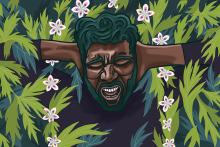
SEVERAL OF THIS month’s lectionary readings deal with the tensions of navigating wrongdoing, judgment, vengeance, and forgiveness. They call readers to forgive — and forgive again: not just once, twice, or seven times, but at least 77 times and counting (see Matthew 18:22).
These texts have been used throughout history to trap people in positions of disempowerment, abuse, and enslavement. Consider, for example, how victims of intimate partner violence have been pressured to forgive and return to their abusers, who then proceed to hurt them again. Or how entire marginalized communities are expected to “get over it,” whether that is the colonization of Turtle Island, enslavement, or generations of misogynist, queer- and transphobic policies, laws, and violence. In light of the rampant misuse of these texts, we’re right to be wary of biblical interpretations for how to handle conflict that reinforce domination. The texts tend not to deal directly with inherent interpersonal and structural power dynamics. We must do that work ourselves. Any of us preaching the lectionary this month must also be careful.
Attending to the power dynamics of these passages doesn’t mean we dismiss them as useless. Rather, such attention helps us discern how these texts invite and bear witness to God’s presence in processes of interpersonal, intergenerational, and even international healing. They call us to attend to what our own pain has to teach us and to seek hope through community life. And they promise that throughout our attending, God will abide — waiting patiently to see us through.

SOON I WILL be stepping away from the church I co-founded 15 years ago. After the beautiful struggle of seeing it get rooted, Metro Hope Church remains a small but vibrant, justice-minded, multicultural community in the heart of East Harlem. Our reach continues to extend beyond our neighborhood throughout the city and to other parts of the country.
My reason for stepping away isn’t, thankfully, some scandal or health concern. Nor is it burnout (I’ve been there) from the pressures of keeping a church sustainable. Nor is it managing the diversity of cultures and personalities, nor even the heartbreak of seeing people leave. Nor is it even how pastors must, at the same time, draw from the resources of theology; management and leadership thought; and diversity, equity, and inclusion — all while navigating a dicey political climate.
Pastoral expectations can be flat-out overwhelming. But my reason for stepping aside is simply because the time feels right. Today, I’m able to pass the baton with much hope through a community that will continue to live out and pursue the good news of liberation and wholeness.
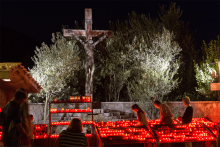
Many of the white evangelical churches I have visited and grew up in framed Good Friday as a celebration. I have attended services that centered around dramatic skits or clips of Mel Gibson’s The Passion of the Christ in order to evoke an emotional response. Another service treated Good Friday like a visitation where congregants were encouraged to reflect on their “friend Jesus” and share words of gratitude.

Danté Stewart is a product of two of the most powerful traditions in the United States: the Black Christian tradition and the Black literary tradition. In his new book, Shoutin’ in the Fire: An American Epistle, Stewart traces how these traditions have touched his life and why he believes they can heal the Christian church and the United States.
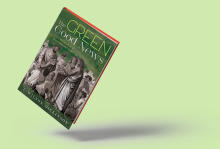
2020 WAS A YEAR of ecological breakdown. Simultaneous climate disasters have roared, including the worst wildfire season in the history of California and, as I write this, the most active hurricane season on record in the Atlantic. Meanwhile, freak wind storms called derechos plagued the Midwest and heatwaves baked the Southwest. In the midst of such devastation, it can seem downright irresponsible to search for hope. Yet, the paradoxical call of the cross is that, in the deepest darkness, joyful and beautiful transformation might be possible.
In The Green Good News, T. Wilson Dickinson does not settle for platitudes of hope. He does not affirm, as is so tempting for Christians, that all will be fine because of faith in God. Instead, Dickinson finds good news in the possibility of a beautiful and joyful set of responses to ecological breakdown. With humble writing grounded in stories of his own life, Dickinson offers a reading of scripture that does not separate the liberation of creation from the liberation of the poor but follows the vision of Jesus, in whom all creation—human and more-than-human—holds together. In a refreshing move, The Green Good News sheds the romanticism of creation care in favor of a biblically based environmental justice from the margins. Dickinson unequivocally offers a call to conversion from neoliberalism to solidarity with all oppressed creatures. This ecological conversion takes place at the heart of the Christian witness: the table.

Saint Francis praying to sister moon and brother sun has changed me. I must confess I am going through a conversion, yet another one. But this time much bigger than I could imagine. I have begun listening to the birds. I have started paying attention to the rivers. I have stopped to talk to trees. As a city boy who grew up in the dirty streets of Sao Paulo, I am becoming closer to the pulsing heart of forests, animals, rocks and skies, and it has expanded my allegiance to God.
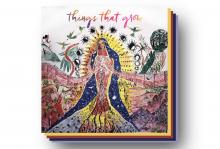
Among the Branches
Retro sounds meet recent dangers in the album Things That Grow. Backed by Memphis rock musicians, songwriter Tracy Howe sings of liberation from violence, racism, and environmental destruction. Soul and gospel lift her prayerful words and guide listeners forward on the shared “justice road.” Just Love Music

Nearly all of the characters K encounters (human and replicant alike) are white. This is in stark contrast to the globalized aesthetic of the city, carried over from the original movie. It could be argued that in a world where a white man like Leto’s Niander Wallace is the one person creating a sizable chunk of the population, it’s not surprising that the creations themselves lack diversity. However, the reality for the film’s casting decisions is likely less about artistic interpretation, and more just plain laziness.
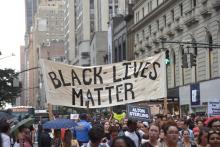
On Nov. 15 the Black Lives Matter Global Network released a statement on the election of Donald Trump, reports Mic. The organization stated that what remains true — and was proven by the results of the 2016 U.S. presidential election — is that “when black people and women build power, white people become resentful.”
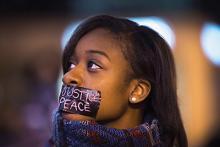
“BLACK WOMEN AND GIRLS are killed by the police, too.” I can’t tell you how many times I’ve received a blank stare when I made this statement, even in activist spaces. Occasionally I’ll see a few affirmative nods, but overwhelmingly there is apathy. I leave with a sick feeling, wondering, “Where is the rage and protest for my sisters?” and “Who will fight for my life?”
In May, Black Lives Matter, Black Youth Project 100, and Ferguson Action came together for a national day of action for black women and girls. We wanted to shed light on the fact that black women and girls, in all our complexities, have been erased from the broader narrative of police terrorism and modern-day lynching in this country. Cities such as Oakland, Calif., New York, Philadelphia, Detroit, and Miami all participated in powerful acts of public resistance that involved reading the names of women who have been killed by police and using the hashtag #SayHerName as an awareness tool on social media.
Speaking our sisters’, daughters’, and mothers’ names at a vigil on a day set aside to acknowledge our humanity is powerful, because it says: When the world has forgotten Mya, Aiyana, Tanisha, Rekia (and so many others), we will not forget.

Bio: Erika Totten is a leader in the Black Lives Matter movement in Washington, D.C., and the black liberation movement at large. She is a former high school English literature teacher, a wife, a stay-at-home mom, and an advocate for the radical healing and self-care of black people through “emotional emancipation circles.”
1. How did you get started with “emotional emancipation” work?
Emotional emancipation circles were created in partnership with The Association of Black Psychologists and the Community Healing Network. I was blessed to be one of the first people trained in D.C. I had been doing this work before I knew what it was called. My organization is called “Unchained.” It is liberation work—psychologically, mentally, spiritually, and emotionally.
I want to tell people to be intentional about self-care. Recently, we had a black trans teen, who was an activist, commit suicide. A lot of times you need to see a counselor or therapist, which is often shunned in the black community. Because of racism, we are taught that we need to be “strong.” But it’s costing us our lives. As much as we are dismantling systems, we have to dismantle anything within ourselves that is keeping us from experiencing liberation right now.
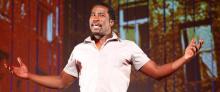
“I AM A storyteller,” says Daniel Beaty, “and my purpose in the world is to inspire people to transform pain to power.”
He was first inspired to share his stories when his third-grade teacher showed a videotape of Martin Luther King Jr.’s “I Have a Dream” speech. Now as a writer, actor, singer, teacher, and motivational speaker, his storytelling is expressed in a dizzying array of different forms and outlets. The week in April that Sojourners’ editorial assistant Rebecca Kraybill interviewed him, Beaty was doing daily performances in Los Angeles of a one-person play he wrote on the life of performer and activist Paul Robeson, “The Tallest Tree in the Forest” (in which he plays 40 characters and sings 14 songs) and, during the day, taping for a Ford Foundation-funded documentary on work he does with children of incarcerated parents.
This was just a fortnight after Beaty finished a six-week speaking tour in support of his memoir, Transforming Pain to Power: Unlock Your Unlimited Potential (Penguin-Random House). He’s also the author of a children’s book released in December 2013 by Little, Brown and Company, Knock Knock: My Dad’s Dream for Me, with graphics by award-winning illustrator Bryan Collier, which is an adaptation of a poem Beaty wrote about his experience growing up with an incarcerated father. “Knock knock down the doors that I could not” is one especially poignant line the father in the book writes to the son; it carries a call to healing and liberation that is found in all of Beaty’s work.
Kraybill talked with Beaty about the effects of mass incarceration on families, the power of a “theater sanctuary,” and how the arts call us toward “the capacity to do better.”

THE SAGA OF Elijah that we are following in 1 and 2 Kings culminates in a poignant parting as the prophet prepares to be taken up into heaven. His disciple, Elisha, makes a final all-or-nothing request: “Please let me inherit a double share of your spirit” (2 Kings 2:9). Elijah states a condition for the fulfillment of Elisha’s prayer: “You have asked a hard thing; yet, if you see me as I am being taken from you, it will be granted you; if not, it will not” (2:10). It is as if Elisha has to look unblinkingly into the reality of their separation. If he is to inherit the prophetic mantle and spirit of his teacher, he must claim the vocation in its entirety. He is now to be the prophet.
The story is an uncanny pointer to the truth that John the Evangelist highlights in Jesus’ last words to his disciples: “I tell you the truth: It is to your advantage that I go away, for if I do not go away, the Advocate will not come to you ...” (16:7). John even echoes the “double spirit” theme in 14:12, when he has Jesus assure us that our prophetic endeavors will be more abundant and powerful than Jesus’ own!
The season following Pentecost helps us realize that we are the prophets now, vested with the mandate and endowed with the gifts for enacting the good news of liberation.
When, as is true today, the richest 10 percent own 85 percent of the world’s wealth and the poorest 50 percent live off the crumbs of 1 percent of the total global wealth, you’ve created a market where slavery will thrive.
Last Saturday, August 20, 2011, I got arrested. Having never been arrested before, it feels strange to write that. Like most Americans I associate getting arrested with committing egregiously unlawful acts that require punishment
 Whenever I give talks on the effects of the Israeli occupation on Palestinian livelihood, the status of nonviolence as a means to resisting the occupation, and how I believe nonviolence is the only way to move forward to resolve the conflict and create a lasting peace between Israelis and Palestinians, one of the first and immediate questions I get from foreign visitors to my office in Bethlehem is, What you said is good, but what about the Muslims? Do they also believe in nonviolence? Do they understand it?" Even if I don't mention religion in my presentation -- and I rarely do -- this question always seems to make its way in our discussions.
Shakespeare said a rose by any other name would smell as sweet. Maybe, but a Stink Rose by any other name (say... garlic?) might get more play.
On July 19, Campus Crusade for Christ announced its plan to officially change its name to Cru in early 2012.
Brown v. Board of Education had not yet been fought in the Supreme Court when Bill and Vonetta Bright christened their evangelical campus-based ministry Campus Crusade for Christ in 1951. The evangelical church context was overwhelmingly white, middle class, and suburban. The nation and the church had not yet been pressed to look its racist past and present in the face. The world had not yet been rocked by the international fall of colonialism, the rise of the Civil Rights movement, the disillusionment of the Vietnam War, the burnt bras of the women's liberation movement, the fall of the Berlin Wall, or the rise of the Black middle class (more African Americans now live in the suburbs than in inner cities). In short, theirs was not the world we live in today. So, the name Campus Crusade for Christ smelled sweet. Over the past 20 years, though, it has become a Stink Rose ... warding off many who might otherwise have come near.