Immigration
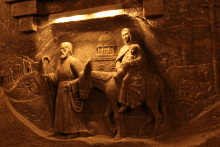
Late last week, the White House announced new enforcement measures at the U.S.-Mexico border. Among other things, these measures expand the pathway for migrants from Haiti, Cuba, and Nicaragua to receive two years of legal entry if they have an eligible U.S. sponsor — and allow the administration to expedite removal of migrants from these nations who cross into the U.S. from Mexico without documentation. It’s unclear what the full human impact of these measures will be, but when I read the news, my heart broke for those whose pathway to safety just slipped even further out of reach.
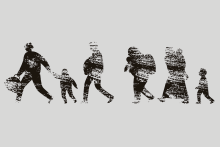
I KNEW ALMOST immediately it was bad news.
“Maria was separated at the border from her auntie,” my friend said in a phone call. “We don’t know where she is. Her auntie was sent back to Mexico and we think is being held by a drug cartel. They separated them under Title 42.”
I felt sick. Four-year-old Maria (not her real name) and her aunt were fleeing violent circumstances. They arrived at the U.S.-Mexico border to exercise their legal right — protected by both international and U.S. law — to request asylum, as other members of Maria’s family had done prior to the COVID-19 pandemic.
In March 2020, everything changed. The Trump administration, through the Centers for Disease Control and Prevention (CDC), invoked a rarely used subsection of public health code called Title 42 to close U.S. borders to asylum seekers and unaccompanied children under the guise of preventing the spread of COVID-19. It made that decision against the advice of many public health experts, including some within the CDC, who agreed there was no public health rationale for a ban on asylum seekers as a group. Though the border remained open to truckers, temporary workers, students, and others, border agents turned back asylum seekers to Mexico or their home country.

Charismatic leaders such as Jean Vanier can inspire and transform us. But when these leaders commit abuse, how do the movements they ignite pick up the pieces?

JANUARY OPENS THE season of Epiphany: In the North, the light begins to last longer, and we reawaken to the world outside our doors. Each Jan. 6, my family performs the old European Epiphany ritual of “chalking the door” to our home. While I pray, my spouse hoists our kids up to write the blessing on our front lintel. This year the markings will look like this: 20+C+M+B+23. Twenty marks the beginning of the year. The letters recall the Magi (Caspar, Melchior, and Balthazar) whose visit we celebrate and also the Latin prayer: Christus mansionem benedicat (“May Christ bless the house”). The final number closes out the year. The markings are strange. We’re asked about them often. We recall the great light that led the people out of Egypt, the great star that guided the Magi, and the Holy Family’s hospitality. These signs keep evil spirits out and invite God’s Spirit in. And that’s a lot to explain to the FedEx guy.
But Epiphany is a lot! It invites us to explore the complex roles we play in God’s redemption: our complicity in evil as we reach for the good, our relationship to violence, and how we’ll practice hospitality post-COVID.
In this season we also travel with the community of Jesus-followers at Corinth. Much like them, Christians today have become increasingly divided — even among those who agree on the values of compassion, community, and caring for those most vulnerable. The pandemic has made it difficult to find a vision for how to live out our shared values. What striking illumination will this season bring?

A fringe Christian ideology helped stoke an out-of-control gun culture. People of faith are working to take back the conversation.

The message of assimilation makes me uncomfortable because it requires me to celebrate the loss of other people’s culture, traditions, and languages in order to alleviate the fears that white people, including Christians, might have about a diverse society where their position as power brokers of society may be threatened. It is akin to saying, “White Christians, please do not fear immigrants because they, too, will submit to white supremacy and blend into it as best as they can, even with their non-white skin and features.”
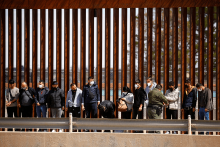
The Biden administration is fighting a legal battle to end the use of Title 42, a policy that has effectively closed the U.S. Southern Border to asylum-seekers for more than two years. Numerous faith-based organizations that work with immigrants have called on the administration to return to pre-pandemic asylum processing.
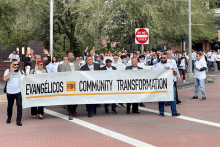
One measure, an executive order from Florida Gov. Ron DeSantis, jeopardizes foster care licenses for anyone who takes in unaccompanied immigrant children who arrive in the country without authorization. The other, a bill being fast-tracked through the state legislature, would bar state and local governments from contracting with businesses that knowingly transport undocumented immigrants, including bus companies or airlines.

While white evangelical support has decreased, Black Protestant support for a pathway to citizenship increased from 70 percent in 2013 to 75 percent in 2021. Advocates are still working to pass a pathway to citizenship this spring. Immigration justice work is now widely recognized as anti-racism work — work to dismantle the systems of white supremacy that oppress us all. Our theology of the imago dei, of the image of God in every person, fuels both our voter protection advocacy and our work to create a pathway to citizenship for undocumented immigrant people. We are working to honor the God-given dignity and full personhood of every person by securing the legal right to vote and a legal status for undocumented immigrant people.
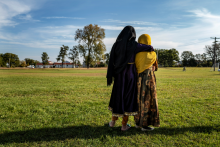
In a hearing on Capitol Hill last week, leaders from humanitarian nonprofits and resettlement agencies asked the House Homeland Security Committee to pressure the Biden administration to do more to help resettle evacuated Afghans into U.S. communities.
Their demands come as thousands of Afghans who had initially been housed at U.S. military bases in Virginia, Wisconsin, Texas, New Jersey, New Mexico, and Indiana are moving into communities in the United States. At least an additional 55,000 Afghans remain at the military bases.

Democrats had hoped to include a provision in President Joe Biden’s proposed $3.5 trillion budget that would have given citizenship to millions, including Dreamer immigrants, brought to the United States as children, who are protected from deportation under the Deferred Action for Childhood Arrivals (DACA) program. But on Sept. 19, Senate parliamentarian Elizabeth MacDonough — a nonpartisan, unelected staff member who advises lawmakers about what is acceptable under the chamber's rules and precedents — advised against adding a provision for citizenship in the budget reconciliation process.
Religion can be a source of resilience and strength for individual refugees as well as the refugee community as a whole. Mosques, temples, and other sites of worship and ritual practice foster rich social networks, generous mutual aid, and meaningful forms of spiritual and cultural connection. Religious institutions, long recognized as pillars of ethnic community life, are especially vital for refugees who have experienced the traumas of war, forced migration, and resettlement.
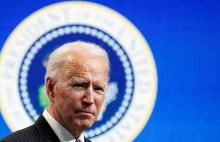
Throughout his presidential campaign, Joe Biden said he would restore America’s role as a “leader” in refugee resettlement. And despite a discouraging start on fulfilling that promise, faith leaders and other advocates for refugees are determined to hold him to his commitment.
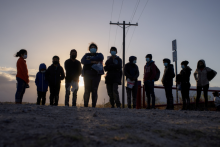
This March, U.S. Customs and Border Protection agents encountered nearly 19,000 unaccompanied children at the U.S.-Mexico border — a record high. To many, this number was shocking; media outlets used militaristic language to describe the arriving minors as a “surge.” However, this influx is not surprising given seasonal migration patterns and the horrific immigration policies instated by the Trump administration — policies the Biden administration has not yet repealed. The current administration must address the immediate needs of people seeking refuge at the southern border while also tackling the root causes of forced displacement and migration: U.S. imperialism.
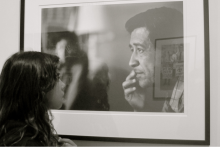
In a White House proclamation, President Joe Biden declared March 31, 2021 as César Chávez Day. Biden called upon “all Americans to observe this day as a day of service and learning, with appropriate service, community, and education programs to honor César Chávez’s enduring legacy.”
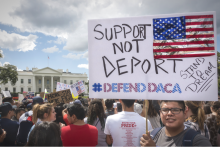
This year is the best chance we have had in nearly a decade to change our broken immigration system.
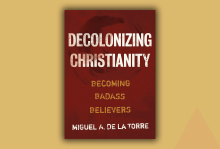
EUROCENTRIC CHRISTIANITY, since the days of Constantine, has predominately served as an apologist for authoritarian regimes, be they emperors, kings, crusading popes, or military dictators. In the last century alone, Eurocentric Christian jargon sustained and supported brutal regimes guilty of unimaginable human rights violations. Think of how the Catholic Church, fearing the loss of power during Spain’s Second Republic, threw its support behind the right-wing politics of the usurper Francisco Franco, who cloaked himself as a defender of religious liberties. The church stood by him as he ignited a civil war against the seculariziation of society, turning a blind eye to the Spanish killing fields. ...

My kids are the great-granddaughters of Chinese immigrants, but until recently, I hadn’t shared much about our immigration story or been a vocal advocate for immigrant rights. Instead, like many evangelicals, I had absorbed hardline views on the subject.
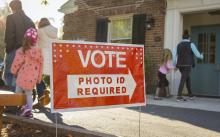
Immigration is never out of sight for those whose lives depend on it, even while it may have not been a topic of choice for presidential and vice-presidential debates this year. Candidates and lawmakers on both sides of the aisle have used the stories and experiences of immigrant people for political gain. But for many immigrant people, engaging in the larger immigration discourse and advocacy work is primarily about our families and our communities: their present reality and their future opportunities. It is not about touting a “welcoming” nature or defending a seemingly attacked territory or national identity as politicians and others have often approached it.

IN JUNE, NEARLY 700,000 DACA recipients could breathe a sigh of relief when the U.S. Supreme Court ruled against the Trump administration’s decision to rescind the Deferred Action for Childhood Arrivals program. The court determined that the basis for President Trump’s action was “arbitrary and capricious.” The grounds presented for termination failed to consider the impact of the program’s rescission, wrote Chief Justice John Roberts.
The grounds of the ruling are important because the court did not address whether DACA was legal. For now, DACA remains fragile. People who have benefited from the program, put in place by executive action under President Barack Obama in 2012, can continue to obtain valid work permits and are protected from deportation. An estimated 130,000 people would have been eligible to submit new applications for the program, except that the Trump administration released a memo on July 28 saying it would “reject all initial requests for DACA and associated applications for Employment Authorization Documents.”
This momentary reprieve and upsurge of hope resulted from decades of fierce social, political, and legal organizing by undocumented youth and their supporters, often at great personal risk. The Trump administration may decide to attack DACA again. It would likely be a costly undertaking since a substantial bipartisan majority of Americans support DACA.
While DACA prevents the eviction from the U.S. of a sector of immigrants, it does not dismantle the massive deportation machine that operates in this country nor create a pathway to citizenship—key components of comprehensive immigration reform. Authentic immigration reform begins with the recognition that U.S. immigration laws, from their inception, have been informed by discriminatory narratives. The first immigration law, the Naturalization Act of 1790, made it possible for those born elsewhere to become citizens—but only if they were “free white persons” (“white” meaning certain Europeans, and “persons” essentially meaning men), excluding enslaved people, Native Americans, those without property, most women, and all others not defined as white. Only property-owning white male citizens could vote.