immigration and customs enforcement
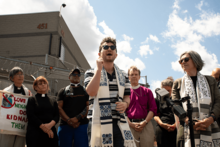
Walking into the Immigration and Customs Enforcement Delaney Hall detention facility in New Jersey, Rev. Robin Tanner quickly noticed that the windows were blocked off. Tanner, a Unitarian Universalist minister in Summit, N.J., pointed out one issue for people inside: “For many people in their faith tradition, [prayer] is a daily act,” she said. Muslims are instructed to face the city of Mecca during their five daily prayers, and a Muslim detainee wouldn’t have any way to know which direction to pray.
But for months, Amadou, a father and truck driver from Burkina Faso, whose full name Sojourners is withholding for his safety, struggled to convince guards to let him pray with other detainees at all. In Islam, Friday prayers, or salat al-Jumu’ah, are not only obligatory for every nondisabled man but are required to be performed in congregation. Amadou was detained 16 months ago and transferred to New Jersey last year. In Delaney Hall, it took four months for Amadou and other Muslim detainees to gain access to occasional gatherings for Friday prayer, finally prevailing in time for Ramadan.
ICE has a stated duty to provide spiritual care for those in its custody. According to ICE manuals, detainees must be provided with “regular opportunities to participate in practices of their religious faiths, limited only by a documented threat to the safety of persons involved in such activity itself or disruption of order in the facility.” As ICE continues to fail even its own guidance, a host of faith leaders have emerged to chip away at the agency’s spiritual blockade of those in its custody.
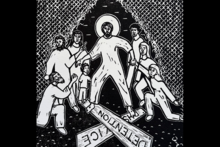
As we journey through Holy Week, I’m meditating less on Jesus on the cross—I see that every day—and am instead meditating on Jesus razing hell.
Israel’s displacement and killing of Palestinians continues; the U.S. continues to escalate the war with Iran; and immigrants are still being hunted down by cowards in masks. Every day we see Christ crucified. What does the hope offered by Jesus, that these forces of evil can be stopped, look like? What are the lessons for us on the road from the crucifixion to the resurrection?
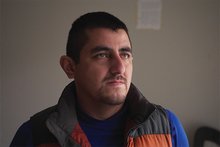
ON JAN. 8, Alberto Castañeda Mondragón was taken to an emergency room in Edina, Minn., with head injuries. It was a few hours after he’d been stopped and detained by Immigration and Custom Enforcement agents. He was then transferred to the Hennepin County Medical Center in Minneapolis. According to the Associated Press, “The officers told nurses Castañeda Mondragón ‘purposefully ran headfirst into a brick wall.’” But AP consulted with a doctor who confirmed that his injuries—including eight skull fractures on the front, back, and both sides of his head and five brain hemorrhages—were inconsistent with walls or falls. Castañeda Mondragón recalled “ICE officers striking him with the same metal rod used to break the windows of the vehicle he was in.”
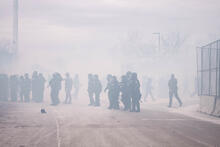
In response to the crisis of mass deportation, faith leaders and clergy are taking a moral stand. Whether it’s clergy protesting in Minnesota or faith-based mutual aid networks dedicated to assisting immigrant communities, people of faith are fighting against injustice. What comes next? What demands can Christian leaders make to shape our collective response beyond immediate protest and protection?
A framework for real justice going forward has three parts: Abolishing Immigration and Customs Enforcement and related agencies; welcoming immigrants through immigration law that includes rather than excludes; and participating in truth and reconciliation work, which may take various forms—including national or local truth commissions.

On Jan. 22, federal authorities arrested at least two organizers linked to a nonviolent protest inside Cities Church in St. Paul, Minn., that interrupted services at a congregation where one of the pastors doubles as the acting director of the Immigration and Customs Enforcement St. Paul field office.
Celebrating the arrests, Attorney General Pam Bondi vowed through a post on X: “WE WILL PROTECT OUR HOUSES OF WORSHIP 🙏🏻”.
Rev. Nekima Levy Armstrong, a Minneapolis activist and ordained minister, was one of the organizers arrested. Referring to ICE, she told the Canadian Broadcasting Corporation on Feb. 4 that “They have been physically brutalizing people, dragging people from their homes, kicking down people’s doors, coming into people’s homes with big guns, arresting people unjustly, even U.S. citizens, and people who are here legally.” She added, “To have someone serving as a pastor who is also overseeing these agents is unconscionable, unacceptable, and antithetical to the Christian faith.”
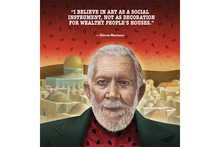
THIS ISSUE GOES to print as the Trump administration wages a massive, deadly attack on Minnesotans under the guise of immigration enforcement. People on the full spectrum of citizenship status, including children, have been violently taken from streets, homes, and businesses. Immigration and Customs Enforcement agents have killed two nonviolent observers. Countless other observers and protestors have been assaulted, tear-gassed, and arrested, including many clergy. Across the country, including Minnesota, people are resisting brutal government overreach by organizing food, rides, protection, and public advocacy. We walk in prayer and solidarity with them.

SHAFTS OF SUNLIGHT streamed through the clouds on an early November morning when I set out with three older women for a two-hour drive from Los Angeles to the ICE detention center in Adelanto, Calif. I was traveling with Rev. Betty Stapleford, a retired Unitarian Universalist minister, and her affable, wise-cracking friends, Maureen Kimberling and Ellen Deeb. While this was Kimberling and Deeb’s second visit, this was my first time visiting a detention center.
Rev. Betty—as she is affectionately called—began making these monthly trips in 2014, taking seriously Jesus’ command to visit the sick and imprisoned. Her outreach is supported by Clergy and Laity United for Economic Justice, a nonprofit coalition of inter-faith congregations that advocate for the rights of low-wage workers and immigrants.
She was dressed in vibrant purple, a color she wears every day, partly inspired by Jenny Joseph’s poem “Warning,” with its famous opening lines: “When I am an old woman, I shall wear purple.” Recalling her final day as a minister in a church, she said she delivered a sermon about “finding what you love that brings you joy”—even something as simple as your favorite color. Joy would be challenging to find at the place we were headed.
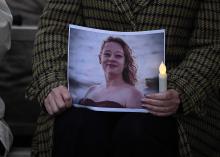
In the days after an Immigration and Customs Enforcement agent shot and killed 37-year-old Renee Nicole Good in Minneapolis, her final words clung to me.
“I’m not mad at you,” she said. Her eyes were earnest.
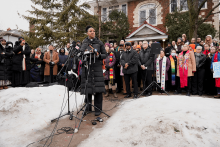
After an Immigration and Customs Enforcement agent shot and killed Renee Nicole Macklin Good, faith leaders in Minneapolis joined demands that ICE leave their city and repent.
“We have our demands. Hundreds of clergy across this state who have gathered together across faith traditions are standing with the rest of Minnesotans to say not again,” Minister JaNaé Bates Imari, co-executive director of ISAIAH, a multiracial interfaith nonprofit, told a crowd of Minnesotans at a press conference.
The press conference, organized by ISAIAH, drew more than a hundred leaders from numerous faith traditions, representing the breadth of the city’s religious communities. ISAIAH presented its demands: That ICE agent Jonathan Ross be arrested, charged, and prosecuted for killing Good; that ICE immediately cease its surge in operations in the state; and that Congress investigate the Department of Homeland Security.
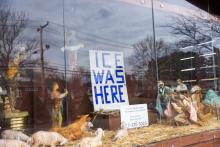
On Thursday, Dec. 11, a man dismantled a nativity scene depicting Immigration and Customs Enforcement arresting the Holy Family at a Charlotte church. The now-viral video depicts the man knocking over the mannequins in ICE uniforms who appear to be detaining a kneeling Mary and Joseph.
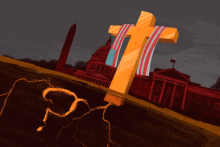
Over the past several months, the Department of Homeland Security has steadily released promotional videos recruiting Americans to join DHS agencies like Immigration and Customs Enforcement. These videos include clips of military agents loading into armored vehicles, bombs falling from planes, and overhead shots of barren cities.
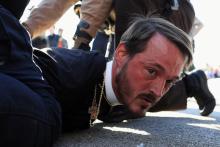
On Nov. 14, more than 100 clergy gathered to raise their voices to demand the closure of the Immigration and Customs Enforcement processing facility in Broadview, Ill., the release of all detainees, and that the Department of Homeland Security honor federal law by allowing detainees spiritual care.
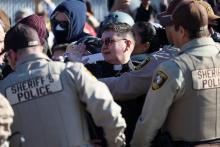
Chicago is in a state of holy rage. Last Friday morning, I stood with many of my colleagues in ministry at a multifaith service outside the Immigration and Customs Enforcement processing facility in Broadview, Ill. It would be better to call this facility an abduction center, as those who are detained there have little to no contact with the outside world.
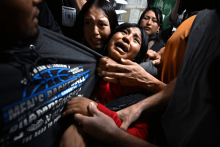
Last week the Trump administration announced Operation Midway Blitz, which extends the surge of ICE agents sent to Los Angeles and Washington, D.C., into Chicago; additional ICE surges are happening in Boston and are planned for Memphis. This increased ICE activity follows an alarming Supreme Court shadow docket ruling that permits the administration to stop people on the basis of personal appearance, language, or type of employment. In other words, racial profiling is now explicitly permissible for immigration officials.
If your life is proceeding basically as normal—school drop-offs, daily commutes, medical appointments, visits with grandchildren, stressful jobs, or the daily rhythms of life—it can be hard to remember the fear that many of our immigrant neighbors now feel. Despite my job leading a social justice organization, I’ll confess that I’m not immune from the temptation myself.

When I talk to clergy in my circles, morale is low. It seems like each day brings another new low in the American experiment. One pastor I spoke with said, “I can go to protests, but what is the point? The people in power don’t care, and it doesn’t change anything.”
That got me thinking: What is the point of protest? For me, at least, participating in protests is about living in alignment with my values and bringing the considerable privilege that religious leaders have to bear on unjust situations.

New York City Comptroller Brad Lander was arrested by masked Immigration and Customs Enforcement agents on June 17. At a lower Manhattan courtroom, Lander and his staff were attempting to escort a migrant after his court hearing. Seen repeatedly asking ICE agents to produce a judicial warrant, and asserting that they couldn’t arrest an American citizen, Lander was roughly detained and later released, the most recent in a string of Democratic politicians arrested by federal authorities.
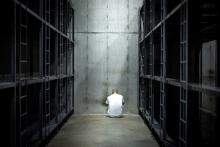
This past March, the Trump administration deported over 200 men to El Salvador to be held in the notorious maximum-security prison known as the Centro de Confinamiento del Terrorismo.
White House spokespersons have repeatedly claimed that these men — most of whom are of Venezuelan background — are members of the Venezuelan gang, Tren de Aragua.
However, multiple outlets have reported that neither the U.S. government nor El Salvador have provided any evidence to support these accusations.

Now that President Donald Trump has rescinded longstanding policy limiting U.S. immigration enforcement in churches and other sensitive locations, some church leaders are wondering what they should do if an Immigration and Customs Enforcement officer comes knocking.
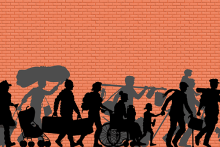
IT SHOULD HAVE surprised no one when Donald Trump, who boasted to a New York City crowd, “On day one, I will launch the largest deportation program in American history to get the criminals out,” began carrying out his promise on Inauguration Day. Immigrants have been the target of Trump’s most aggressive rhetoric since he entered politics a decade ago, and he loves hyperbole. Trump is making the removal of migrants a centerpiece of his new administration by declaring a state of emergency on the U.S.-Mexico border, mobilizing National Guard units, and sending troops to do his bidding. The warlike imagery and language he uses are hard to hold alongside the Christian belief that we are all created in God’s image.
With approximately 11 million undocumented residents in the United States, there is legitimate reason to fear what Trump is enacting in his second administration. I say this as someone who witnessed what a Trump-appointed federal prosecutor called “the largest single-state immigrant enforcement operation in our nation’s history” during Trump’s previous administration. It occurred in 2019, in Mississippi, where I live. I know that whatever else happened that day, children were left without parents, families were cut off from loved ones, and communities were filled with a sense of confusion and terror. But I also know from that experience that, even in the worst moments, there were people and places where hope and comfort resided, too.
On day one, Trump began translating his campaign rhetoric to actual deportation methods. The point is sometimes made that Trump’s first administration deported fewer people than Biden’s or either of Obama’s administrations. While that may be accurate, context is everything. For example, deporting someone who just crossed the border illegally is very different from deporting someone who has lived in the U.S. for 20 years. While the numbers of people matter for each impacted individual and family, it also matters how people are targeted and why inciting terror is the tool of choice. Tom Homan, who Trump has chosen to oversee the nation’s borders, has said we should expect “shock and awe” from the current administration’s deportation efforts. That comment, coupled with Homan’s promise to conduct more workplace raids, suggests how deportations will be handled. That language calls to mind the workplace raids that U.S. Immigration and Customs Enforcement (ICE) officials conducted in Mississippi in 2019.

As we enter a second Donald Trump presidency, the stakes could not be higher for undocumented people and asylum seekers in this country. Having promised mass deportations to a degree never attempted in the United States, President-elect Trump’s new border czar, Tom Homan, has signaled that the administration’s cruelty will begin in my backyard — Chicago. What he might not be counting on is organized resistance from labor, faith, and immigration leaders that will attempt to thwart these plans.