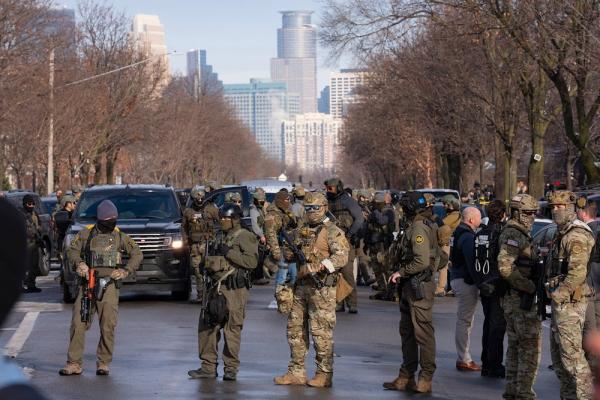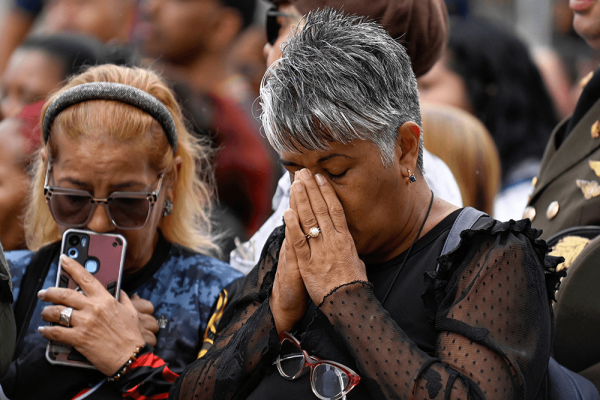
After an Immigration and Customs Enforcement agent shot and killed Renee Nicole Macklin Good, faith leaders in Minneapolis joined demands that ICE leave their city and repent.
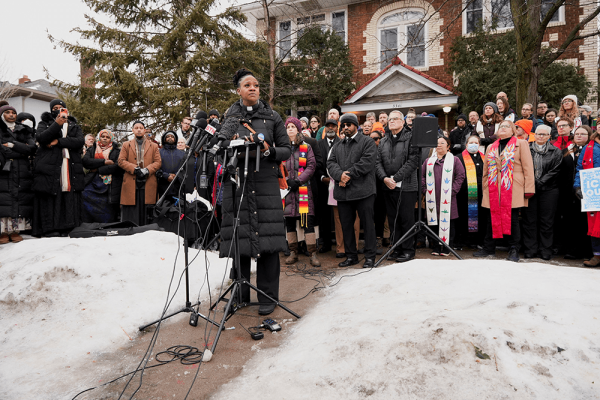
“We have our demands. Hundreds of clergy across this state who have gathered together across faith traditions are standing with the rest of Minnesotans to say not again,” Minister JaNaé Bates Imari, co-executive director of ISAIAH, a multiracial interfaith nonprofit, told a crowd of Minnesotans at a press conference.
The press conference, organized by ISAIAH, drew more than a hundred leaders from numerous faith traditions, representing the breadth of the city’s religious communities. ISAIAH presented its demands: That ICE agent Jonathan Ross be arrested, charged, and prosecuted for killing Good; that ICE immediately cease its surge in operations in the state; and that Congress investigate the Department of Homeland Security.
This list of demands is just one of the ways that faith leaders have been loving their neighbors in the time of ICE. For the last five weeks, organizers and activists, including faith leaders, have been working diligently to respond to the influx of ICE agents targeting Somali immigrants in the twin cities. As in other cities across the U.S., actions ranged from direct protest at federal buildings to more mundane support like grocery pickups and rideshares for those afraid to leave their homes.
Sergio Amezcua, the lead pastor at Dios Habla Hoy, told Sojourners that when he first heard ICE would be coming to Minneapolis, he believed the federal government’s proclamation that they would only be looking for people with criminal records.
“Everything changed after two days,” he said. “When the federal government started sending these agents, it’s been horrible. I’ve never seen anything like it.”
260109-MN2.png
Amezcua will celebrate 14 years in Minnesota this summer. He said DHH, a nondenominational church of 500-600 people, isn’t terribly political. “Our church is focused on preaching the gospel and serving our community,” he said. They’ve done food programs for unhoused people, as well as during the COVID-19 pandemic. Amezcua and other church leaders began grocery deliveries in the community after he saw ICE stopping and harassing people based on skin color, and how people became afraid to leave their homes.
“When we put on the registration form in our social media, at the end of the day, my assistant came and said, ‘Pastor, we got a lot of people.’ I said, a lot of people? Is it 30 families? 50 families?” he asked. No, Amezcua was told that more than 3,000 people had registered for grocery deliveries. DHH went to work immediately and has been delivering 400 boxes a day through a network of more than 1,000 volunteers.
Amezcua, himself a first-generation immigrant, hopes other Americans will come to understand that “the immigrant community are people that flee their countries because of danger and poverty, just like our ancestors did back in the day when they moved from Europe. And they’re here believing in the American dream.”
Social justice in Minneapolis
Organizing like DHH’s is familiar in Minneapolis, which has many well-established social justice networks. Some are rooted in the 1960-’70s American Indian Movement, others in the welcome of Somali immigrants in the ’90s, still more in the racial justice organizing that came after police shootings.
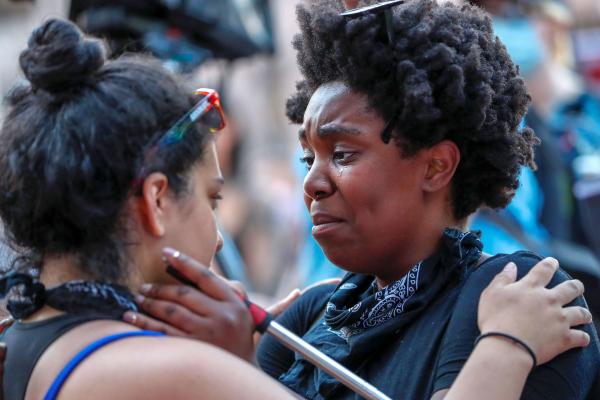
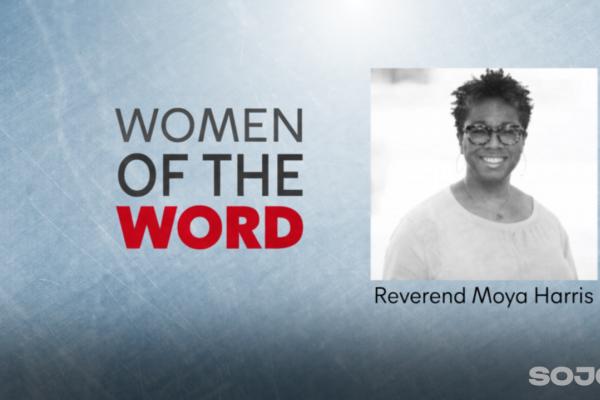
Rev. Susie Hayward, an expert in peacebuilding and human rights, grew up in a Minneapolis suburb and moved back to the city in 2023. On Wednesday, Hayward heard the news of the shooting and rushed to join other clergy praying and singing at the site of Good’s death. While trying to find colleagues, she waded through what seemed like a hundred ICE agents, who began pepper-spraying protesting community members. Hayward was shoved by an ICE agent trying to make his way to his car, and several people rushed to her aid.
“It was an awful scene,” Hayward told Sojourners, recalling the compounded pain, grief, and fear she sensed among her community. “I was in Charlottesville, [Va.], in 2017 … and there were a lot of things that felt familiar in the clergy presence after Heather Heyer was killed by the car. Holding that space, holding the grief, holding the trauma, and doing so in a place where there are federal agents dressed for combat in our neighborhood.”
The next morning, after only an hour of sleep, Hayward was out in front of the Whipple Building, the federal building where ICE has operated, working to represent the needs of her neighbors and serve as a de-escalating presence. She said she tried to remind ICE agents that, whatever they had been commanded to do, the greatest commandment was to love God and neighbor.
“I was talking with one ICE agent about Matthew 25, ‘Whatever you did for the least of these, you did unto me,’” she said. “He told me he was going to go home and read Matthew 25 tonight. I encouraged him to take a look at Matthew 5 also for the Sermon on the Mount.”
Pastoral and prophetic
Peter and Liz Digitale Anderson are the executive director and program director for Peace Catalyst, a Christian peacebuilding organization. They moved to Minnesota in 2019 and their work involves trainings and workshops ranging from the theological foundations of nonviolence to dialogue and community organizing.
They’re also parents to two elementary schoolers. The night after the shooting, Peter attended a vigil to honor Good while Liz took the kids to extracurriculars.
“This is not the childhood that I wanted for them,” Liz said. “To figure out what skills and values and things they will need to stand up to fascism is also an important part of our work right now.”
After Border Patrol disrupted dismissal at a local high school, classes across Minneapolis Public Schools were canceled.
“They've spent the past months seeing me wear a whistle down to the bus stop with them and tell other parents at the bus stops that they can stay home I’ll watch over their kids,” Peter said. “They see this happening.”
260109-MN3.png
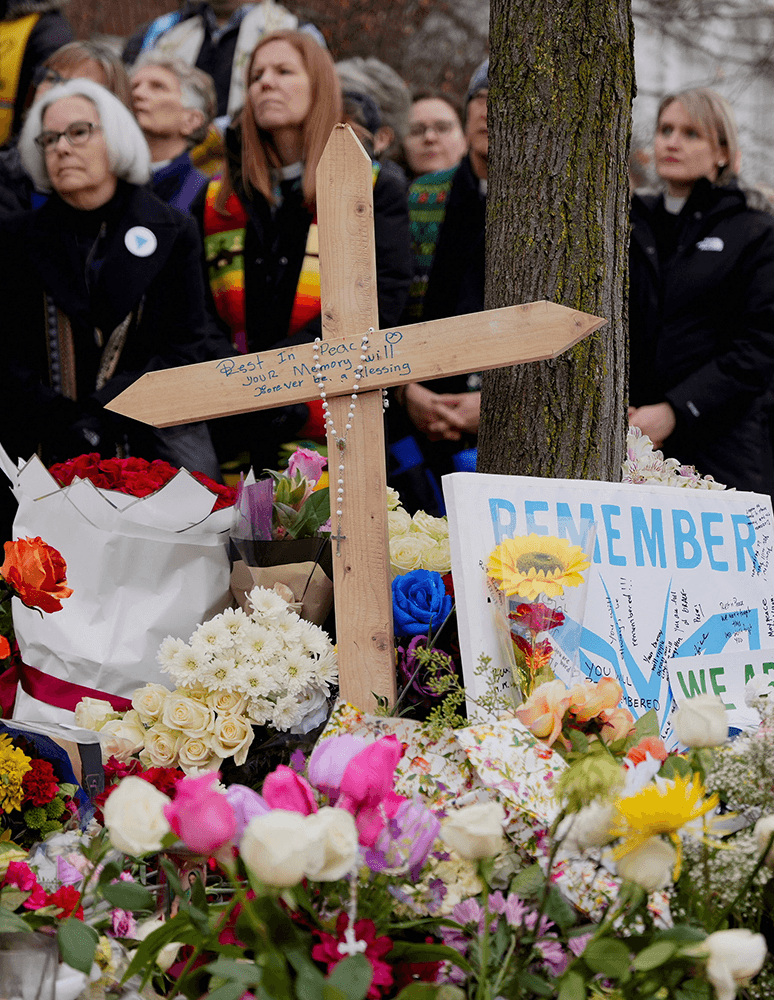
At the vigil that night, Peter said it felt like a powerful and holy space for catharsis. Mourning and protest weaved together as people sought justice, and rest.
“It was [a space] that people really needed as an act of connection … especially because there really wasn't the moment to pause during the day yesterday,” he said. “Things just kept happening. Everybody was in reactive, responsive mode the whole time.”
READ MORE: How To Read the News Without Sacrificing Your Mental Health
Hayward said clergy and other activists in Minneapolis have been attending pastorally to the needs of rapid response teams, especially as ICE escalated their tactics in recent weeks.
“ICE agents are boxing observers in. ICE agents are pepper spraying them. ICE agents are looking up their name and home address and going to their homes and taking photos and saying their names to them to try to intimidate them. Sometimes [rapid response teams] are not able to stop these abductions,” she said. “After their shift, their systems are so escalated, they are so activated, and they have grief and trauma and anger.”
Hayward and a team of multi-faith clergy had been hosting nightly Zoom calls to provide spiritual care, somatic work, and other ways of helping people process. Most nights they had a few dozen attendees. The night of Jan. 7, she said they had 120. As for the future, Hayward expects clergy to lean further into the prophetic side of their work.
“A lot of our work has been less visible because we've been with our communities, responding to the pastoral emergencies, providing this sort of quiet care through mutual aid, through spiritual care,” Hayward said. “And things changed [Wednesday.] I expect we're going to see far more visible clergy presence in the prophetic lane.”
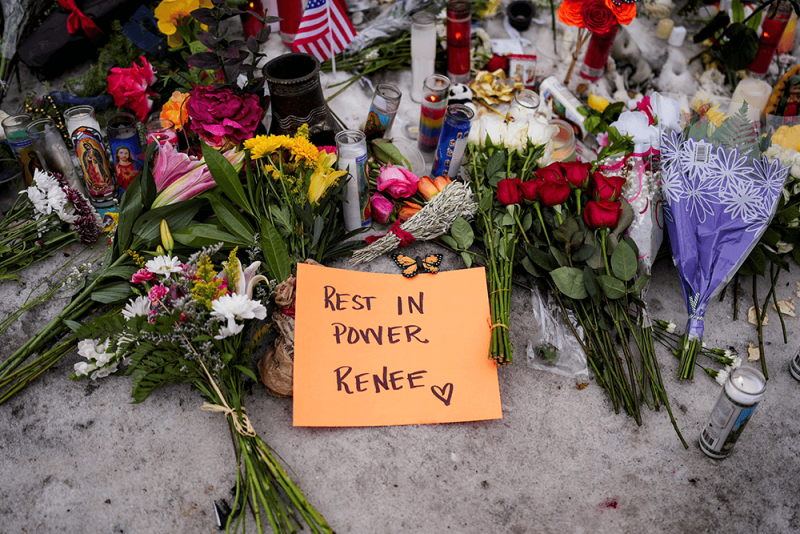
Amezcua said he was mourning the loss of Good, who like so many others, was volunteering for rapid response and legal observer teams meant to protect immigrants.
“She is someone that should be remembered and should be honored,” he said. “My heart goes to their family, and my prayers go to their family. It will be part of my mission to make sure people do not forget who Renee Nicole Good was. She will continue to be a hero for our community for years to come.”
“I was talking with one ICE agent about Matthew 25, ‘Whatever you did for the least of these, you did unto me,’ ... He told me he was going to go home and read Matthew 25 tonight. I encouraged him to take a look at Matthew 5 also for the Sermon on the Mount.”—Rev. Susie Hayward

Got something to say about what you're reading? We value your feedback!