domestic violence
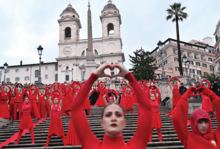
“HOLY HUSH” MEANS people of faith keep quiet about abuse, women don’t feel empowered to speak their truth, or families feel pressure to pretend everything is fine when it’s not. Part of the fear is that if we speak out, that means we’re not a forgiving community. Responding to abuse is about justice, accountability, and change, which often isn’t what those who act abusively want. They want quick forgiveness; this can be challenging to a religious leader who says, “It’s not my role to forgive. It’s God’s role. It’s the victim’s role.”
Religious women often feel they promised God to be faithful to the end. That’s where a religious leader can say, “You haven’t broken the covenant. The person who’s been abusive broke the covenant. Seventy times seven doesn’t mean someone can hit you over 400 times, say they’re sorry, and you say, ‘Let’s go back to life as it was.’”

When the House passed President Donald Trump’s Big Beautiful Bill Act, House Speaker Mike Johnson gave glory to God.
Johnson, the Louisiana Republican and Christian, believes that his work and the work of the United States are divinely orchestrated. But if the so-called “Big Beautiful Bill” is truly from God, then what are we to make of cuts that negatively impact the most marginalized in our society?

Tia Levings made a decision for herself and her children on October 28, 2007. With the help of a priest, she planned for an escape from her abusive husband. “I heard a voice say, ‘RUN,’” she writes in her memoir, A Well-Trained Wife: My Escape from Christian Patriarchy.
Domestic abuse is not only a public matter; it’s also a matter that affects the church. There are many ways people of faith can work to end domestic abuse, but the first way is by debunking harmful myths such as these.

Communities of faith should be an intentional place for survivors of domestic violence to find healing, refuge, and safety. However church can also be an unsafe place that hinders the process of healing. The steps, responses, and practices offered in this article are meant to be a beginner’s guide to what congregations — including lay members — need to know about preventing, recognizing, and responding to domestic abuse in their midst.
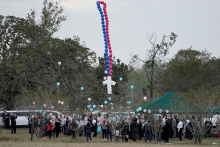
A federal judge found the U.S. government 60 percent responsible for a 2017 mass shooting that killed 26 people at a rural Texas church, where a former Air Force serviceman used firearms he should not have been allowed to purchase.
U.S. District Judge Xavier Rodriguez ruled on Tuesday that the Air Force did not use reasonable care when it failed to record Devin Patrick Kelley's plea to domestic violence charges in a database used for background checks on firearms purchases.
He said the government bears "significant responsibility" for harm to victims of the Nov. 5, 2017 massacre at the First Baptist Church in Sutherland Springs, TX.

AS THIS PANDEMIC rages on and people are isolated in their homes with their intimate partners, many are more vulnerable than ever to violence. According to the Centers for Disease Control and Prevention, approximately 1 in 4 women and nearly 1 in 10 men experience sexual violence, physical violence, or stalking by an intimate partner during their lifetime. In addition, an average of 24 people per minute are victims of rape, physical violence, or stalking by an intimate partner in the United States—more than 12 million women and men during a single year.
Odyssey Impact, an interfaith nonprofit that addresses social issues through storytelling and media, hopes to change this with a four-part Healing the Healers video series, directed by Kirsten Kelly, that features interfaith peer-to-peer conversations about domestic violence. It is scheduled for a January 2021 release on healingthehealers.org.
This is the second series under the Healing the Healers name. The first was a five-part video series that grew out of a pastor’s efforts in Newtown, Conn., to deal with the aftereffects of the Sandy Hook school massacre; it includes conversations with clergy, social workers, and first responders who have been on the front lines as different communities have dealt with traumatic events. The second Healing the Healers series on domestic violence likewise addresses a crisis by modeling honest conversation about a difficult topic across faith lines.
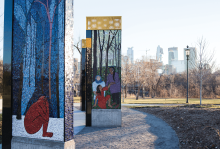
Lori Greene is a mosaic artist living in Minnesota. She spoke to Sojourners' Jenna Barnett about creating the first permanent memorial to sexual violence survivors in the United States.
“WHEN SARAH Super asked if I would help create a memorial to survivors of rape and sexual assault, I said ‘yes’ immediately. I’m also a survivor, so it was a no-brainer. Burying pain will not help us recover.
The memorial [in Minneapolis] is painful, but it’s not just pain. I call the first [of the five] panels ‘Sorrow.’ A person in red is curled up in the snow. It’s dark; there are trees everywhere. In panel two are two figures: the same figure, who is clearly crying, and a purple figure holding them. There’s a little sunrise on the horizon. We have a memorial to Holocaust victims. We have the new lynching memorial. And these things are making a difference.

THE UNITED STATES is one of only 28 countries without a provision in its Constitution that provides equality under the law regardless of sex.
The Equal Rights Amendment was proposed in this country nearly a century ago. Congress passed the amendment in 1972 with bipartisan support in both houses and then set a time limit for ratification by the states. In January 2020, when Virginia became the 38th state to ratify the ERA, the amendment met the requirements to be added to the U.S. Constitution. Unfortunately, the deadline for ratification passed more than three decades ago.
The amendment’s language is simple: “Equality of rights under the law shall not be denied or abridged by the United States or by any State on account of sex.” The ERA would add what the Founding Fathers intentionally left out: constitutional rights and protections for everyone regardless of “sex.” Isn’t it time?
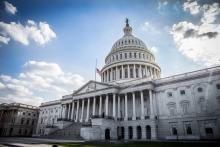
VAWA expired back in February, leaving shelters and survivors worried about their futures. However, on March 7, Rep. Karen Bass (D-CA) and Rep. Brian Fitzpatrick (R-PA) introduced an expanded version of VAWA in the House. While it’s been introduced bipartisanly, it’s almost entirely supported by Democrats, who comprise 110 of its 111 co-sponsors. VAWA is reauthorized every five years and with each new reiteration has been expanded to offer new services for communities and individuals that are suffering. In the latest proposed legislation, many Republicans object to assisting two of the communities designated for special protections: Native Americans and transgender individuals.
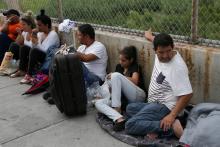
A U.S. judge struck down Trump administration policies aimed at restricting asylum claims by people citing gang or domestic violence in their home countries and ordered the U.S. government to bring back six deported migrants to reconsider their cases.

On Thursday Dr. Christine Blasey Ford recounted her experience of sexual assault before a committee comprising mostly older white men. Women and other victims of abuse held their collective breath. The details were familiar. The resulting trauma — anxiety, fear of flying, claustrophobia — resonated. Survivors listened — and they recalled their worst experiences.

Yesterday Attorney General Jeff Sessions issued a legal decision that has fatal implications for our neighbors fleeing abuse around the world. Sessions has decided to deny asylum to everyone coming to the U.S. to escape domestic violence, overturning a precedent set by the Obama administration in 2009.

THIS SPRING, more than 2,500 Southern Baptist women published a letter denouncing the misogyny and apparent toleration of domestic abuse exhibited by Paige Patterson, then head of Southwestern Baptist Theological Seminary and one of the Southern Baptist Convention’s most influential leaders.
These women are speaking truth to power at a critical time, affirming that “the Bible’s elevated view of womanhood,” as they put it, is completely incompatible with Patterson having counseled a woman who was being physically abused by her husband to keep quiet and pray for her husband, and with Patterson’s sexually objectifying comments about a 16-year-old girl. (In late May, Patterson was removed from his position as president of the seminary.)
The letter was a real risk for the signers in a religious world as conservative as the SBC, but it quickly opened up a needed conversation in the denomination and beyond.
We should be grateful for and inspired by the courageous witness of women in the church and broader society who are saying #MeToo and demanding accountability for predatory behavior and the pervasive sexism that creates an environment where sexual harassment and assault too often thrive. Too few men have demonstrated sufficient commitment to end domestic and sexual violence and dismantle the patriarchal system that undergirds them. Changes in both personal attitudes and structures are needed. Men in our churches, as in broader society, too seldom speak up on these issues.
A few years ago, Sojourners commissioned a poll of clergy across the country. We found that 65 percent of pastors speak once a year or less about sexual and domestic violence; 1 out of 10 pastors never address this topic. These distressing facts correlate with another of our findings: 74 percent of pastors underestimate how prevalent sexual and domestic violence is in their own congregations.

In the midst of the Time’s Up movement, we agree that now is the time for equality and to end sexual and gender-based violence once and for all. While the entertainment industry is doing a great job of raising awareness, other groups need to step up and enact change. A critical group that must be involved is the faith community.

She called for the end of "the boyfriend loophole," referring to the 20-year-old Lautenberg Act that barred individuals who are married, in a domestic partnership, or have children to own guns. Outside of that realm, domestic abusers are still allowed to own guns.

If and when a survivor manages to leave an abusive situation, they still face many hurdles in their immigrant community. Some fear that stories of abuse may threaten whatever positive image the community has worked hard to shore up in a time of fear and distrust. Aisha Rahman, Executive Director of KARAMAH, a group of Muslim women lawyers representing human rights, told a story of a Somali woman living in the small town of Lewistown, Maine. After counseling and support, she finally felt able to testify about the sexual assault she experienced, yet only two men in her community were able to interpret for her. During her testimony, the men translated her stories in much softer language (“He was mean to her”), and themselves repeatedly asked her questions like, “Do you really want to expose your husband? Do you really want to expose our community?
Faith communities can play a powerful role in preventing violence and supporting survivors, but collectively we’re falling short. Two-thirds (65 percent) of pastors say they speak once a year or less about sexual and domestic violence, with 1 in 10 never addressing it at all. This failure has a deep and lasting impact.

“If you take one city alone, like Dallas — without including the surrounding areas — in any given month anywhere from 639 to 1199 people are turned away from emergency services because we don’t have enough funding now,” Sim said.
“Imagine how much worse it would be if we lose funding from VAWA in the future. Right now we still can’t do enough and that is with VAWA funding. Our crisis partner support will be impacted severely and I fear we would see shelters close.”
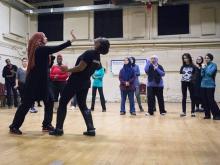
Melissa Grajek was subjected to all kinds of taunts for wearing the hijab, but an incident at San Marcos’ (Calif.) Discovery Lake sealed the deal.
Her 1-year-old son was playing with another boy when an irate father saw her and whisked his son away, telling Grajek: “I can’t wait until Trump is president, because he’ll send you back to where you came from.”
The man then scooped up a handful of wood chips and threw them at Grajek’s son.