Cover Story
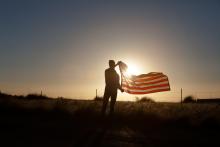
What does it mean to be exceptional?
Most people have to worry about making enemies. You know, they’re constantly freaked out that they might offend somebody or hurt somebody’s precious feelings. But I don’t worry about that. I’m exceptional. Other people in my family worry about everyone getting their fair share at the dinner table. They might really like mashed potatoes or lasagna, but they only take a normal small portion so that their sister or grandmother or cousin can have some too. But I don’t worry about those sorts of things. After all, I’m exceptional. I take as much as I want.
When you’re an exceptional nation, you want other nations to worry about your opinion of them. You don’t really care what their opinion is of you. When you’re a run-of-the-mill country, you’ll be nervous about going against the United Nations or the Geneva Conventions or the International Criminal Court and such, but when you’re an exceptional country, that sort of concern is beneath your dignity. You set expectations; you don’t fulfill them. Of course, with exceptional status comes exceptional responsibility, so we have the sole responsibility to drop nuclear bombs on nations that cause problems for the world—unexceptional nations, that is, which means everybody else but us. It’s a tough job, being exceptional, but somebody has to do it.
Between now and the elections in November, my guess is we’re going to hear the term “American exceptionalism” echoing from the mountains to the prairies to the oceans white with foam; echoing ad nauseum. It’s become a powerful political meme in recent years, popular but poorly defined. The history of the term aids and abets in its vagueness.
Thomas Jefferson repeatedly spoke of the United States as a unique—or exceptional—historical phenomenon. As a democratic republic, it differed from Europe, and all the nations of the past. Since then, of course, scores of nations have followed our example in forming democratic republics, so what was exceptional in Jefferson’s time has now, we might say, become the norm.
Does that make us “the nation formerly known as exceptional,” but now typical?

For 40 years, Sojourners has been fighting the good fight. Where do we go from here?
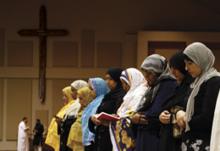

In the new South Africa, the future is speaking in the voices of the girls.
An activist in Phoenix launches a website -- and supports a revolution on the other side of the world.


Bernard Lafayette, a leader in the civil rights movement and teacher of nonviolence, discusses lunch counter sit-ins, Martin Luther King Jr., and the challenges and victories of nonviolent movement.
The roots of Egypt's revolt: the story of Egypt's long preparation for nonviolent revolution.
What the Egyptians did right: a Cairo-based nonviolence trainer looks at what the Jan. 25 activists did right.

From Cairo, Egypt, to Madison, Wisconsin, civil society is fighting back through massive nonviolent resistance. But what makes for a successful campaign? The data is in.

Ben & Jerry's co-founder Ben Cohen talks with Jim Wallis about ice cream, Oreos -- and how the bloated military budget is destroying our economy and making us all less secure.
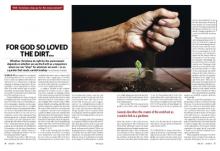
Whether Christians do right by the environment depends on whether we can see the Earth as a megastore where we can 'shop' for whatever we want -- or as a garden that needs careful tending.


To effectively communicate the truth about this contentious issue, we have to start by understanding others' perspectives.
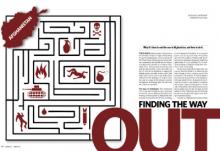

When the Taliban ruled, they prevented girls from going to school. Who's stopping them now?

Blacks and whites use drugs at about the same rate, yet African Americans are 10 times as likely to be imprisoned for drug offenses. The unbalanced effects of the 'war on drugs.'