Nicaragua
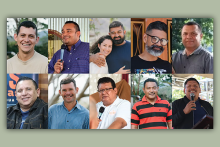
ON SEPT. 5, the U.S. Department of State announced that it had secured the release of 135 political prisoners in Nicaragua. Among those released were 11 pastors of the Mountain Gateway ministry and a number of Catholic laypeople. These victims of the Ortega-Murillo regime’s sweeping persecution of religion will join hundreds of now stateless priests, women religious, bishops, and other believers exiled to Guatemala, Costa Rica, the United States, and even Vatican City.
Despite this negotiated release, the U.S. Commission on International Religious Freedom still lists 36 Nicaraguans imprisoned because of their faith. That number does not include the thousands of Nicaraguans who have fled because of their beliefs or the more than 1,600 religious organizations and facilities that have been closed by the regime. Dozens of priests and ministers have been arrested. Religious charities, schools, universities, radio stations, churches, and clinics have been shuttered. Religious orders have been banned. Traditional religious processions for Holy Week have been outlawed. Secret police systematically monitor religious services. Even Mother Teresa’s Missionaries of Charity were escorted from the country by armed police.
President Daniel Ortega’s authoritarian-trending-toward-totalitarian regime is powerfully repressing the Catholic faith and is rapidly expanding its persecution to Protestant and Indigenous faith communities. However, it was not always so.
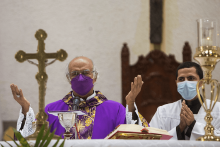
Nicaraguan President Daniel Ortega has ordered the closure of the Vatican Embassy in Managua and that of the Nicaraguan Embassy to the Vatican in Rome, a senior Vatican source said on Sunday.
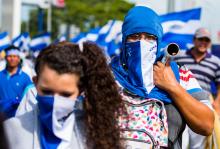
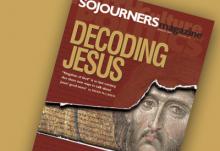
TENS OF THOUSANDS of Americans took the Pledge of Resistance in the 1980s to oppose funding for a U.S.-backed militia formed to overthrow the Sandinista government in Nicaragua. Now that government, led by Daniel Ortega, is accused of gross human rights violations against student protesters. What happened?
After nearly 12 years in office this time around, Ortega and what remains of the Sandinista movement now cling to power through repression, threats, and intimidation. Many of those who fought alongside the Ortega brothers to free their country from the Somoza dictatorship and joined arms to defend the revolution from Ronald Reagan’s contras have left the Sandinista party out of disgust or were purged by an increasingly autocratic Daniel Ortega.
Sandinismo has given way to Ortegismo. Ortega is determined to hold on to power through authoritarian rule rather than governing in the spirit of Ernesto Cardenal and Father Miguel d’Escoto.
Despite Ortega’s defeat at the polls in 1990, he never lost his thirst for power and ran for president in each successive election until he won in 2006. He was adept at exploiting the weaknesses, greed, and corruption of his old adversaries and creating new alliances with them. First, he struck a deal with former President Arnoldo Alemán, who was serving a 20-year sentence for corruption. In exchange for Ortega’s promise to overturn his sentence, Alemán supported a package of electoral and legal reforms that allowed Ortega to win in 2006 with just 38 percent of the vote and allowed Ortega to take control of the National Assembly and eventually the Supreme Court and Supreme Electoral Council.
Ortega also struck a deal with Nicaragua’s private sector council that had bitterly opposed him in the 1980s and helped finance his electoral defeat in 1990. Ortega and the council fashioned a pact in which Ortega agreed not to intervene in the dealings of the private sector and they, in turn, would refrain from getting involved in his political agenda.
The decision to end TPS for Nicaraguans is part of President Donald Trump's broader efforts to tighten restrictions on immigration. Hundreds of thousands of illegal immigrants from across Central America live and work in the United States, but some are protected from the threat of deportation under the TPS program.
Thousands from both Nicaragua and Honduras were given the special status in 1999 after Hurricane Mitch devastated Central America. In all, TPS protects more than 300,000 people from nine countries living in the United States.
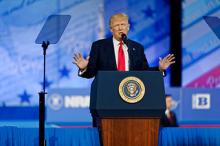
Syria announced plans to sign the Paris climate accord on Nov. 7, according to The New York Times. With Nicaragua signing the Paris Agreement in October, it leaves the U.S. as the only country to oppose the accord.
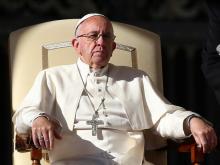
These new cardinals include prelates from 11 dioceses and six countries that have never before had a cardinal, and from places far outside the traditional European orbit of ecclesiastical influence: Albania, for example, plus the Central African Republic, Lesotho, Mauritius, Bangladesh, Malaysia, and Papua New Guinea.
But the real surprise in these picks, as in past appointments, is that they came as a complete surprise to many of the new cardinals themselves, and to the pope’s closest collaborators.
Protesters converged on Managua in February with brooms in hand to "sweep out" corrupt public officials.
One of the most urgent issues for faith communities during the 1980s was the contra war in Nicaragua.

The Iran-contra hearings have provided a summer-long opportunity for Reagan administration spokespersons to make their case for the contras on national television.
Ben Linder is dead. The 27-year-old engineer from Portland, Oregon, built dams in rural Nicaragua and liked to dress up like a clown for the kids.
As congressional hearings began in Washington to determine the "facts" in the Iran-contra scandal, the family of Ben Linder attended his funeral in Nicaragua.
To look into the eyes of Gustavo Parajon is to see compassion and integrity.
When I look into the eyes of Eugene Hasenfus, I see a man who is scared, helpless, and trapped. Eugene Hasenfus [was] the first American caught in the net, the first American who [fell] into the pit we dug in Nicaragua...[and he wasn't] the last.