Poetry
Early morning
before he unlocks the church gate
the rector kneels before
the gridiron fence surrounding the Cathedral,
not in prayer
but to collect empty wine bottles,
snack bags, and used condoms.
After shoving them into a bag
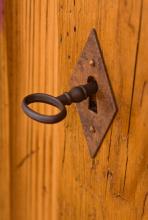
he turns the latch key and enters the churchyard
shutting it behind him.
The hollow, thunderous deadbolt
echoes through trees like the voices of
ancient saints.

If I were a tree
I would like to be
A giving tree.
Leaves a peaceful green,
Birds could sit and sing,
Children laugh and swing
Upon my branches.
From the midst of the nether
world I cried for help.
—from the Book of Jonah
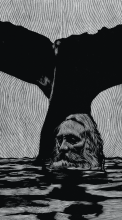
A gray whale blows off Cardiff Beach,
just beyond the glamour homes,
boutiques, and drive-thru windows,
valet service and all-u-can-eat sushi.
I want to swim out and be swallowed.
Jonah’s whale wasn’t Ahab’s, all
tripey white and peg-toothed, but
a strainer of phosphorescent shrimp,
which lamped the reeking gut, like
fireflies we swallowed once, in jars.
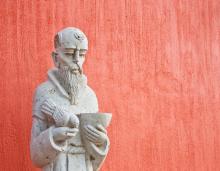
Editor’s Note: The following poem by Trevor Scott Barton was written while he was living in Africa and reading The Little Flowers of St. Francis of Assisi.
Holding you in the palm of my hand
I see your tiny feet and hope you'll live and walk these stony paths
To the pump to get water.
Blessing you in your meekness and gentleness,
You are Jesus to me today.
Kind, tired eyes from too much seeing ...
Worn, battered shoes from too much walking ...
Stained, tattered shirt from too much working ...
Gentle, calloused hands from too much holding ...
Open, humbled heart from too much knowing ...
On my knees I beg forgiveness for my greed—
and for starving myself.
By your eyes I see you love this priest,
follow his lyrical fingers in praise of
a small white host he points here,
there.

Yesterday Kay Stewart shared this at the cemetery as we laid to rest the ashes of her first-born daughter Katherine (“Katie”).
For Christ to have gone before us,
To have kept us from ultimate sadness,
To be our brother, our advocate,
The One who ushers in the Kingdom,
Here
And the One to come,
Does not keep us from our digging today.
We still gather here and throw the dirt on our sacred dust,
We take the shovel like all those gone before us
And surrender to the Unknowable—
The place where
Love and Beauty and Kindness grow wild.
Where sorrow has no needs,
Where there is all beginning and
Nothing ends.
...
I
The crumpled woman pushes through the door
and sees your plump limp limbs
held tight in my buckled arms.
She remembers holding
such sweet eternity.
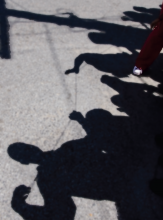
Blindfolded and gagged, tossed in the back
of a car—it's how they gather up young men
and after tire irons and chains, leave some
lying in the road like dirt, rained on all night.
Some are bundled-up, tossed off a bridge
into the river whose muddy swirls warn:
kick, fight, breathe, twist your arms free.
Some do. They rise, spit out the rags
stuffed in their mouths, limp back to town,
and one begins to sing—slow at first— Lord,
I want to be in that number ... Another moans
a low muted tone where words won't go.
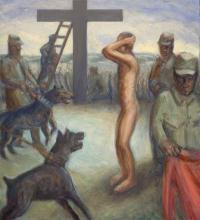
Hemorrhaging from the concertina
crown, brass knuckles, scourging, cigarette burns,
lurching the last meter of Golgotha
where He must dangle three hours in urns
of japing ether, He drops His bloody tree.
Executioners rip His clothes away,
cut cards for His keepsake convict jersey.
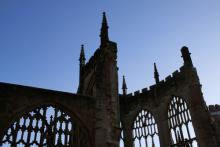
Deep with one savior’s death, how many more?
In observance of which, the Dresden burghers
as usual held Shrove Tuesday circuses
around Our Lady’s Church, the Frauenkirche,
eating pancakes before their fast for Easter.
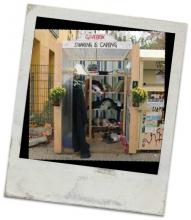
Something called a GiveBox appeared
this fall on Falckensteinstrasse, and my first gift
was a memory: Dorothy Day, decades ago,
gently quoting St. Basil to me: If you have two coats,
you've stolen one from the poor.
Like a walk-in cupboard on the sidewalk, brightly
painted, decked out with flowers, this GiveBox
is for the anonymous exchange of gifts.

I cannot
think that you don't
sound
or breathe
weep
or grieve
I will not
think that you don't
want
or ply
the cosmos
with love
or grace
seeking
us
lost again
I can believe
I can lose you
I can thwart you
I can set you up
I can watch you fall
to die
again
you breathe
weep
cry
sing
and I
am here seeking
better signs
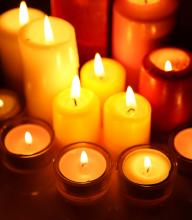
You wait a long time for Christmas morning
drifting asleep even as the ebony slate of sky
shatters in clarion silence
Glory, Hallelujah!
and shepherds in the hills cast down their rods
look up at angels and find themselves
no longer huddled in darkness
but lucent between the stars.
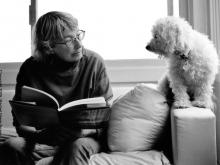
What’s the first thing you think of when you think poetry readings by a Poet Laureate and a Pullitzer Prize winner? Well, whatever it is, I’m sure you weren’t thinking dogs.
Nonetheless, pet dogs were brought up more than anything else during poetry readings by Billy Collins and Mary Oliver at the Strathmore in Bethesda, Md. on Sunday. They managed to bring up their dogs in a beautifully poetic way, of course.
But perhaps the most important take away from the evening came from Oliver during a question and answer time after the readings. She said something like this: “Pay attention. Be astonished. And tell about it. We’re soaked in distractions. The world didn’t have to be beautiful. We can and should think about that beauty and be grateful.”
Those are words I have tried to live by for the last year.
Both poets demonstrated that attention in their work — even in poems about dogs.

He uproots teeth primordial in nature and that eat his soul
with appetite the size of mercenary forces plundering a city
whose inhabitants do not fight back because most of them
are women, children, and animals that creep on all fours.
He knows of a city not spared and is without name, unlike Nineveh,
whose repentant king decreed:
Human beings and animals shall be covered with sackcloth,
and they shall cry mightily to God.

About love she was all wrong,
the old capitalist, patron saint
of the self-made rich. How well
she misunderstood the paradox deep
as mothers’ grief: that finding our self
requires losing it, that love and loss
make one truth, not two. Objective
as granite in relationships, her hero
never collapses into cancer with a wife,
never drops into death with a brother.
 I stepped down from the train,
Saw you there, old man, bent
Next to the Tudor station, smiling
And waving to me over the steering wheel.
Your aged blue eyes
Saw us through the maze of roads
Walled by high corn and close trees, roads
Which branch away from the train
Station to the cottage, to your wife’s eyes
And worn wrinkled skin. Her back bent
Over the low table. You turn the wheel
And press the horn, she’s smiling,
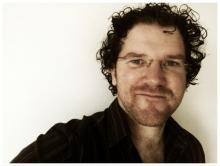
Last Sunday, the Catholic singer/songwriter/poet/theologian Pádraig Ó Tuama (who hails from County Cork, Ireland), took to Revolution NYC's "barstool pulpit," to share stories, poems, and wisdom from the spiritual journey — his, yours, ours.
Listen to Ó Tuama's talk inside the blog ...
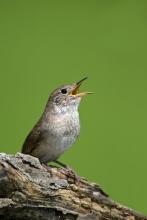
On Proverbs 8
My saints won’t be named by a church.
Their sainthood won’t stand as statues. Listen.
Voices
calm as cooking directions
play continually—
If any thing’s resurrectible, it’s memory:
those eyes,
song-haloed, so full of lightness
nothing could stop their flight;
not a Thomas who peers into pupils’ darkness,
not a ravenous soul left grounded.
We are born, yin-yanged, of lightning
with saints and putti the lightest of all.
But love-rumpled faces, quick limbs, and pierced hearts
are unstable, done only in clay.