Pakistan

The first news stories Friday afternoon (from AP and AFP) wrote of 4 suspected militants killed by two missiles fired from a drone in northwest Pakistan. It was soon updated to 9 dead, which is what we reported at the end of the day.
This morning, I checked my Reader and found 30-some new stories overnight (many just repeats of updated wire stories.) But the stories and death totals were all over the map. Some still echoed the earlier AP story; there were also reports of 12 deaths, or 15, or 21, and a few 24. The most comprehensive stories told of three drones. According to the Pakistani newspaper The Nation:
"The initial strike on a house killed 13 militants, five more were killed in a second attack when they drove to the site to recover dead bodies, and a third drone killed six more five minutes later, a senior security official in Peshawar said."
Other stories also recounted the 3 drone strikes, but gave varying numbers of deaths in each of the three.
Here is a more detailed version from DAWN, another Pakistani newspaper, which tells of multiple drones and 20 deaths:
"According to sources, six missiles hit the fortress-like residence of tribesman Muhammad in Zoi Nari locality of tehsil Dattakhel at around 8:45pm.
Local people rushed to the site of the attack and started rescue work while drones continued to hover over the area. They retrieved 17 bodies and two injured persons from the rubble of the house.
At about 10:30pm, the drones fired another two missiles on the compound, some 35km from the agency’s headquarters of Miramshah, when tribesmen were still carrying out rescue work. Three people died and two others were injured in the attack.
Local tribesmen feared the number of the people killed or injured might go up because they had to stop work due to the hovering drones. They said most of the bodies retrieved were mutilated beyond recognition."
These details raise two questions:
First, will we ever know how many deaths there were on Friday? And if they were militants, civilians, or both?
Second, even if one accepts the U.S. rationale for targeting militants (which I don’t), if it is true that after the initial strike, a second strike was launched some time later against rescue and recovery efforts, experts consider that a violation of international law – a war crime.
Perhaps in another day or so we will get the complete story, with timeline and casualty totals. But what is already clear is that these attacks must stop.

The Associated Press and Agence France Press (via The Nation in Lahore, Pakistan) are reporting this afternoon that a drone strike killed at least nine suspected militants in a small village near Miranshah, the main town of North Waziristan tribal district. At least three others were injured.
AP reports “The militants were believed to be fighters loyal to Hafiz Gul Bahadur, a militant commander whose forces frequently target U.S. and NATO forces in neighboring Afghanistan. A similar drone attack on Sunday killed eight of Bahadur's fighters.”
As always, the necessary disclaimer is that we may never know whether all or only some of these “suspected militants” were in fact militants. Remember that the U.S. definition is that anyone in a strike area is assumed a militant unless there is clear evidence after the fact. And after a direct hit from a Hellfire missile, there may not be any evidence left to examine.
One of the most respected sources of investigative reporting on drones is The Bureau of Investigative Journalism, a non-profit organization based in London. As part of  its research, TBIJ tracks drone strikes and other US military and paramilitary actions in Yemen, Somalia and Pakistan. Yesterday, TBIJ released its summary for June. The major conclusions:
- As relations between Washington and Islamabad continue to falter, Bureau data shows fewer civilians are being killed in CIA drone strikes in Pakistan than at any time in the Obama presidency.
- US military action in Yemen is at its bloodiest ever, with the strike rate and reported casualties the highest yet recorded.
- The true extent of US action in Somalia remain unclear, despite many claims of attacks.
The report also provides a comparison of the first six months of this year with 2011.

The Associated Press reports
U.S. missiles fired from a drone in a Pakistani tribal region near the Afghan border killed eight suspected militants early Sunday, officials said, as the controversial American strikes continue despite Islamabad's persistent demands that they stop.
Unidentified Pakistani intelligence officials said that four Hellfire missiles were fired at a house in the North Waziristan tribal area used by suspected militants. The eight dead included suspected members of a Taliban faction and some suspected members of the Turkmenistan Islamic Movement.
The Pakistani newspaper DAWN reported this morning that the National Research and Development Foundation (NRDF), a national NGO, has appealed to the U.S. to  stop drone attacks. NRDF has been promoting polio vaccinations in the tribal area where the strikes occur. The appeal follows a Taliban decision to ban the vaccinations due to fear of their possible relation to CIA intelligence gathering for targeting drones.
Tehseenullah Khan, NRDF coordinator, told DAWN that “The ban will adversely affect 318,000 children in the two agencies.” He continued, “Stoppage of drone strikes by the US could safeguard children against host of diseases. Fata [the Federally Administered Tribal Areas] is the only active hub of active polio virus transmission in the country that has contributed more than 50 per cent of the total polio cases this year.”
Agence France-Presse and the Associated Press are reporting that a U.S. drone fired two missiles at a house in northwest Pakistan late on Tuesday, killing at least four (AP) or five (AFP) Taliban militants. All those killed were associated with local Taliban leader Hafiz Gul Bahadur, a security official told AFP. A week ago, the New York Times noted Bahadur as one of those who had banned a polio vaccination campaign, citing his “fears that the C.I.A. could use the polio campaign as cover for espionage.”
One wonders if today’s strike is proof of his fears?
In the second attack in two days, AFP reports that a U.S. drone strike killed at least three people early today in a building in the central market of Miranshah, the main town in North Waziristan near the Afghan border.
"A US drone fired two missiles on the first floor of a shop in the main market and at least three militants were killed," a senior official told AFP. … "When the first missile hit the building, I heard cries for help and ran towards it, but militants stopped me at a distance. When they started rescue work, another missile hit," a local tribesman said about Thursday's strike. "I eventually saw them removing three burnt bodies in a really bad shape. They were put in wooden boxes and taken away."
After more than a week with no reported drone strikes, there are news reports this morning of strikes in Yemen and Pakistan.
Over the past several days, the Yemeni army has recaptured two towns from Ansar al-Sharia — an offshoot of al-Qaeda in the Arabian Peninsula. Militants have fled and heavy fighting continues. Apparently as part of that offensive, an attack by a US drone killed nine people:
“A US drone struck a house where al-Qaeda militants were meeting, and a car nearby," in the town of Azzan in Shabwa province early in the morning, a tribal source told AFP on condition of anonymity.
In Pakistan, the Associated Press reports:
"Pakistani intelligence officials say a U.S. drone strike has killed four suspected militants after firing two missiles at a vehicle in which they were riding near the Afghan border.
Carlo Munoz reports for The Hill:
"American negotiators working with Pakistan to reopen critical supply routes into Afghanistan have been called back to the United States, casting further doubt on whether the lines will ever be reopened to U.S. and coalition forces. Defense Department spokesman George Little told reporters on Monday that several members of the U.S. negotiation team had already left Islamabad, with the remaining members scheduled to depart the country within days."
Read the full story here
As relations between the U.S. and Pakistan continue to deteriorate, the Obama administration has decided the solution is … more drone attacks.
"Expressing both public and private frustration with Pakistan, the Obama administration has unleashed the CIA to resume an aggressive campaign of drone strikes in Pakistani territory over the last few weeks, approving strikes that might have been vetoed in the past for fear of angering Islamabad."
Seems to me that killing more people in Pakistan is probably not the best way to improve relations.
Following a four-day visit to Pakistan, UN High Commissioner for Human Rights Navi Pillay, has called for a UN investigation into U.S. drone attacks. Pillay told a news conference in Islamabad:
“Drone attacks do raise serious questions about compliance with international law. The principle of distinction and proportionality and ensuring accountability for any failure to comply with international law is also difficult when drone attacks are conducted outside the military chain of command and beyond effective and transparent mechanisms of civilian or military control.”
One of the U.K.’s leading newspapers, The Guardian, takes on President Obama’s drone policy in an editorial this morning:
"Thomas Aquinas, Augustine and John Brennan – two saints and a counter-terrorism adviser – may give the counsel a president feels he needs before adding another al-Qaida suspect to his kill list. But whatever else these authorities do, they do not constitute due process – and Barack Obama's administration knows it. It is doing everything it can to avoid scrutiny. It is refusing to publish its standards for putting people on terrorist or assassination lists. What are the target limits? When is a last resort truly a last resort, particularly in areas well back from recognised battlefields? And who is providing independent oversight?"
Yesterday, the government of Pakistan once again expressed its opposition to U.S. drone attacks on its territory as being against international law. This morning, speaking in neighboring India, U.S. Defense Secretary Leon Panetta responded:
"Defense Secretary Leon Panetta is delivering a strong defense of the U.S. use of drones to kill insurgents in Pakistan, telling an audience next door in India on Wednesday that America has made it clear to Islamabad it will continue to target al-Qaida leaders in that country."
Following three U.S. drone strikes in the past three days, the government of Pakistan is not happy, and it has made it officially known.
"Pakistan's foreign ministry summoned Washington's deputy ambassador to Islamabad, Richard Hoagland, to "officially convey the government's serious concern regarding drone attacks in Pakistani territory". A statement repeated the stance that drone strikes were "unlawful, against international law and a violation of Pakistan's sovereignty.""
Meanwhile, U.S. officials claim to have confirmed that Monday’s strike killed the #2 leader of Al Qaeda, known as Abu Yahya al-Libi, along with 15 other people. News reports say that
"Abu Yahya was among al Qaeda's most experienced and versatile leaders - operational trainer and Central Shura head - and played a critical role in the group's planning against the West, providing oversight of the external operations efforts," one official said."
Fifteen dead in Pakistan on Monday:
The third US drone strike in as many days in Pakistan has raised the three-day death toll in the aerial attacks to at least 27, according to Pakistani intelligence officials. Monday's strike in the Hesokhel village of North Waziristan's tribal areas, was said to have targeted a hideout for fighters, officials said. The latest strike, which officials said had killed 15 people, was the seventh in a span of less than two weeks.
At least 10 die in Sunday Pakistan strike:
A US drone strike in Pakistan's frontier tribal areas has killed 10 suspected fighters, according to Pakistani officials. Sunday's strike was the sixth such attack in two weeks, despite ongoing demands by Islamabad for aerial strikes on its territory to stop.
Pakistani intelligence officials said four missiles were fired at the village of Mana Raghzai in South Waziristan near the border with neighbouring Afghanistan. The suspected fighters had gathered to offer condolences to the brother of a commander killed in another drone attack one day earlier.The brother was among those who died in the Sunday morning attack.

Last month, White House counter-terrorism adviser John Brennan acknowledged in a public speech at the Woodrow Wilson Center that the United States was using armed unmanned drones to kill alleged militants.
Brennan’s acknowledgement was the only “new” news.
Beginning in earnest under President George W. Bush and dramatically escalating under President Barack Obama, the United States is now using drones in four countries (Afghanistan, Pakistan, Yemen, and Somalia), and has used them in two others (Iraq and Libya). Going by the names Reaper and Predator, firing missiles named Hellfire, the drones are responsible for thousands of deaths, including hundreds of women and children.
Why drones?
There are three major reasons opponents of the unmanned death planes usually give. First, in fighting against terrorist and insurgent organizations, the United States has adopted a kill — not capture — strategy. With a “kill list” of targets, the attacks aim at known or suspected leaders.
Second, the attacks can be carried out with no danger to American troops. Remotely guided from distant locations, drones are a way of carrying out risk-free military operations. Third, with the attacks increasingly under the control of the CIA rather than the military, they can be conducted with a high degree of secrecy. Whom the drones targeted and killed, and how many civilians may have also been killed, is free of scrutiny.
Peter Bergen, a director of the New America Foundation, writes: “The president who won the Nobel Peace Prize less than nine months after his inauguration has turned out to be one of the most militarily aggressive American leaders in decades.”
And he adds up the evidence of the past four years:
"Mr. Obama decimated Al Qaeda’s leadership. He overthrew the Libyan dictator. He ramped up drone attacks in Pakistan, waged effective covert wars in Yemen and Somalia and authorized a threefold increase in the number of American troops in Afghanistan. He became the first president to authorize the assassination of a United States citizen, Anwar al-Awlaki, who was born in New Mexico and played an operational role in Al Qaeda, and was killed in an American drone strike in Yemen. And, of course, Mr. Obama ordered and oversaw the Navy SEAL raid that killed Osama bin Laden."
These actions, allegedly against the “threat of terrorism,” are reminiscent of the so-called Reagan Doctrine against the “threat of communism” in the early-to-mid 1980s. We’re still paying the price for the use of covert operations to attack insurgents, while supporting repressive and corrupt governments in that era. The Mujaheddin who were armed and trained to fight the Soviet occupation of Afghanistan are now the Taliban and Al Qaeda fighting the U.S. occupation. The price of the last four years is yet to be seen, but history suggests it will be substantial.

Last week, anonymous U.S. officials told the media that the U.S. military wouldn't stop the drone-launched missile attacks, which they have been carrying out for years within Pakistan.
Discouraging news, indeed. But we all need encouragement, so here's a little good news—images of a chance encounter of a peace-building kind.
During the first-ever all-virtual interview conducted by Americans via Google+'s "hangout" group video chat feature, a young, homeless veteran in Boston asked President Obama why the United States still gives money to countries such as Pakistan, that are known to fund terrorism — especially when there are so many veterans living on the streets after returning from the war. The session was broadcast live via YouTube.
Watch the video of their conversation inside the blog...
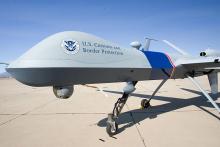
Since mid-November, the CIA had not launched a drone attack against Pakistan. On Sunday, the New York Times front page prominently featured a story headlined Lull in Strikes by U.S. Drones Aids Militants.
Quoting an array of administration officials, diplomats, intelligence analysts, and one “American government official with decades of experience in Pakistan;” the picture painted was one of a bolder al Qaeda, increased attacks on Pakistani security, and threatened strikes against U.S. troops in Afghanistan. It was a “sky is falling” account of the dire effects of no drones.
In my more cynical moments, I think such stories, almost entirely from anonymous sources, are a not-so-subtle way of applying political pressure. It’s one of the ways media and politics interact in Washington. And, sure enough, yesterday, the attacks resumed. Reuters reported that “missiles hit a home on the outskirts of the town of Miranshah in North Waziristan, killing at least four militants.” Recess is over, back to business.