Immigration

IF YOU'VE been following Sojourners’ work for the past few years, you know that we have been deeply involved in efforts to reform our nation’s broken immigration system. In the wake of President Obama’s game-changing executive actions in November and the political firestorm they ignited, it’s appropriate for us to reflect on how we got to where we are today and where we might go from here.
After the 2012 elections, it seemed all but certain that we would see comprehensive immigration reform become law during the 113th Congress. The electorate in 2012 had a higher percentage of Latino voters than ever before, in keeping with our country’s changing demographics. The mandate seemed clear for political leaders on both sides of the aisle to prioritize immigration reform or risk alienating a constituency vital to winning future elections.
Beyond this narrow political calculus, however, many of us became deeply involved in the struggle for immigration reform because we strongly believe that fixing our broken immigration system is a moral imperative, and long overdue. Our faith as Christians compels us to struggle for a more humane immigration system. Indeed, the scriptures could not be clearer. In the Old Testament, the Lord commands: “Also you shall not oppress a stranger, for you know the heart of a stranger, because you were strangers in the land of Egypt” (Exodus 23:9).

I am a newly minted American. Four years ago I passed the naturalization test and took the oath of allegiance to the United States. But I had been living as a citizen before I took the oath. Those who do not have the legal status of citizen often act as citizens. They attend PTA meetings, pay taxes, and engage in spirited public discussions about the common good. Citizenship is not only a legal status, but also a moral category and a set of practices.
President Obama recognizes this. Last night’s address described executive actions that will protect up to five million people from deportation and provide them with permits to work legally. People without valid immigration documents will be eligible to stay in the country temporarily if they have lived in the United States for more than 5 years, if they have children who are American citizens or legal residents, and if they register and pass criminal background checks.
Obama is not offering people citizenship, but his address reflected on the meaning of community belonging. “These people” often act like citizens, he seemed to be saying, because they “came to work, and study, and serve in our military, and above all, contribute to America's success.” To those of us who are citizens legally, Obama also had a message: Become better Americans.
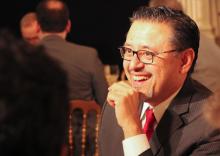
While Republican leaders blast President Obama for taking executive action on immigration reform, some prominent evangelical leaders are welcoming the president’s plans to keep about 5 million undocumented immigrants from being deported.
Evangelicals are a key voting bloc for the GOP, but on immigration some are taking a pragmatic step away from the party. They include Hispanic leaders such as the Rev. Samuel Rodriguez who say the time has come to manage what has become a “de facto humanitarian crisis” for millions of immigrants.
“This merciful action takes place because for years our government, under the leadership of both parties, failed miserably as it pertains to immigration,” said Rodriguez, president of the National Hispanic Christian Leadership Conference.
Rodriguez planned to be with Obama on Nov. 21 in Las Vegas, where the President hopes to rally for his new steps.

Editor's Note: Thursday evening, President Barack Obama announced he is taking action to reform pieces of our broken immigration system. See Sojourners President Jim Wallis' recap here. Below are President Obama's remarks as prepared for delivery.
My fellow Americans, tonight, I’d like to talk with you about immigration.
For more than 200 years, our tradition of welcoming immigrants from around the world has given us a tremendous advantage over other nations. It’s kept us youthful, dynamic, and entrepreneurial. It has shaped our character as a people with limitless possibilities – people not trapped by our past, but able to remake ourselves as we choose.
But today, our immigration system is broken, and everybody knows it.
Families who enter our country the right way and play by the rules watch others flout the rules. Business owners who offer their workers good wages and benefits see the competition exploit undocumented immigrants by paying them far less. All of us take offense to anyone who reaps the rewards of living in America without taking on the responsibilities of living in America. And undocumented immigrants who desperately want to embrace those responsibilities see little option but to remain in the shadows, or risk their families being torn apart.

Tonight, faith leaders and all those who have spent years trying to fix our broken immigration system should feel gratitude toward President Obama. In a primetime address to the nation, the president announced he was taking executive action to relieve some of the suffering caused by the failures of the status quo. Millions of families will no longer live under the daily threat of having their lives torn apart by senseless deportations, which is something all Christians – whether Republican or Democrat – should celebrate. Many of our brothers and sisters in Christ, who have spent significant portions of their lives hiding in the shadows, can now enjoy the flourishing God intends for us all. Their joy and well-being must inform our judgments of the president’s action, especially in light of the biblical call to “welcome the stranger.”
Unfortunately, the president’s compassionate actions are creating a political firestorm among some Republicans in Washington. Their anger and antipathy toward the White House are blinding them to the positive effects these measures will have for our society. Even after decades living and working in our nation’s capital, I’m still amazed at the many ways political ideology can prevent us from having “eyes that see” and “ears that hear.” I lament that our political discourse has come to this.
Everyone agrees the only way to find sustainable, long-term solutions is through Congress passing bipartisan legislation. The Senate did exactly that more than 500 days ago, but their honest efforts have languished in the House of Representatives because of Republican intransigence. GOP leaders promised alternative policy ideas; reform garnered widespread, nationwide support — including among a majority of Republicans; faith leaders were hopeful after countless positive conversations with members of Congress; the president even told me that he was “optimistic” about reform after conversations with Speaker John Boehner; the country, and, more importantly immigrant families, patiently waited — yet, the House failed to act.

Yesterday, President Obama released a short video providing more information on a much-anticipated executive action announcement on immigration policy. While the details remain unclear on how many of the 11 million undocumented and aspiring Americans will be covered, relief is rumored to the following:
- Temporary legal protection for undocumented parents of children who are legal U.S. citizens.
- Temporary legal protection for undocumented immigrants with a longstanding presence in the United States.
- Extension of the 2012 Deferred Action for Childhood Arrivals (DACA) program.
The president will address the nation tonight at 8 p.m. ET. Watch the speech live here.
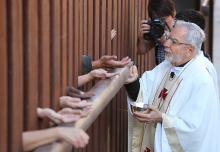
The nation’s Catholic bishops are jumping into the increasingly contentious battle over immigration reform by backing President Obama’s pledge to act on his own to fix what one bishop called “this broken and immoral system” before Republicans assume control of Capitol Hill in January.
In an unscheduled address Nov. 11 at the hierarchy’s annual meeting, Seattle Auxiliary Bishop Eusebio Elizondo, chairman of the migration committee of the U.S. Conference of Catholic Bishops, said the USCCB would continue to work with both parties to pass comprehensive immigration reform.
But, Elizondo said, given the urgency of the immigration crisis and the electoral gains by Republicans who have thwarted earlier reform efforts, “it would be derelict not to support administrative actions … which would provide immigrants and their families legal protection.”
“We are not guided by the latest headlines but by the human tragedies that we see every day in our parishes and programs, where families are torn apart by enforcement actions especially,” he said.
During the summer, the president was moving toward unilateral action on immigration, despite warnings that such moves could exceed his constitutional authority or would turn voters against reform.
Then in early September, Obama said he would delay acting on his own, a move that was seen as a way to protect vulnerable Democrats from any backlash in midterm elections. On Sunday, Obama told CBS’ “Face the Nation” that he was now “going to do what I can do through executive action.”
“It’s not going to be everything that needs to get done. And it will take time to put that in place,” he said.

Think about this: why would anyone travel thousands of miles on a journey that many do not survive — except for the hope that their destination (the U.S.) is significantly safer than where they currently live? I cannot imagine taking such risks unless my current circumstances left me with no other options besides death. I have met many people who are undocumented in the U.S. They are not criminals. They are not economic threats. They are mothers and fathers, aunts and uncles, and sometimes teenagers trying to escape untold violence and oppression. They are our neighbors, community members, and friends. They are people simply trying to do what it takes to survive.
Our immigration system is broken. It is hard for anyone to say otherwise. But I think our values are broken too. When gun-toting vigilantes are able to successfully threaten buses full of children put at risk by their parents because it was a better option than staying at home, something is desperately wrong with our values. We can say their home country needs to get its act together, but that does not address the hostile response in the U.S. by some people. Politics aside, the morality of refusing such people violates the values of both my Christian faith and my understanding of how my country was founded by persecuted refugees seeking freedom.
Comprehensive immigration reform is about real people with real blood flowing through real veins. It is not about numbers, other than the fact that the U.S. grants the lowest number of visas to the countries with some of highest homicide rates in the world — violence that the U.S. government has had a hand in creating over the past several decades. This is not about following the law, because our current immigration laws are simply unjust and violate the values upon which this country was founded: a country of immigrants in which “all people are created equal.” It is about God’s children desperately seeking refuge in a country that boasts itself as the “land of the free” and the land of hope and promise.

Editor's Note: Jarrod McKenna is an Australian Christian leader behind #LoveMakesAWay, a movement of Christians seeking an end to Australia's inhumane asylum seeker policies through prayer and nonviolent love in action. Read more about McKenna, #LoveMakesAWay, and the indefinite imprisonment of immigrants in Australia HERE. This article originally appeared at Junkee.
If you care about the cause of asylum seekers in Australia, you know there’s not been much to cheer about lately – the government descends further into cruelty, while much of the populace just shrugs.
So when a group of priests and pastors were arrested for peacefully occupying the Sydney offices of immigration minister Scott Morrison in March, praying and demanding the release of kids in detention, it turned a few heads and went a bit viral. When it happened again and again in the following months, it felt like a movement. To date, more than 100 leaders from many different faiths have been arrested at Love Makes A Way prayer vigils in politician’s offices all over the country (the PM wasn’t spared; his digs were targeted in May).
The charmingly polite stubbornness with which they’ve taken the government to task has earned many supporters of all persuasions, even if the prayer bit is lost on some of them. Along with other “cranky Christian” activists like Gosford Anglican Church’s Father Rod Bower (he of the irrepressible message board) and rogue Catholic priest and Triple J presenter Father Bob, they’ve been a pain in the conservative arse even an atheist could love.
One of the main minds behind Love Makes A Way is Perth-based radical Christian leader Jarrod McKenna. With his blond dreadlocks, casual vibe, and jokes about how Christians are “daggy,” he’s hardly the sanctimonious, Bible-bashing type. But when the subject of human rights and nonviolent resistance comes up, the charismatic McKenna becomes passionate, even evangelical.

Zach Szmara, Pastor of The Bridge Community Church in Logansport, Ind., was on a conference call when a young man entered the church. He put the call on hold to walk out of the office and meet him. In broken English, the man said, "Are you the people that help immigrants?" The man had driven more than 20 miles because he heard rumors of a church that loved the stranger.
Szmara said, "In that moment I was both humbled and convicted. I was humbled that our small church had such a reputation. Yet I was convicted that it was only very recently that I could answer 'yes' to the burning question of this young immigrant who came to me."
"I have lived overseas, and there my eyes could easily see the marginalized and the stranger in my midst. But at home in the states, I almost missed it, and almost missed how God has enriched my life because of it," Szmara continued.
The issue of immigration has dominated the headlines for much of this year. As Christians, we believe that – regardless of where we each may stand on the political spectrum – God’s heart for the immigrant is clear. In fact, the Hebrew word for an immigrant appears 92 times in the Old Testament alone, and the New Testament says in no uncertain terms that however we, as Christians, treat the stranger in our midst, is how we are treating Jesus himself.
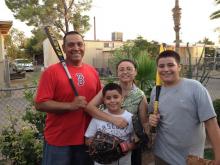
On Aug. 7 we lit a single white candle at the prayer service welcoming Rosa Robles Loreto into sanctuary at Southside Presbyterian Church in Tucson, Ariz. Almost 90 days later, that candle has been joined by five others, representing Luis Lopez Acabal, Beatriz Santiago Ramirez, Francisco Aguirre, Francisco Perez Cordova, and Arturo Hernandez. We are grateful that Beatriz was just granted a stay so that she could return to her home with her two small children, but the rest all remain in sanctuary.
As we approach Rosa’s 90th day in sanctuary, its time to replace the nearly burned down candle, but the light of radical Christian hospitality continues to not only burn bright, but spread throughout the nation.