Evangelicals
Tonight, Sojourners and the Ethics and Religious Liberty Commission are co-sponsoring an event to discuss religion and the 2012 elections. Rev. Wallis and Dr. Richard Land will delve into what they believe the religious issues will be and should be from now until election day.
The event is already turning some heads. A Washington Post article by Michelle Boorstein summed up the unique nature of the event in a headline, "Evangelical opposites to hold discussion on 2012 presidential race."
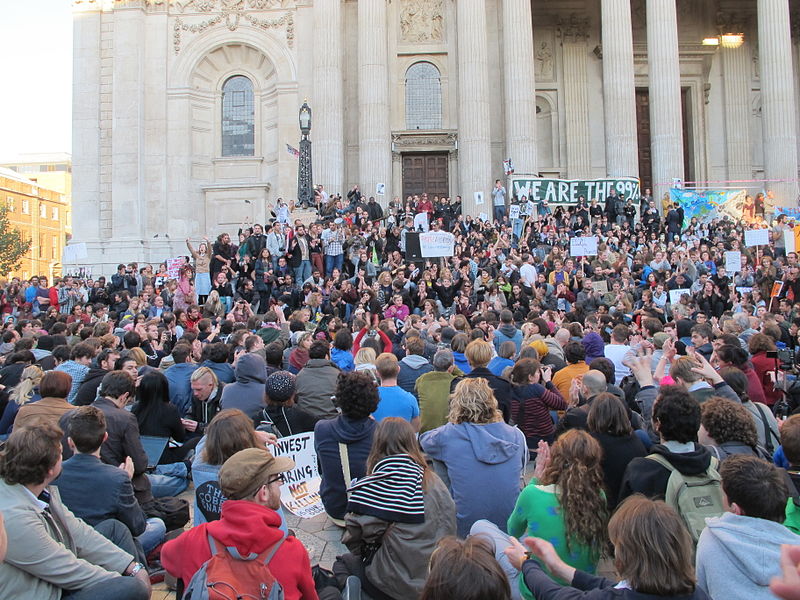
On Sunday (10/30), the Anglican Bishop of London, the Rt. Rev. Dr. Richard Chartres, met with Occupy London protesters who have encamped for several weeks now on the ground of St. Paul's Cathedral in London, in an ongoing attempt to get the demonstrators to leave church grounds.
Chartres wants the Occupiers to vacate cathedral property and stopped short, in an interview with the BBC yesterday, of saying he would oppose their forcible removal. Other British clergy, however, are rallying behind the demonstrators, saying they would physically (and spiritually) surround protesters at St. Paul's with a circle of prayer or "circle of protection."

When I applied for a job at CNN in the 90s, and told the interviewer that I had interned with an evangelical magazine called Christianity Today, his response was, "If it's Christian, it isn't journalism."
Over the years that expanded to, "If it's evangelical, it's Republican. Or Jerry Falwell. Pat Robertson. The Tea Party. Wrapped in a Patriotic Flag. White People. Derivative, cheesy music. Big Money. Big Hair." Fill in the rest of the blanks.
Are those labels a distortion of what it means to be an evangelical? Of course they are. Yet they are how evangelicals are perceived, rightly or wrongly (I personally think it's a mixture of both), in our society.

Evangelicals had always seemed like the "other" Christians. They were the ones who didn't celebrate Advent or baptize babies. They were the ones who went colleges that required pledges not to drink, smoke or dance. They were the ones who frowned upon evolution or "free-thinking."
As a child of the 1970s and '80s, I saw evangelicals as politically and socially conservative -- ever skeptical of culture and worried about what we were reading and watching. They bobbed for apples at "Harvest" parties instead of trick-or-treating on Halloween. They were the ones telling Kevin Bacon he couldn't be footloose and fancy free -- or maybe those were "fundamentalists." Did it matter? Was there even a difference?
Do Evangelicals hate smart people?
No. But it is such a persistent rumor that it might take something as momentous as another Protestant Reformation to see it die.
Why?
Because there are folks out there that do hate smart people. More precisely, there are people of faith who draw a line between "God's Word" and "Man's Opinion." They set up human reason as a force fighting against God's truth. While I think most Christians would agree that human reason is imperfect and limited (as humanists and scientists would probably agree as well) that doesn't make it antithetical to "God's Word." Most Christian traditions acknowledge reason as a gift from God not an enemy of God.

As the evangelical community in Portland rediscovered the calling of showing, in addition to sharing their faith, everything has changed. And it's only the beginning of what God is doing in our city. We're in it for the long-haul.
Not only have many great needs been met, but churches are working together in relationship as never before. The impact of one church humbly serving is profound. But the impact of a united Church serving in concert, actually has the power to change how the world views the Gospel.
 Being an Evangelical Christian means accepting grace and being honest about your faith with others.
First, I think you have be honest with yourself and God; and, then, when you’re as true as you can be about both what you actually know and what you actually don’t -- that’s what’s worth sharing.
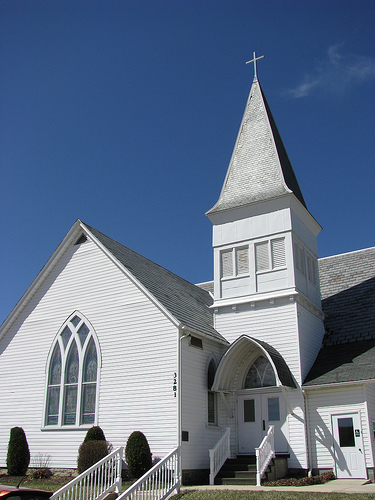 What are "the evangelicals," you ask?
Certainly not a political or ideological monolith, as recent polling and survey numbers demonstrate.
Here is a compilation of some recent statistics related to evangelicals and their political, spiritual and ideological habits.
 The puzzle here is not that readers of the Bible would tilt toward the political left. That, for me, as well as for thousands of other American evangelicals, is self-evident. Jesus, after all, summoned his followers to be peacemakers, to turn the other cheek, to welcome the stranger and to care for “the least of these.” He also expressed concern for the tiniest sparrow, a sentiment that should find some resonance in our environmental policies.
No, the real conundrum lies in the subtitle the editors of Christianity Today assigned to Franzen’s article, which was titled, “A Left-Leaning Text.” Adjacent to a picture of a Bible tilted about 45 degrees to the left, the editors added the subtitle: “Survey Surprise: Frequent Bible reading can turn you liberal (in some ways).”
The fact that anyone should register surprise that the Bible points toward the left should be the biggest surprise of all.
Here we go again. Presidential elections are coming and the role of "the evangelicals" is predictably becoming a hot political story.
Ironically, voices on both the right and the left want to describe most or all evangelicals as zealous members of the ultra-conservative political base.
Why? Perhaps because some conservative Republicans want to claim a religious legitimacy and constituency for their ideological agenda, and some liberal writers seem hell-bent on portraying religious people as intellectually-flawed right-wing crazies with dangerous plans for the country.
Let me try to be clear as someone who is part of a faith community that is, once again, being misrepresented, manipulated, and maligned. Most people believe me to be a progressive political voice in America. And I am an evangelical Christian.
I believe in one God, the centrality and Lordship of God's son Jesus Christ, the power of the Holy Spirit, the authority of the scriptures, the saving death of the crucified Christ and his bodily resurrection -- not as a metaphor but a historical event. Yep, the whole nine yards.
American Christian Zionism is pushing the U.S. government to support Israeli policies that our international friends find immoral and illegal.
We have come to believe that Christian Zionism underwrites theft of Palestinian land and oppresses Palestinian people, helps create the conditions for an explosion of violence, and pushes US policy in a destructive direction that violates our nation's commitment to universal human rights.
We write as evangelical Christians committed to Israel's security. We worry about your support for policies that violate biblical warnings about injustice and may lead to the destruction of Israel.
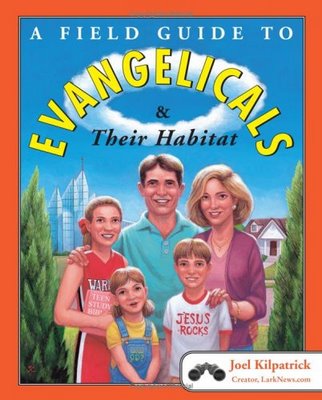 Most of my friends knew evangelicalism only through the big, bellicose voices of TV preachers and religio-political activists such as Pat Robertson, the late Jerry Falwell and James Dobson. Not surprisingly, my friends hadn't experienced an evangelicalism that sounded particularly loving, accepting or open-minded.
After eschewing the descriptor because I hadn't wanted to be associated with a faith tradition known more for harsh judgmentalism and fearmongering than the revolutionary love and freedom that Jesus taught, I began publicly referring to myself again as an evangelical. By speaking up, I hoped I might help reclaim "evangelical" for what it is supposed to mean.
Last night, death was interrupted when the U.S. Supreme Court issued a stay of execution for a Texas man convicted of a double murder in Houston in 1995.
Duane Buck was set for execution by lethal injection sometime after 6 p.m., Thursday September 15 in Huntsville, Texas. His execution would have been the second this week and the 11th so far this year in Texas alone. Two more executions are scheduled for next week.
The evangelical world expands to a far-off horizon and the topographical valleys and peaks cover landscapes that are both long and wide. Many in the media seem to have little knowledge of how large of a space the evangelical map covers. So, with this said, I welcomed Ross Douthat's thoughts in Monday's New York Times. His column, "American Theocracy Revisited," places good markers on the fears that Rick Perry and Michelle Bachmann's presidential runs are nothing more than an attempt at theocracy.
In much of the coverage of these two campaigns, the evangelical world gets flatten, stereotyped, and portrayed as only coming from one narrow point. Whether or not you agree with this view, the fact remains that any group that includes Miroslav Wolf, Jim Wallis, RC Sproul, Rick Warren, Joyce Meyers, Philip Yancy, Chuck Missler, Rob Bell, Albert Mohler Jr, TD Jakes, Amy Grant, Tony Campolo, Lucy Swindoll, Debrah Joy Winans, and so many more hues and colors of evangelicalism should not be placed in one bag and shaken into one lumpy mess, while saying that any one of their diverse views politically are the one true color. I know many will view this list and say who should or should not belong, and then justify their choices. A coherent political agenda could not be drawn from such a list of people. But following Jesus and making Jesus known in the world is at the core of each of these people's identity. Many on the list may disagree as to the best way to provide for the widows and orphans, but all would agree that we must care for them.
A week or two after the 2004 election, I was dining with some friends in New York when the conversation turned to religion and politics -- the two things that you're never supposed to discuss in polite company.
George W. Bush had just been re-elected with the help of what was described in the media as "evangelical voters." And knowing that I am an evangelical Christian, my friends were terribly curious.
"What, exactly, is an evangelical?" one gentleman asked, as if he were inquiring about my time living among the lowland gorillas of Cameroon.
I suddenly found myself as cultural translator for the evangelical mind.
"As I understand it," I began, "what 'evangelical' really means is that a person believes in Jesus Christ, has a personal relationship with him and because of that relationship feels compelled to share their experience of God's love with other people. "How they choose to share that 'good news' with others is entirely up to the individual. Beyond that, the rest is details and style."
Earlier this summer I attended a church service where the pastor, a man struggling with what appears to be his final bout with cancer, preached about the hope that Jesus promises to those who trust in him. After describing the returning Jesus brandishing a sword and dripping with the blood of all our vanquished enemies, he invited the audience to share what they saw as the hope that this Jesus promises. The responses ranged from no cancer, to no pain, to no worries about paying the bills, to the promise of an upgraded body -- all of course in heaven someday after we die. The congregation was encouraged to find contentment in the present from the possibility of realizing these promises someday. Our souls are what matter; the body just has to endure until our souls reach heaven. No mention of help with how to pay this month's rent or what it means for a cancer-ridden body to be the temple of the Holy Spirit, just the spiritual promise that someday all will be well.
Sign Language. Fashion Tips. Thank You. Interns. Today we say goodbye and thank you to this year's Sojourners interns. Among their other invaluable contributions to the work and mission of Sojourners, the interns wrote 72 blog posts for God's Politics! Here is a little round up of links to a few of them:
- Jesus Knows Sign Language by Taylor Johnson
- 7 Essential Tips For Fitting in With the Christian Literary Underground Scene Near You! by Betsy Shirley
- Justice For All Means Justice for Gays and Lesbians by Hannah Lythe
- Who Goes to Hell is Not the Most Important Question by Kiran Thadani
- Saleswoman + Creative Inspiration = Marketing Maven! by Alie Jones
- Deportation is Not a Family Value by Andrew Simpson