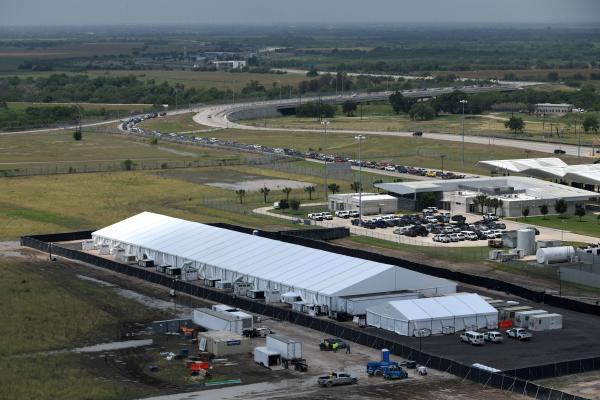
Hunger strikes allow detained immigrants to regain their agency while simultaneously throwing themselves on the mercy of the very institution that has oppressed them.
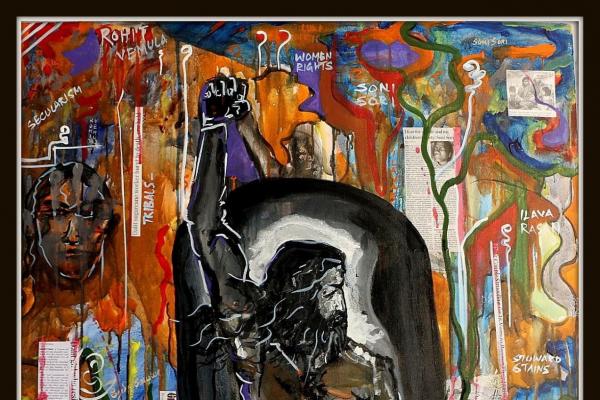
Jesus came to liberate people. That’s what Jesus has done in his ministry. When we read Jesus’ parables and quotes in Luke’s gospel, as well as in Matthew, you can find out that Jesus is a social reformer. So that is in the Palestinian context. When we see Jesus as our God, we should contextualize him in our own context, so then we can see Jesus as our God, or else he’ll be a normal human being — like Martin Luther, Martin Luther King — but he is different from other liberators.
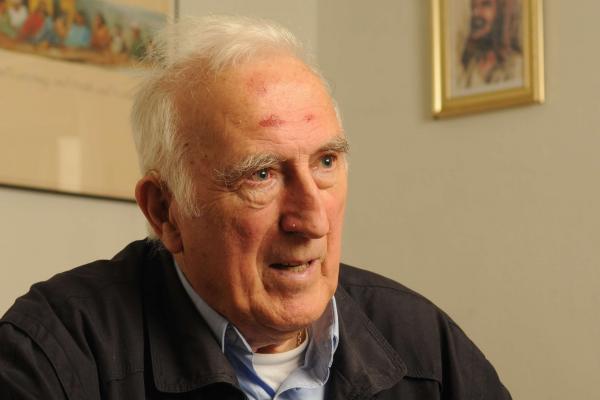
Reading the flood of obituaries and tributes to Jean over the past weeks, I have been struck by this insight: Jean’s central message about transforming structures of privilege to build community across every imaginable kind of difference makes sense without reference to Jesus — but his life doesn’t. His deepest desires and choices were all tied to his reading of the gospel stories of Jesus and his community.


There are moments in Long Shot, the new comedy in which Charlize Theron and Seth Rogen fall for each other, save the country from dehumanizing polarization, and (maybe) the planet from dehumanized humans, in which I wondered if I was watching something as good as Tootsie. It’s really easy to make a slapstick joke, but really hard to integrate dozens of them into a coherent work (there’s a reason the Marx Brothers don’t have many heirs); and it’s even harder to weave comic tropes into a story that also manages to feel like real life.
Black Millennial faith, bodies in deserts, global religious persecution, climate warriors, and more!
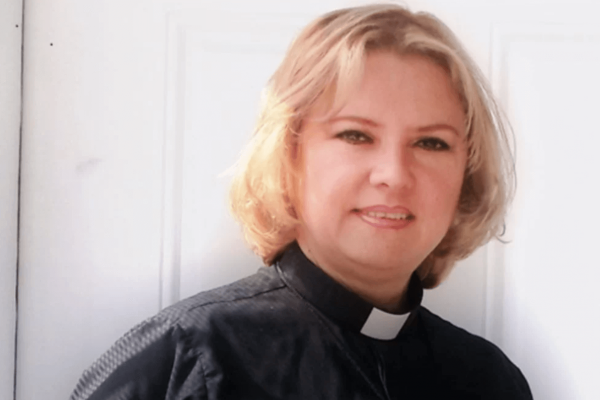
“In a representative democracy, if our legislators are not legislating in accordance with the moral law that we’re given by God, then it’s really on us to select representatives who will legislate in accordance with that law,” she said.
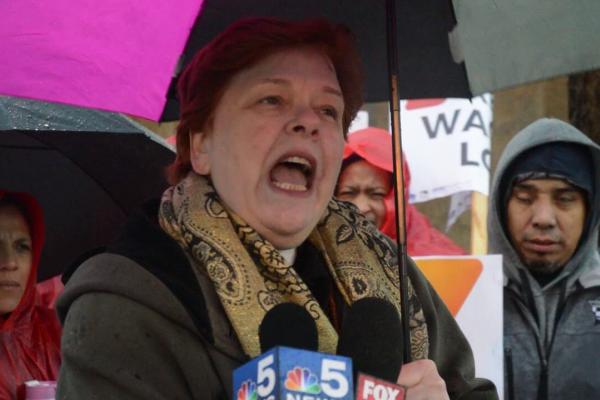
Rev. C.J. Hawking, Executive Director of Arise Chicago, has worked at the intersection of faith and organized labor for over 30 years. Arise Chicago helps organize religious communities in support of union campaigns and advocates for workers’ rights and dignity in the workplace. For Rev. Hawking, the co-author of Staley: The Fight for the New American Labor Movement, this activism is an essential part of her faith and the church’s call to be faithful to the gospel. I recently had the opportunity to talk with Rev. Hawking about Arise Chicago’s work, and how churches can support the labor movement in their fight for workplace democracy and a more equitable economic order.
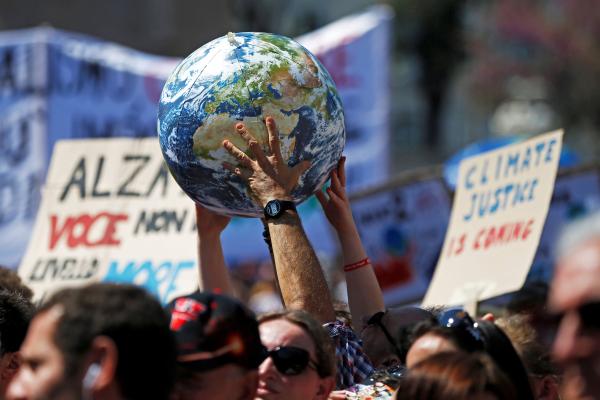
Seemingly every week a new major report comes out sounding the alarm about the escalating crisis of climate change. You may have missed two of these from just this past week that join a drumbeat that often causes me to lose sleep as I worry about the future that my 6- and 8-year-old sons will inherit. First, on Saturday the sensors at the Mauna Loa Observatory in Hawaii indicated that concentrations of the greenhouse gas has reached 415 parts per million (ppm), which means that for every 1 million molecules of gas in the atmosphere, 415 are made up of carbon dioxide. This means that even if we manage to move rapidly toward renewable energy and use other measures to help stanch the steady flow of carbon dioxide into the atmosphere, the next generation will likely be saddled with permanent negative consequences of our artificially elevated levels of CO2. Also last week, the Intergovernmental Science-Policy Platform on Biodiversity and Ecosystem Services (I.P.B.E.S.), a research arm of the United Nations, told the world that we may be on our way to losing as many as a million plant and animal species. The 1,000-plus page report details the effects of climate change on marine and other wildlife and emphasizes like never before the devastating impact of biodiversity loss to humans.

While the Trump administration has been vocal about confronting religious persecution for global Christians, many of its domestic and foreign policies only serve to exacerbate the conditions that make Christians in these regions more vulnerable. The Iraqi Christian Chaldean community in the United States has been susceptible to deportations in the aftermath of Trump’s executive orders. The “Muslim travel ban” has done little for Christian migrants and other vulnerable religious communities from nations now under travel restrictions to the United States.