Documentary

At the Full Frame Film Festival in Durham last week, I saw Marco Williams’ new documentary, The Undocumented, which tracks migrants as they hike into the United States across the border between Mexico and Arizona, trying to escape the detection of border patrol agents, and trying to survive the deadly heat of the Sonoran desert.
The documentary follows a young man, Marcos Hernandez, as he tries to find his father, Francisco, who was last seen in the desert walking for days in the 120-degree summer heat. Francisco left their home in Mexico with a coyote — man he paid $2,000 to lead him across the border — to make enough money to pay for his son’s expensive dialysis treatments. But he never called; he never returned. The coyote reported that he left Francisco in the desert because he was sick and couldn’t keep up with the other migrants in the group. Marcos fears the worst — that his father died of dehydration, of heat exhaustion. But to confirm the death he has to find the body.
The filmmaker focuses on the morgue in Tucson, Ariz., where the medical examiner investigates human remains, looking for clues that would help identify the dead in order to return whatever is left to family members and friends, to provide some kind of closure, to honor the dead with a burial.
In the film, Marcos won’t believe his dad is dead until he can see his dead body, or whatever is left of his body — a skull, teeth, his rib cage. He will not believe unless he can see.
“Unless I see the mark of the nails in his hands, and put my finger in the mark of the nails and my hand in his side, I will not believe” (John 20:25). That’s what Thomas says to the other disciples about the resurrected Jesus; and what Thomas says about needing to see the body reminds me of the story of Marcos, about the need to see in order to believe.
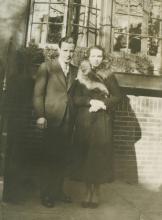
Gilbert and Eleanor Kraus lived a comfortable life in 1930s Philadelphia, where he made a good living as a lawyer, and she kept a stylish house.
They were secular Jews who sent their children to a Quaker school, and unlikely candidates for the mission they assigned themselves. Gilbert revealed the plan to his wife as he was shaving in the bathroom, so their young son and daughter would not hear.
He wanted to go to Vienna and save 50 Jewish children from the Nazis.
THE DOCUMENTARY film The Economics of Happiness, produced by the International Society for Ecology and Culture, begins starkly, with full-screen titles that tell us we are facing an environmental crisis, an economic crisis, and a crisis of the human spirit. As the film goes along, it strongly suggests that those three crises are interrelated.
In the end, the filmmakers and their multicultural array of talking heads ask that we stop measuring human progress simply by economic growth and give priority to the quality of life, the health of communities and their cultures, and the sustainability of our economic practices. In short, they suggest replacing our mad rush toward globalization with a back-to-the-future move to “localization.”
Early in the film, writer-director-narrator Helena Norberg-Hodge tells us about the people of the remote Ladakh region of the Himalayas, one of the highest spots on earth to be inhabited by a settled human community. When Norberg-Hodge first visited the Ladakhis in the 1970s, she says, they were self-sufficient, healthy, and mostly at peace, with themselves and each other. Then came the great Western world with its bells and whistles and manufactured needs. Soon the people became dissatisfied with their traditional way of life and were driven to compete in a cash economy. Before long, there was open hostility between Muslims and Buddhists, who had co-existed peacefully for centuries, a fraying of the social fabric, and an atmosphere of gloom and depression.

Tomorrow night is the first presidential debate. It will undoubtedly be an important moment in the campaign for the highest office in the land. But, whose lives will it be important to?
Certainly, there will be a lot for pundits to discuss and dissect. They will analyze phrases and statements, and will compare them to polling data and focus groups in swing states. Super PACs will record gaffes by either candidate, ready to turn them into multi-million dollar commercial buys.
But, as a person of faith, what I want to know is: how will the words that are said and the positions that are staked out affect the 46 million people in our country living in poverty? What does it mean for the hardworking families who can't put food on the table? Or the 1 in 5 children for whom poverty is an everyday reality and opportunity seems to be an illusion?
Tonight is the world premiere of a film that puts those questions front and center. The Line is a new documentary film from Emmy award-winning writer and producer, Linda Midgett. It tells the stories of real people struggling to make ends meet but still falling below the poverty line. These are stories far too common in our country today and should be a central topic of this debate.
Neighborhood Film Company reaches out to homeless people in Philadelphia --- interview with The Book's founder Nick Zammuto --- This American Life's "The Convert" --- Pixar's new short film "Partysaurus Rex" --- musicians Silversun Pickups vs. the Romney campaign --- Stride gum parodies Apple --- Over the Rhine documentary from Nowhere Farm in Ohio. See these and more in today's Links of Awesomeness...
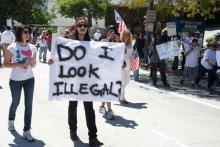
When people who have immigrated to another country through methods other than the official legal system are discussed, we hear quite a few words bandied about: “illegal,” “undocumented,” and “alien” just to name a few. The terms are often used interchangeably, but are these terms interchangeable? On NPR’s, Tell Me More, Professor Kevin Johnson, Dean of the law school at the University of California at Davis says no.
“I fear that ‘illegal immigrant’—the term—is a loaded term. It is not as loaded as some of its predecessors like ‘illegal alien’ or ‘wetback,’ but it still is a loaded term,” says Johnson.
In Mandela: An Audio History, the voices of activists, artists, and ordinary citizens unite to tell the powerful narrative of overcoming apartheid through strength and solidarity in South Africa. In this five-part audio documentary, hosted by Desmond Tutu, the weaving of personal interviews, newsreels, and found sounds from Mandela and those around him (both for and against) are highlighted to showcase the watershed story of a 50-year struggle.
CLICK HERE TO LISTEN TO THE FULL SERIES OF AUDIO DOCUMENTARIES
Take a listen to Part One: 1944 –1960
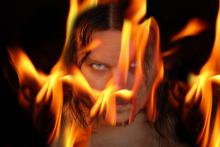
The film picks up on the recent media buzz generated by Rob Bell's controversial bestselling-book Love Wins, taking that debate into new levels of intelligence and depth.
Like any good documentary, we have the entertaining attention grabbing parts, which aren't hard to find when your topic is Hell and damnation:
We meet people at a death metal concert, take a tour through "Hell House" where actors attempt to traumatize teens into the kingdom by reenacting scenes from Columbine. Then there are the street interviews with the rather obviously mentally unstable and angry folks from Fred Phelps' church, holding their "God Hates Fags" signs and screaming at anyone who passes by.
The movie quickly moves beyond this however, delving into the deeper issues at hand. Unlike so many other Christian films, Hellbound? is neither sentimental nor sensationalist. The word that comes to mind instead is depth.
THE TRUTHS flickered into visible expression at the Full Frame Documentary Film Festival are, minute-for-minute, usually among the cinematic highlights of the year.
The line between documentary and fiction movies has blurred: On the one hand, even a Hollywood package as huge as The Dark Knight has its share of verite-style intimate handheld camerawork (and thoughtful politics—Batman is presented as nothing less than the necessary sacrifice for a community that has to kill someone to stay “pure”). On the other, the top 10 grossing documentaries of all time were each released in the past decade: Audiences are attracted by the fusion of social engagement and entertainment like never before.
Michael Moore’s appearance at the festival reminded me how common it is for activists to want to make films just because it’s cool (which usually makes for bad films), or for filmmakers to inject a dose of socially “relevant” messaging into their movie because they think it will increase the box office. (Think of when churches jumped on the bandwagon for Mel Gibson’s The Passion of the Christ. Mel got rich. Jesus, I aver, stayed 99 percent poor.) Moore’s point is that you should make documentaries because you want to make films—you can be an activist without being a filmmaker.
But if you’ve got the heart and the talent, it should rise to the surface, and if it does, you’ll usually end up at Full Frame, where this year’s highlights were three films that mingle mature cinematic craft with ethical depth.
An outspoken supporter of a planned mosque that has sparked opposition in Murfreesboro, Tenn., has switched sides and joined the anti-Islam movement.
Eric Allen Bell, a documentary filmmaker, was a fixture at court hearings and protests over the Islamic Center of Murfreesboro in 2010. Back then, he was making a movie called Not Welcome, which depicted mosque critics as Southern Christian bigots.
Now he says the mosque is part of a plot to destroy America. He claimed the mosque is "built on a foundation of lies" in a recent op-ed piece at the anti-Islam site Jihadwatch.com.
“If art is to nourish the roots of our culture, society must set the artist free to follow his vision wherever it takes him.” ~President John F. Kennedy
Twenty-five years after the release of Paul Simon's Graceland album, the singer-songwriter returned to South Africa to visit the musicians who worked with him on what many believe is his musical masterpiece. A new documentary film, Under African Skies, which premieres tonite (Friday, May 25) on A&E, chronicles Simon's journey and the role that music — and artists — may have played in bringing about the end of apartheid.
This masterful film, which debuted earlier this year to wide acclaim at the Sundance film festival, makes a convincing argument for the important role that artists play in changing the world for the better.
This week I came across a dynamic outlet for new forms of storytelling. MAKERS is a documentary project where dozens of short reflections and dreams are gathered to promote the ways a diverse collection of women are transforming the planet into a more holistic and habitable place. While most of these stories are non-fictional, rooted in a place that may not extend too far beyond their origins, the opportunity to zoom in on an impassioned way of living, thinking, and acting, is an encouragement for all people to continue acting out the worlds we desire. These many narratives of change and engagement craft a large and resounding story of the power of women.

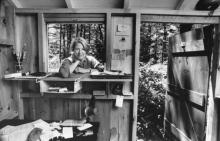
When Sojourners CEO Jim Wallis departed on his three-month sabbatical at the beginning of January, I sent him a list of books, films and music that I thought would nourish his mind and spirit in, perhaps, different ways than the media he normally consumes do.
Jim's sabbatical — a true Sabbath in the literal sense — is designed to be a time of rest and, more importantly, rejuvenation. It will also be a creative time when he will be working on a new book.
Jim is a creative. A writer. A visionary. He regularly digs deep into his heart and soul, breaks himself open and pours out his passion, hope and faith for the edification of others. If creatives aren't diligent, though, we can work ourselves into the ground. Our wells can run dry.
In sending Jim this list of what I like to think of as "soul food," I hoped to inspire his imagination and give him new fuel for the fire, if you will.
Art in the streets and in the windows of dirty cars, photography hot spots around the world and how it's bringing healing to victims of sexual abuse, Leonard Cohen, David Lynch, Mitt Romney, and a guide to discovering what type of worshipper you are.
Last weekend, I had the privilege of spending some time at the End Genocide Action Summit, which brought people from all over the world to Washington, D.C., to learn about and fight against genocide, particularly the ongoing genocide being waged by Omar al-Bashir against the people of Darfur, Sudan.

When I applied for a job at CNN in the 90s, and told the interviewer that I had interned with an evangelical magazine called Christianity Today, his response was, "If it's Christian, it isn't journalism."
Over the years that expanded to, "If it's evangelical, it's Republican. Or Jerry Falwell. Pat Robertson. The Tea Party. Wrapped in a Patriotic Flag. White People. Derivative, cheesy music. Big Money. Big Hair." Fill in the rest of the blanks.
Are those labels a distortion of what it means to be an evangelical? Of course they are. Yet they are how evangelicals are perceived, rightly or wrongly (I personally think it's a mixture of both), in our society.
[caption id="attachment_34028" align="alignleft" width="214" caption="Detail of a sculpture at the site of a former slave market, Christ Church, Zanzibar. By Cathleen Falsani."][/caption]
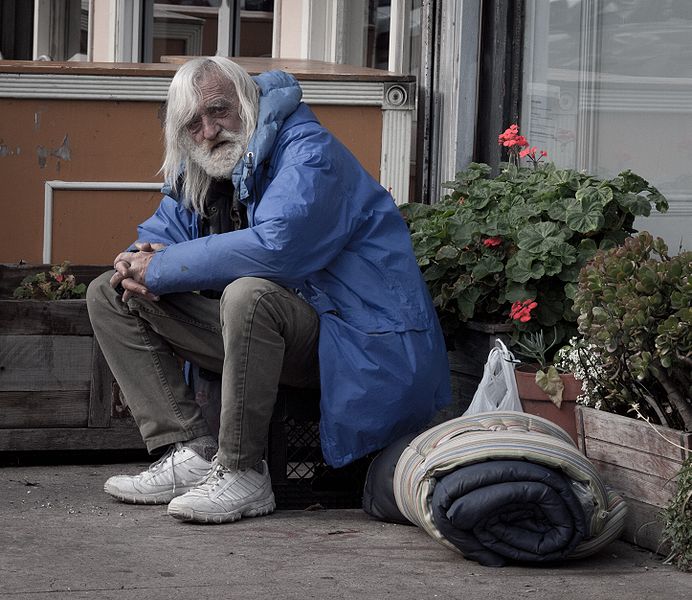
The Gubbio Project, which helps churches become refuges for homeless people throughout the U.S., recently earned a new fan: Author Anne Rice. "When I was in San Francisco, I visited St. Boniface Church in the Tenderloin and was moved by the sight of many peaceful homeless people sleeping in the pews of the church," Rice wrote on her Facebook.com page earlier this month. The author of the Vampire Lestat books and most recently the biblically-themed Christ the Lord novels and her spiritual memoir, Called Out of Darkness, provided her "people of the page" as she calls them, a link to the Gubbio Project where they could donate to "this fine work on the part of the Franciscans of St. Boniface in helping the homeless."
For the past 30 years, through my work with Maryknoll and Pax Christi International, I've come to know grassroots communities around the world in situations of war and poverty. My mission focus base been largely international, but people, were in the "center of my screen." The environment, I thought, would have to wait.
A few weeks ago, I went with two of my grandchildren, Lauren (10) and Bobby (9), to see the documentary Hubble, which is about NASA's final shuttle expedition to repair a a broken part of the Hubble telescope. We watched in awe at the spectacular photos of the expanding universe. What an amazing sense these photos give of our own location as humans who are part of a larger earth community, who are part of a cosmos with which our own future is inextricably linked.