Alabama
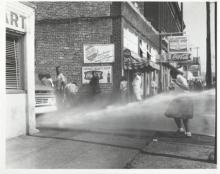
BIRMINGHAM, Ala. — In May 1963, thousands of Birmingham school children faced police dogs, fire hoses, and possible arrest to demonstrate against segregation. Now, 50 years later, those who were part of what became known as the “Children’s March” say they don’t want their story to be forgotten.
“We were doing this not just for ourselves but for some higher purpose,” said one of the young marchers, Freeman Hrabowski III. “It focused on civil rights for all Americans.”
Hrabowski is now president of the University of Maryland, Baltimore County. He was 12 when he marched in Birmingham and was arrested for parading without a permit. He and hundreds of other children were held in custody for five days before being released.
Experts say the children’s crusade helped galvanize the civil rights struggle at a time when efforts were flagging.
“That was really the tipping point in a tipping year,” Pulitzer Prize-winning author Taylor Branch, who has written a series of books about the civil rights movement, told the PBS program “Religion & Ethics NewsWeekly.”
Watch Birmingham and the Children’s March on PBS. See more from Religion & Ethics NewsWeekly.
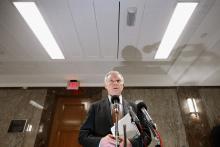
The momentum for immigration reform is building across the country, but leaders in Washington are often the last to realize the seismic shifts taking place. The most recent example is when Alabama Sen. Jeff Sessions made the claim that there is no “moral or legal responsibility to reward somebody who entered the country [without documentation].”
No moral responsibility? Many Christians believe otherwise.
Charles Carpenter
George Murray
Nolan Harmon
Paul Hardin
Joseph Durick
Earl Stallings
Edward Ramage
Milton Grafman
In towns all across America, streets are not named after them. School children do not learn about them. No one waits in line to see the homes where they were born. They are ... simply forgotten.
They weren’t necessarily bad men. They weren’t unimportant men. They were men of influence, men with a voice and the respect of their community. Most would have agreed; they were good men, according to one, “men of genuine good will.” While evil men are remembered and great men are enshrined, these men … just forgotten.
They are forgotten for being on the wrong side of history. Men forgotten for being silent when “a word fitly spoken” could have made a difference. Men who are forgotten for valuing comfort and stability over justice and compassion. Forgotten because they were unwilling to call out the status quo, and show it for it was … cruel and unjust.
These are the eight men on the other side of Martin Luther King’s “Letter from a Birmingham Jail.” The recipients. Eight well educated white pastors, priests, and rabbis who by God’s providence led reputable congregations in Birmingham, Ala., in 1963.

I walked down the newly plowed row with my grandpa, feeling the warm, red clay on the soles of my bare feet and listening to his stories and words of advice. I held a tomato plant in my hands, the rich, black potting soil falling off of the small, vulnerable roots, as he knelt and dug a place for it in the garden. “Hey,” he’d often start, “here's something my daddy told me when I was little. ‘God gave you two ears and one mouth because He wants you to listen twice as much as you speak. If you do that, you'll learn something. If you don't, you won't.’”
The memory of walking with my grandpa in his garden came back to me after I read about The Faith and Politics Institute's Civil Rights Pilgrimage in which more than 250 people (including 30 members of Congress) took a three-day tour of civil rights landmarks from Tuscaloosa to Birmingham to Montgomery to Selma. The participants in the pilgrimage got to hear the stories of the struggle for justice from the people who were in those places 50 years ago. I especially remember grandpa’s stories about his childhood on the family dairy farm in Greenville, S.C. in the 1920s. I liked to hear stories about the black folks who came and worked with him and his family. I heard hard work in his voice and saw struggle in his face when he talked about those times.

This past weekend, The Faith and Politics Institute led a three-day Congressional trip to visit Civil Rights landmarks across Alabama — from Tuscaloosa to Birmingham to Montgomery to Selma. It was an incredibly moving, emotionally exhausting, soul-quenching pilgrimage as we journeyed along with heroes of the Civil Rights movement and experienced their stories.
One such hero is Congressman John Lewis. A highlight of the trip for me is recorded at the jump.

America is in dire need of comprehensive immigration reform. It is an ethical and moral issue for sure, but it is also an economic one. Our nation’s future economy prosperity depends on migrant labor. Immigration laws that have been passed in states like Arizona, Georgia, and Alabama have severely hurt the state economies, local communities, and small businesses that rely upon migrant workers for farm labor.
The Senior Editor of CNBC.com, John Carney has asserted that there is no crisis related to a shortage of migrant farm workers. Well, to be perfectly blunt, I believe that Mr. Carney is wrong.

Over the past few weeks, Christians have written Alabama Gov. Robert Bentley asking him to stop the immoral practices that plague the state’s criminal justice institutions. This incredible outcry from the faith community demonstrates their outrage at stories of people in poverty spending days, weeks, and months in jail over their inability to pay fees and fines to private companies contracted to administer parts of Alabama’s system.
When contacted by Sojourners for a response to the thousands of messages received from people of faith about this issue, Jeremy King, spokesman for Gov. Bentley’s office responded, "We can review this issue and move forward from there."

Living in poverty has always been a struggle, but in Alabama being poor could land you in prison. According to a recent story in The New York Times, Alabama resident Gina Ray was locked up for over a month because she couldn’t pay fees and fines related to minor traffic offenses. Speeding while poor shouldn’t land someone in jail. This punishment doesn’t fit the crime.
Why would such morally outrageous penalties be imposed for such minor violations? Because criminal justice has become big business. Private companies are making millions of dollars running prisons, administering probation systems, and providing health care to those living behind bars.
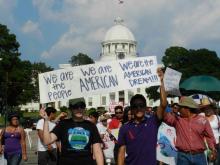
We lost a bitter legislative battle this year, as Alabama Legislators voted to make the nation's most toxic anti-immigrant law more poisonous than anyone imagined. Added to the notorious HB 56 is a requirement that the names and faces of undocumented persons be plastered on the web and in prominent public places — the new law stops just short of putting targets on their backs.
Teachers are still required to interrogate schoolchildren about their immigration status. People of faith, Good Samaritans, and family members are now felons if they knowingly drive five undocumented children to the store, the doctor, or Vacation Bible School. Racial profiling provisions make every trip to school, work, and church a nightmare.
The legislators — all Republicans — must have laughed all the way to golf games waiting for them back in their districts. They think they won.
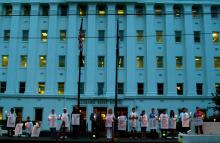
Here we are today, caught in an economic slump, finding ways to once again dehumanize those that we encouraged to come. The very people who have harvested our food, built our homes and served us over the past 30-plus years, we now declare criminals.
In my beloved Alabama, where 3 percent of the population (largely Hispanic) is estimated to be undocumented, our state government has created the harshest and most egregious anti-immigrant laws in the country. Rep. Micky Hammon and Sen. Scott Beason, sponsors and writers of HB56, stated that these laws would create an atmosphere of “self deportation.” I can only wonder how Native Americans might feel about that concept.
HB56 — passed by the legislature and signed into law by Gov. Robert Bentley in June 2011 — has now been replaced by HB658. The stated purpose of the new legislation was to simplify HB56 and make enforcement less complicated. In the process, stricter guidelines and harsher treatment were incorporated while simplification was ignored.
I am compelled to look at this law as a child of God within the Christian faith, accepting that all people in this world are my brothers and sisters, created by the God who breathed life into me and into them, making us one family.

Last week, Alabama Gov. Robert Bentley made a morally indefensible decision. He signed HB 658, which intensifies the climate of fear that already hangs over Alabama like low dark clouds before a hurricane.
Bentley once claimed that HB 658 would simplify HB 56 — the current anti-immigrant legislation that catapulted Alabama to the national stage. If this is simplification, then I’d like to see Bentley’s version of messed up. HB 658’s additional punitive measures now have created a more problematic situation that exacerbates the current oppression of some of the most vulnerable souls in Alabama.
The new law is reckless. HB 658 calls for the creation of an online public database to expose the names of all undocumented immigrants who have appeared in court. In addition, the law targets innocent children by requiring schools to check the immigration status of students.

In an uncharacteristic move, televangelist and bestselling author Joel Osteen, senior pastor of Lakewood Church in Houston, Texas, stepped into the political arena briefly to talk about Alabama's House Bill 56, the strictest anti-illegal immigration legislation in the nation.
Osteen, who unlike many of his television compatriots, normally eschews entering into the political fray, was in Alabama last week for an event and during an interview with a local television station, a reporter asked him about having to choose between faith and breaking civil laws, in the context of HB56, which would make it illegal for undocumental immigrants to receive any public benefits at the state or local level, attend publicly-owned colleges or universities, transport, harbor, employ or rent property to undocumented immigrants in Alabama.
Yesterday, a diverse group of faith leaders in Alabama released a television ad targeting Alabama's HB 56 -- the worst anti-immigrant law in the country.
The 30-second ad features Rev. Steve Jones, senior pastor at Southside Baptist Church in Birmingham.
''We believe in reaching out and ministering to our community. Yet under Alabama's immigration law, we could be prosecuted for following God's call to be good Samaritans,” Jones says in the ad.
Watch:
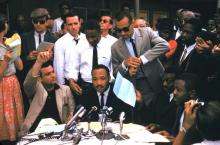
February was Black History Month. I ended it by pressing for immigration reform in the birthplace of the Civil Rights Movement.
When I landed in Birmingham, Alabama two weeks ago, it struck me that I was on my way to Samford University — the flagship University of the Southern Baptist Convention (SBC). It struck me that the Southern Baptist Convention is the largest evangelical denomination in the country and among the most conservative. It struck me that Alabama used to boast that it had the harshest Jim Crow laws and law enforcement during the Civil Rights era. Now it boasts the harshest anti-immigrant law in the nation.
Passed into law on June 9, 2011, HB56 criminalizes Alabamans’ daily associations with immigrants who cannot prove their legal status. Giving an undocumented immigrant a ride can result in criminal arrest. The legislation also prohibits all businesses (including schools, the water company, and the telephone company among others) from conducting business transactions on any level with anyone who cannot prove their legal status. Tens of thousands of Latino families fled Alabama within weeks of the law’s passage. Businesses closed, schools lost huge percentages of their students, and vegetables were left to rot in the fields.
I was in Birmingham to speak at the G92 South Conference, a one-day conference for students and pastors hosted on Samford’s sprawling campus. G92 is a reference to the 92 times the Hebrew word Ger is used in the Bible. Ger means stranger or sojourner. The conference began last autumn at Cedarville University in Ohio. It is now being replicated on Christian college campuses across the country. Samford University was the second campus to agree to host the conference.

GDP Revised Up To 3 Percent In Fourth-Quarter; Why Foreign Assistance Is Still Important; Syrian Army Assaults Rebel Districts; Public Views Of The Divide Between Religion And Politics; What Did Congress Do To Combat Poverty In 2011? Virtually Nothing (OPINION); Environmental Justice A Form Of Social Justice (OPINION); Occupy LSX May Be Gone, But The Movement Won't Be Forgotten; World’s Extreme Poverty Cut In Half Since 1990; Poverty Resolutions, Microloan Nonprofit, Shows How Far $1 Can Go To Provide Jobs For Poor; Alabama Lawmakers Calls For Immigration Law Repeal.
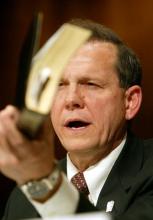
MOBILE, Ala. — You might think a candidate's ouster from the post he is seeking to regain would play a central role in a statewide election.
Yet Republican Roy Moore's forced exit, almost a decade ago, as Alabama's chief justice over a Ten Commandments monument seems only a murmur on the campaign trail.
Voters don't often ask about it, and the other two candidates in the March GOP primary hardly ever talk about it.
Moore plunged Alabama into a showdown in 2003 when he erected a 5,280-pound granite monument to the Ten Commandments in the Alabama judicial building in Montgomery. A federal judge declared the monument to be a violation of the separation of church and state and ordered Moore to remove it.
When Moore refused, a special panel of retired state judges voted unanimously to remove him from office for violating a higher-court order.

Whenever possible, I plan my Saturday errands such that I’ll be able catch part of “This American Life” on public radio as I drive and I’ve often found myself sitting in the grocery store parking lot to hear the end of a story.
One recent Saturday, the show’s theme — which ties together each of its non-fiction stories — was the biblical truism that “you reap what you sow” (Galatians 6:7), and most of the program was dedicated to examining the consequences — intended and otherwise — of Alabama’s controversial, toughest-in-the-nation immigration law, HB 56, which passed last June.
Whether what is happening in Alabama as a result of this law — and, as the program reveals, a great deal is happening, even if most of us outside of the state aren’t paying attention — was the intention of the bill’s authors and supporters is not entirely clear. What is clear, from a Christian perspective, is that the effects are devastating.
What most saddened me in the program was the statement of a young undocumented woman named Gabriella that, since the passage of HB 56, she finds herself unwelcome everywhere. “Even in the church,” she says, “you find people that… don't want to talk at you. And they don't want to give the peace to you.”

Obama: Jesus Would Tax The Rich; Pockets Of Prosperity Across USA Escaped Recession; Obama Won't Touch Climate With A Ten-Foot Pole; U.S. Press Freedom Fell 27 Places Last Year To 47th In The World; Gingrich Slams Romney: The Founding Fathers Believed In Equal Opportunity For The Poor; Why Both Parties Are Flying the Anti-Wall Street Banner; Occupy Your Voice; Can Science End War?; Alabama's Immigration Law To Cost State Millions In Lost Taxes, Study Says.

During this 35-minute audio story, Hitt walks through many aspects of the immigration bill and introduces real stories of people interacting with it — from Scott Beason, a Republican senator who was the primary sponsor for the bill last season, to Latino families pulling their kids out of school, quitting their jobs, and remaining safe in their isolated neighborhoods.
Hitt demonstrates how this is not only a huge issue for the state, but also for the church. A woman shares that people at her congregation are suspect when passing the peace, some won’t even shake hands. But again, this is what HB56 is about: making life uncomfortable to the point that the undocumented people will leave because it’s easier to flee than to stay.
On Monday's Colbert Report, Sojourners friend and Civil Rights activist Scott Douglas, discussed the overturn of Alabama's immigration law with host (and possible presidentail candidate) Stephen Colbert, and calls for a single, fair and national immigration law for the entire country.
Douglas is executive director of the Greater Birmingham Ministries in Alabama.
Watch his conversation with Colbert inside the blog...