Nielsen’s role in family separation, Islamophobia in Brazil and in the past, friends officiating weddings, and more!
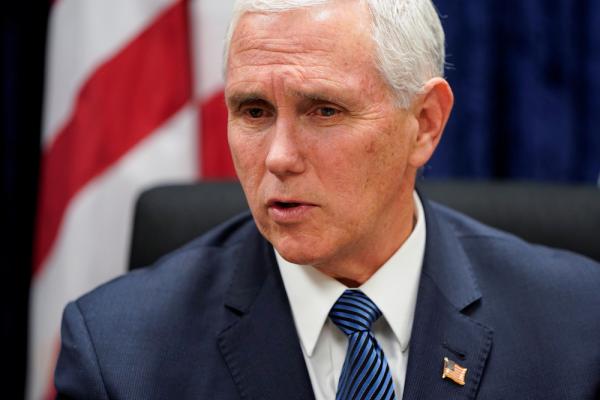
Early Thursday morning, Taylor University announced its choice of U.S. Vice President Mike Pence as its commencement speaker. As a TU alum, who regularly spends time on the campus talking to faculty and students, I was completely taken aback by this announcement. It wasn’t just me who was surprised. The majority of the faculty expressed their opposition to the choice of Pence in a faculty meeting following this announcement. Many students also are shocked by the selection, some of whom have signed a petition denouncing the selection of Pence.
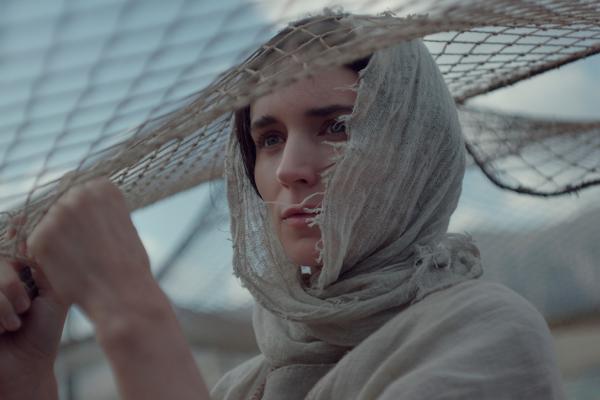
In the newest cinematic Mary Magdalene, directed by Garth Davis from a script by Helen Edmundson and Philippa Goslett, Mary isn’t confused at all. I don’t think anyone was expecting a film with that title to appear unironically in 2019; it's also a genuine surprise that it wasn’t made for the Christian market, nor does it aim for the kind of dry, “noble” distance that makes large-scale biblical epics such as Ben-Hur seem like Downton Abbey, upstairs, with sandals. The fact that Mary Magdalene contains decent performances (especially Rooney Mara’s Mary, not a doe-eyed holy innocent, but a leader who finds her voice by speaking), and makes an honest effort at exploring the less familiar parts of one of the most familiar stories in history makes it worth our attention. That attention may even be rewarded by an idea or two. It’s thoughtful, honest, yet not earth-shattering cinema, although it does bring its own revelation.
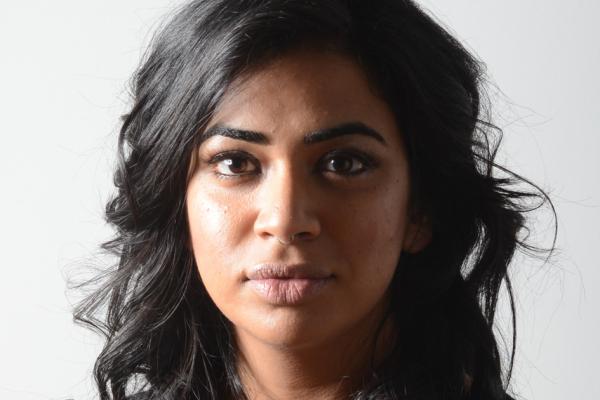
Nazia Kazi knows her history well: A Ph.D. in anthropology, she teaches courses on race, ethnicity, immigration, and Islam in the U.S. at Stockton University in Philadelphia. Kazi’s new book, Islamophobia, Race, and Global Politics, released Dec. 12 from Rowman & Littlefield, discusses the scope of Islamophobia in the U.S. from the country’s historical and political roots. Drawing on examples such as the legacy of Barack Obama, the mainstream media’s portrayal of Muslims, and the justifications given for some of America’s most recent military endeavors, Kazi highlights the vast impact of Islamophobia, connecting this to a long history of U.S. racism.
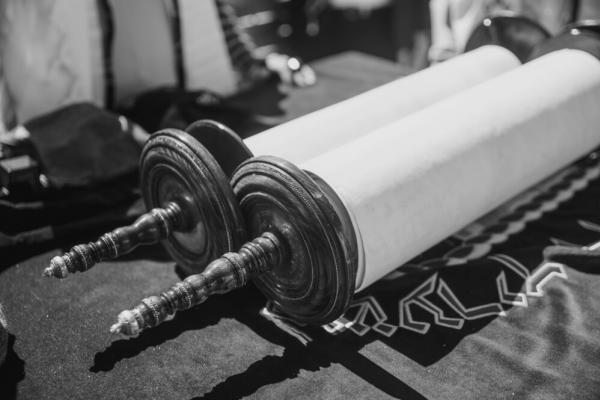
These faithful Christians may not realize that they have inherited the long historical lineage of Christianity that, since the early centuries of the common era, has partaken in a deliberate or unwitting de-Judaizing of Christianity. The distancing from its original Jewish leadership, the replacement of Passover with Easter, the changing of names: Yeshua to Jesus, Miriam to Mary, Saul to Paul, continue to this day, despite Christian scholarship, altruism, and the progressive ideal of honoring a diversity of cultures.
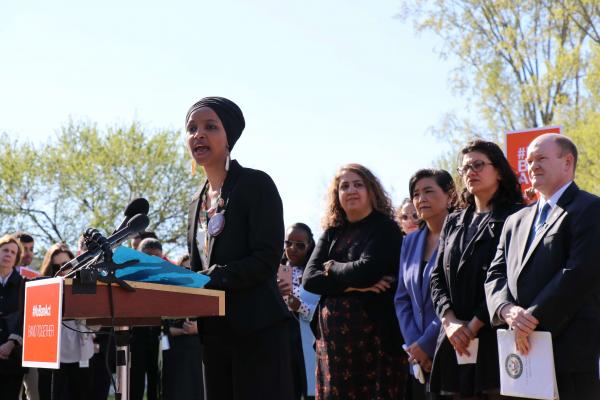
The last time Mana Kharrazi spoke with her uncle in Iran on the phone, she told him he could not visit the U.S. because of President Donald Trump’s so-called “Muslim ban,” an executive order barring travel from seven mostly Muslim-majority countries. She did not know her uncle was dying.
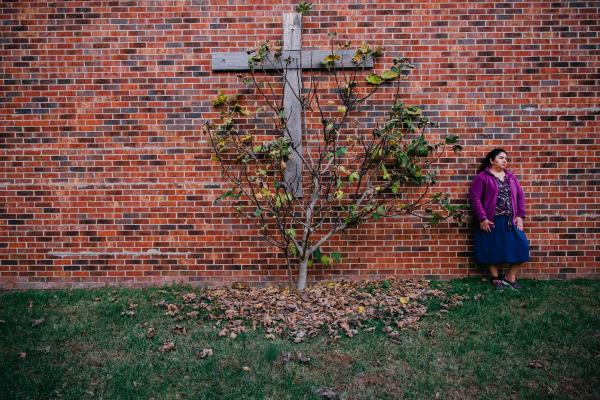
In May 2017, Juana Luz Tobar Ortega took sanctuary at St. Barnabas Episcopal Church in Greensboro, N.C. Originally from Guatemala, she had received a deportation sentence that would have separated her from her husband, four children, and two grandchildren, after living and working in the United States for over 20 years. Juana’s story, which is one among many harrowing stories of families harmed by aggressive immigration policies under the Trump administration, is now the subject of a documentary film.
As this conversation continues at the national level, we want to hear from you. What is changing in the way we discuss religion and politics, and what does that tell you about the direction of our country?
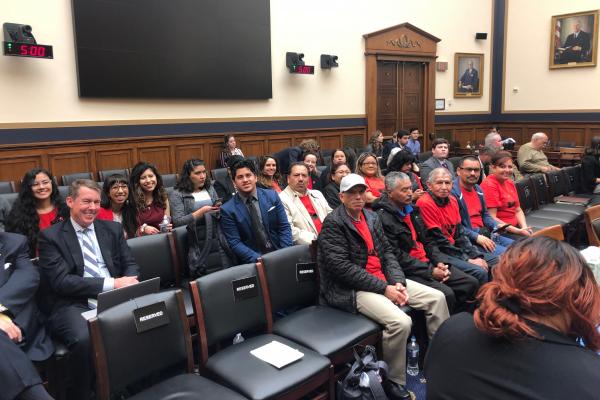
“Unskilled” and “temporary” do not accurately describe the people Areli Arteaga loves and works with — and she has no problem addressing those false labels. Arteaga, the daughter of two agricultural workers who immigrated to the U.S. from Mexico almost 30 years ago without documents, testified before the U.S. House Judiciary Committee on April 3, urging Congress members to help pass The Agricultural Worker Program Act of 2019, also known as the “Blue Card” bill.

According to Francirosy Campos, anthropologist and professor at the University of São Paulo (USP), the main problem faced by Muslims in Brazil is prejudice and threats, many of them made on social networks, particularly on Facebook.