
The Parkers wanted to limit small talk at their annual family Christmas party, fearful that conversation would veer into politics, or religion, or whether Pete Davidson is unconventionally attractive. So they organized a harmless white elephant gift exchange. By night’s end, they would be full of carbs and regret, vowing to play charades next year.

A lot of people I admire are fascinated with Hallmark Christmas movies. Chief among them is Mariame Kaba, founder of Project NIA, a leading advocate of prison abolition, and a self-described “Hallmark Channel devotee.” “I love the anthropological whiteness of those films,” Kaba told public radio in 2018. “I’m pretty sure there are white people who live like that. I don’t know any of those white people. I find it fascinating for that reason.”

In Matthew 25:35, Jesus identifies himself with the stranger we welcome or exclude. Advent hospitality extends beyond our personal relationships and into the ways we structure our neighborhoods and our common life. But in the United States, our politics are driven by “NIMBYism” (“not in my backyard!”), as housed individuals and politicians not only demand the exclusion of unsheltered people from public spaces but also oppose the creation of shelters and permanent, affordable housing in our neighborhoods.

Christians believe that God’s reign of righteousness, steadfast love, peace, and justice is not just a promise relegated to the future. Instead, we see glimpses of that heaven in the here and now, even as we face the realities of suffering and grief all around us. This means that Christ’s birth in Bethlehem makes it possible for us to co-labor with God in yanking pieces of heaven and bringing them closer to Earth.
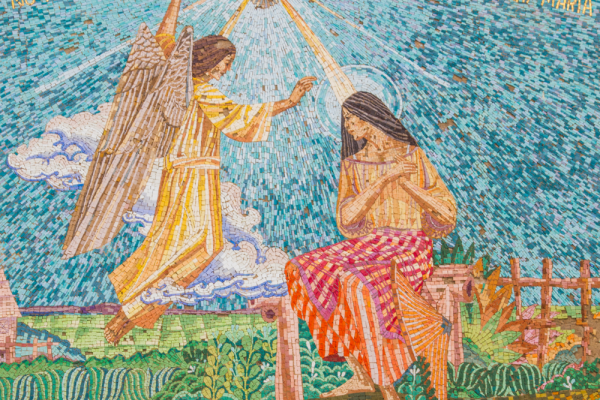
As I observed and engaged in the multifaceted conversations about abortion, I came to a stark realization: In the story of the Annunciation, God reveals the importance of consent, agency, and women’s rights. This season of Advent presents us with the perfect opportunity to look at the Annunciation from this perspective.
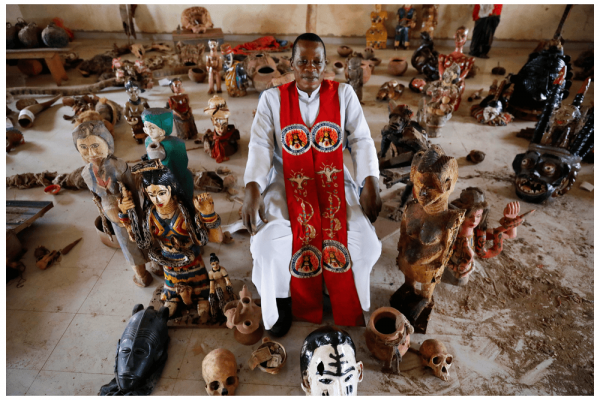
A Roman Catholic priest is collecting and saving hundreds of traditional pre-Christian religious artifacts in southeast Nigeria that new converts to Christianity had planned to burn.
The collection includes carvings of pagan deities and masks, some of them more than a century old and considered central to the pre-Christian religion of the Igbo people, who traditionally believed them to be sacred and to have supernatural powers.

The Great Resignation is underway in the United States with an astounding 3 percent of employees collectively refusing the terms of low-wages, absent benefits, and dangerous working conditions expected by their bosses. Pastors, too, are walking away. Recent poll data collected by Barna Group, a California-based research firm that studies faith and culture, confirmed what I’m seeing among my friends and colleagues. According to Barna, about 38 percent of Protestant senior pastors surveyed have considered leaving ministry over the past year. Among pastors under age 45, that number rose to 46 percent.
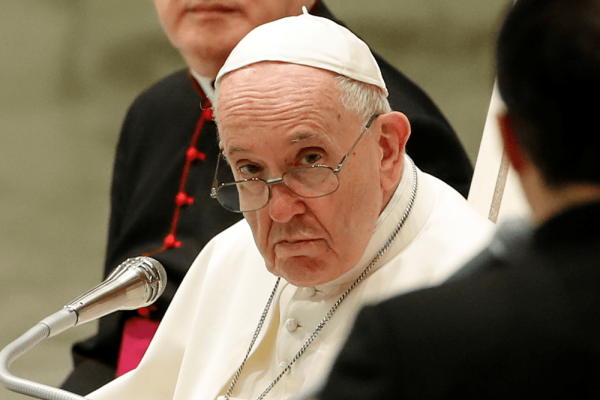
Pope Francis said on Monday that migrants were being exploited as “pawns” on a political chessboard in an apparent reference to the crisis at the Belarus border.
Thousands of migrants are stuck on the European Union’s eastern frontier in what the EU says is a crisis Minsk (Belarus’ capital city) engineered by distributing Belarusian visas in the Middle East, flying them in and letting them go to the border.

My favorite part of Thanksgiving is the leftovers. If we’re being honest, most of the food tastes better the day after the feast. Cranberry sauce becomes a sandwich spread, ham goes into a breakfast taco, bones go into a pot to make enough broth for several weeks of soup. Some happenings are so big that there’s always much leftover.
But not all leftovers are good. Trauma, for instance, can linger for months or years after the initial act of violence.

A jury in Brunswick, Ga., found all three defendants guilty of murder Wednesday for chasing and killing Ahmaud Arbery while he was out on a run in February 2020. Faith leaders across the country showed gratitude for the verdict while noting the grief for Arbery’s family and the work of justice still to be done.