progressive christians
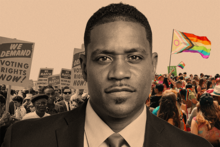
As founder and president of the AND Campaign, Justin Giboney has championed an approach to politics that seeks to overcome, in his words, Left-Right culture wars.
He has galvanized Christians, especially evangelicals, around a platform that aims to maintain a commitment to traditionally conservative Christian morality while championing traditionally progressive views on race and economics. His organization’s name and its ampersand logo represent an unwillingness to cede either value in service of a political party.
An attorney and political strategist, Giboney explains in his new book, Don’t Let Nobody Turn You Around: How the Black Church’s Public Witness Leads Us Out of the Culture War, the ways his upbringing and study of the Civil Rights Movement informs his work. In particular, Giboney criticizes Christians on the Right for allowing conservative politics to shape their views on race, immigration, and economics; he criticizes the Left for allowing progressive politics to shape their views of sex and abortion. At one point, the AND Campaign’s tagline was “Social Justice (&) Biblical Values.” In recent years, it has shifted to “Social Justice (&) Moral Order.”

For several years, I pastored a small church in the Northwest Bronx. In the summer of 2022, the church leadership decided to dedicate one Sunday a month to do a service project where we engaged in direct political action. It was the summer when Roe v. Wade was overturned, and we focused our attention on reproductive justice. Instead of simply looking at reproductive justice as a pregnant person’s right to receive an abortion, we started thinking of it in broader terms: a better family welfare system in the U.S., honoring the bodily autonomy of birthing people, and taking steps toward improving the material conditions of Black and brown children in the Bronx through mutual aid, collective care, political education, and political solidarity.
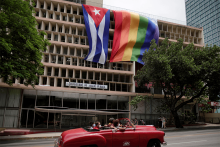
Cubans celebrated the results of a landmark referendum on Sept. 25 that legalized same-sex marriage, redefined the legal family, expanded rights for the elderly and children, and more.

This week has been one where loss seems as close as it might ever be — losses significantly more important than tennis matches. Thinking of politics as sports is deeply unhealthy but understanding and identifying when we are losing is important. Loss is never inevitable, but neither is victory.

Every so often a fiction book makes a splash in the swamp of Christian literature, which is predominately ruled by non-fiction reads. The Shack by Wm. Paul Young would be one modern example and, reaching back just a bit more, In His Steps by Charles M. Sheldon would be another.
It's happened again.
Frank Schaeffer's And God Said, “Billy!” is a work of Christian fiction that just barely fits into the “Christian” sub-category of fiction. That's not to say it doesn't come with a heavy dose of Christian characters and culture (it does) as much as it is to say, unlike the other must-read fictions of the past that I just mentioned, this book could and should have a much broader appeal. So much so, I almost titled this review, “The Book Everyone Needs to Read ...”.

I am an evangelical.
But what does that label even mean anymore?
A few days ago I was sitting around chatting with a few new friends at my Bible college. One of them was a young Canadian and another was a middle-aged former U.S. soldier. We ended up on the topic of politics and how many companies and businesses in the United States give millions to political and social causes and somehow we ended up talking about McDonalds.
My USAF friend made the statement: “McDonalds is terrible because it gives millions to causes and organizations that you [speaking of me] directly oppose: LGBTQ rights campaigns, Planned Parenthood, etc.” I was taken aback because my new friend simply assumed that because everyone in this conversation was an evangelical meant that we all held a certain set of political ideals and social standards. For him — for millions of others — evangelical meant something far more than a theological persuasion. In the midst of this awkward moment, I decided to reveal my identity as a politically progressive/liberal evangelical, which automatically caused an immense amount of tension to arise in our conversation. How could I, a Bible-believing evangelical, possibly support the LGBTQ community’s right to marry? How could I think that Planned Parenthood was doing any good and that President Obama’s plan to rapidly decrease the numbers of abortions in the United States was progress in any way? Let’s just say that the conversation ended on a pretty tense note.
This encounter really caused me to re-reflect on the magnitude that the term evangelical has been hijacked by political and social agendas over the past decade and how a new generation of evangelicals is emerging that does not at all identify with any of the social and political baggage that has come to represent evangelical Christianity. Which brings me back to my original question: What does the label evangelical even mean anymore?
I can tell you this — it doesn’t mean that I am a Republican. It doesn’t mean that I am a Democrat. It doesn’t mean that I am pro- or anti-anything.
GOTCHA!!! BWAHAHAHAHAHAH!
This was, of course, an April Fool's Day joke...
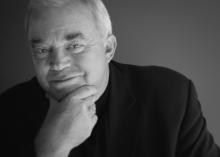
Sojourners CEO Jim Wallis stunned critics and supporters alike Sunday as he emerged from a three-month sabbatical from the progressive Christian social justice organization and announced he had joined the tea party.
More than 15 percent of the U.S. population now lives in poverty -- the highest rate in 18 years, according to a U.S. Census Bureau report released this morning.
Poverty has risen for the third consecutive year in a row, the new census figures show, with perhaps most distressing are the child poverty numbers, which rose from 20.7 percent in 2009 to 22 percent in 2010.
"The results aren't good," the Rev. Jim Wallis, president and CEO of Sojourners, the largest network of progressive Christians in the United States focused on the biblical call to social justice, said upon reviewing the census report today.
Glenn Beck can do better. Fox News can do better. When it comes to upholding truth and having civil dialogues, let's be honest, we all can do better.