Katrina
I had just returned from a mission trip organized by the Episcopal Diocese of Louisiana's Office of Disaster Response when I read Jim Wallis' column for the April 2007 issue, "All Hands on Deck."
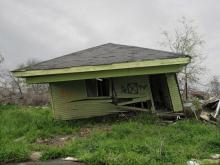
WHEN DISASTER STRIKES, churches—from the conservative Southern Baptist Convention to the liberal United Church of Christ—are among the first to respond. However, as Katrina so painfully revealed, churches and charities—no matter how much they give—can't build levees (though neither, apparently, can the U.S. Army Corps of Engineers).
Many faith-based disaster relief agencies are using 9/11 and Katrina as stark comparisons of how government should—and shouldn't—respond to disasters. A May 2006 Urban League report highlighted the differences: "The state response was strong after September 11, and the nonprofit sector tried to work alongside the government as well as fill in the gaps the government left behind, both short and long term. With Katrina, in contrast, the immediate state response was weak, and the nonprofit sector had neither the organizational structure nor the resources to meet immediate needs."
In disaster relief, efficient, well-organized faith-based organizations work best as an adjunct to a strong, responsive, and accountable state.

On the first anniversary of Katrina, New Orleans is grateful for the kindness of strangers, but worried about those levees.
More than 270,000 evacuees ended up in shelters after Hurricanes Katrina and Rita.
Rodell and Dale Scarabin and their children outside their makeshift house in Venice, Louisiana, in January, following Hurricanes Katrina and Rita.