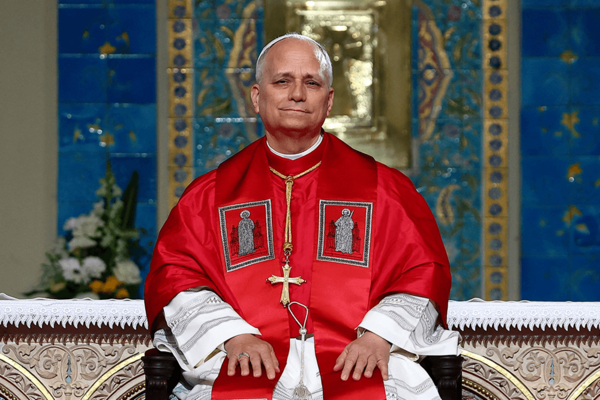
On Monday, Pope Leo XIV responded to ranting criticisms from President Donald Trump, saying in part that he had no interest in being perceived as a politician.
“The message of the church, my message, the message of the gospel: Blessed are the peacemakers,” Leo told journalists as he arrived in Algeria. “I do not look at my role as being political, a politician.”
Trump attacked Leo late Sunday night as “WEAK on Crime, and terrible for Foreign Policy,” at the beginning of a lengthy post on Truth Social.
“I don’t want a Pope who criticizes the President of the United States,” he wrote. “Leo should get his act together as Pope, use Common Sense, stop catering to the Radical Left, and focus on being a Great Pope, not a Politician.” The president also posted an AI-generated image of himself as Jesus, though he later deleted the post and claimed he thought it was him as a “doctor … a Red Cross worker.”
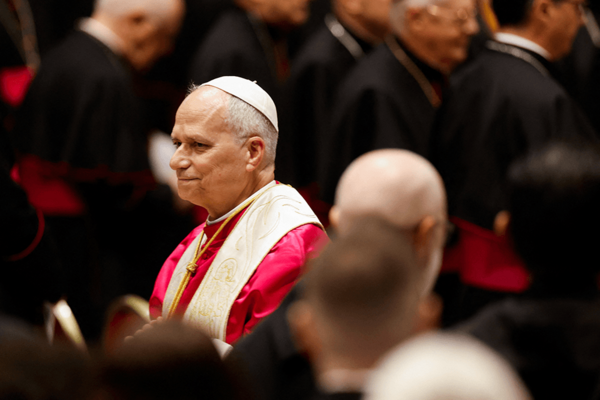
President Donald Trump issued an attack on Pope Leo late on Sunday, calling him “WEAK on Crime” and “terrible” for foreign policy after the religious leader criticized Trump’s foreign and immigration policies.
“Pope Leo is WEAK on Crime and terrible for Foreign Policy,” Trump wrote in a lengthy post on Truth Social.

“Romantic” may not be the first word that comes to mind when talking about Werner Herzog—known for such charming expressions as “I believe the common denominator of the universe is not harmony but chaos, hostility, and murder”—yet it is, perhaps, one of the most appropriate.
The German filmmaker can be considered a romantic in both the contemporary-everyday and historical-philosophical sense. Like the poets and painters who emerged from the Sturm und Drang movement of the mid-18th century such as Johann Wolfgang von Goethe, Friedrich Schiller, and Henry Fuseli, he gravitates toward the fantastical, transcendent, and sublime. His films, documentaries, and books frequently center on characters who attempt to do the impossible for the sake of its impossibility, and in doing so, posit that existence is, at its core, the stuff of feeling rather than thought. After all, reason alone can’t explain why someone would hoist a steamship over a mountain, live among grizzly bears, or—as in his latest documentary, Ghost Elephants—chase a potentially nonexistent herd of proboscideans across the Angolan highlands.
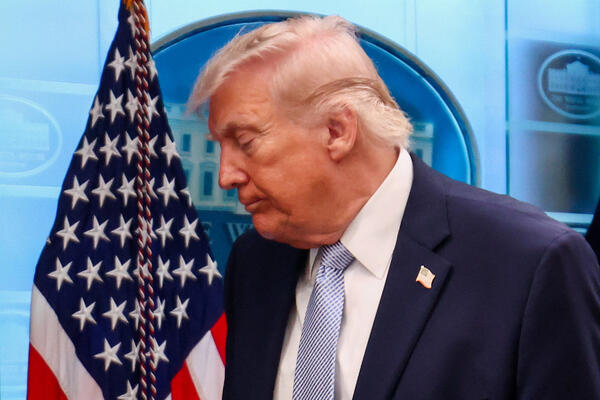
President Donald Trump has been playing Russian roulette with genocide. Ninety minutes before his own deadline expired, the man in charge of the most powerful and lethal military force in the world decided not to destroy a civilization. And the global response was simply a sigh of relief. There wasn’t a bullet in the chamber, at least this time.
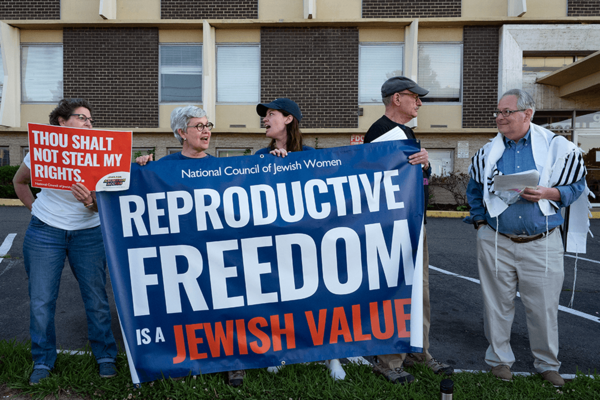
When Elly Cohen chose to terminate her pregnancy in 2022, it aligned with her understanding of Jewish law that life begins at birth, not conception.
Cohen and her husband were eager to give their then 4-year-old daughter a sibling. But her fetus had been diagnosed with Trisomy 18, a severe chromosomal disorder that, in most cases, leads to death before birth or within the first year of life. She decided to end the pregnancy.
Had she gotten pregnant just a few months later, she might not have had that choice. She lives in Indiana, one of 13 states that enacted near-total bans on abortion following the Supreme Court’s Dobbs decision, which overturned Roe v. Wade.

With The Chosen leading the way, we seem to be entering a golden age of Bible prestige television. A recent entry is Fox’s The Faithful, a three-part miniseries that retells the ancestral narratives of Genesis with a focus on the perspectives of woman. While the series at times pushes the envelope on melodrama, it also sincerely grapples with the complexities of these biblical stories. The three-part series, which aired its final episode on Easter Sunday, offers explanations for why characters make the choices they do, but it also doesn’t gloss over the troubled relationships and flawed personalities of the biblical text.
Episode 1 begins with a meet-cute. We first encounter Sarai (renamed Sarah after a visit from God midway through the episode) and Abram in a Haran marketplace. Before they were the covenant ancestors of the Israelites, Sarai and Abram were an aspiring romantic couple, at least as viewed through the lens of The Faithful. Sarai asks about a teal shawl at a market stand and looks crestfallen when she hears the price. But after walking away, someone calls her name, and she turns around to see Abram waving the shawl at her and grinning. She wears this shawl throughout the episode and is buried with it at the conclusion.
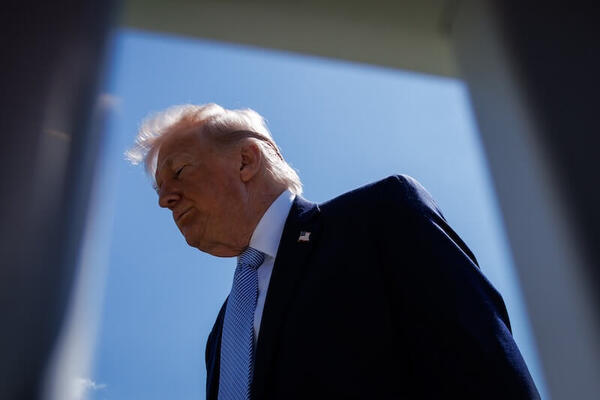
At the beginning of 2026, President Donald Trump said that his New Year’s resolution was to accomplish “peace on earth.” As he asserted last year with his aggressive campaigning for the Nobel Peace Prize, and the White House dubbing him “THE PEACE PRESIDENT” on X, Trump was convinced that he would be the one to fulfill it with “no new wars.” But just two days after issuing this resolution, Trump had Venezuelan President Nicolás Maduro kidnapped.
It is a pattern that has continued deep into 2026—promises of “peace” followed by bloodshed and violence. In January, Trump announced the Board of Peace, an international effort to “stop generations of hatred and bloodshed.” A month later, a joint U.S.-Israeli airstrike hit an Iranian all-girls elementary school as a result of outdated intel, killing at least 168 people, most of whom were children.
On April 7, Trump threatened the people of Iran if the government refused to reopen the contested Strait of Hormuz, a trade route through which about 20% of the world’s oil passes. “A whole civilization will die tonight, never to be brought back again,” Trump threatened on his social media platform.
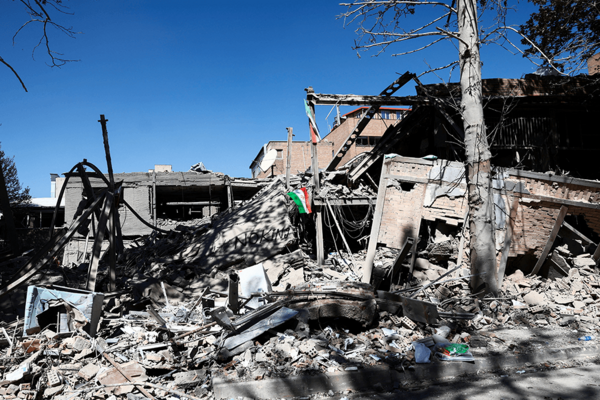
Iran showed no sign of accepting Donald Trump’s ultimatum to open the Strait of Hormuz by the end of Tuesday, while the U.S. president threatened that “a whole civilization will die tonight” unless Tehran reached a last-minute deal.
Trump has given Iran until 8 p.m. in Washington—3:30 a.m. in Tehran—to end its blockade of Gulf oil, or he will destroy every bridge and power plant in Iran. Iran says it would retaliate against U.S. allies in the Gulf, whose desert cities would be uninhabitable without power or water.
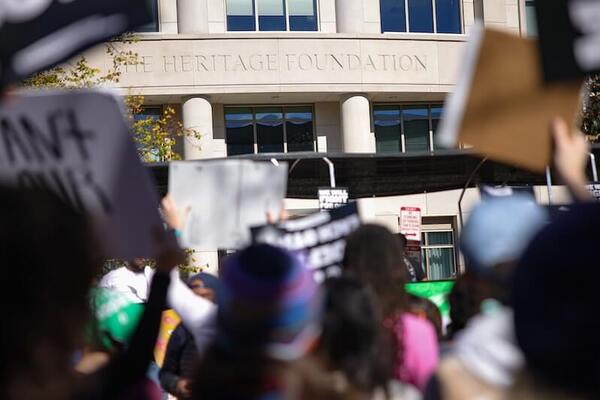
The Heritage Foundation brought you Project 2025 in order to completely transform the U.S. federal government. Now, it’s rolling out a new plan to save the American family.
To ring in 2026, the conservative think tank that provided the blueprints for the administrations of President Ronald Reagan and President Donald Trump released a new 168-page policy plan titled Saving America by Saving the Family. The Heritage Foundation’s plan claims that its goal is to encourage more “fertile” men and women to marry younger and have more children. But curiously, this plan for America’s families recommends programs like marriage boot camps and“community rest” laws, not policies that have been empirically shown to encourage family growth and stability—such as the expansion of paid parental leave and flexible work schedules.
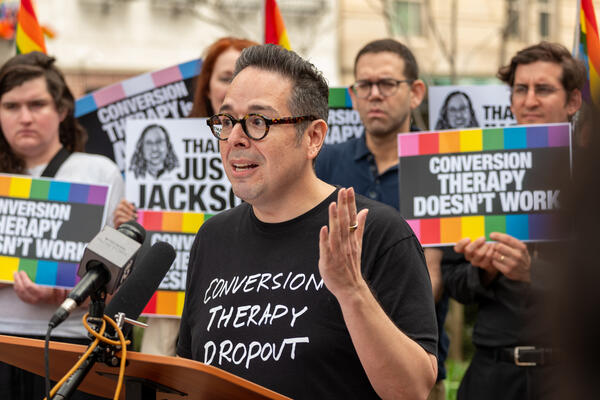
On March 31, the Supreme Court sided with a Christian therapist in Colorado and tossed out the state’s ban on conversion therapy for minors. The therapist, Kaley Chiles, challenged the state’s ban on the grounds that it violated her First Amendment rights. The Court agreed with Chiles by an 8-to-1 vote.