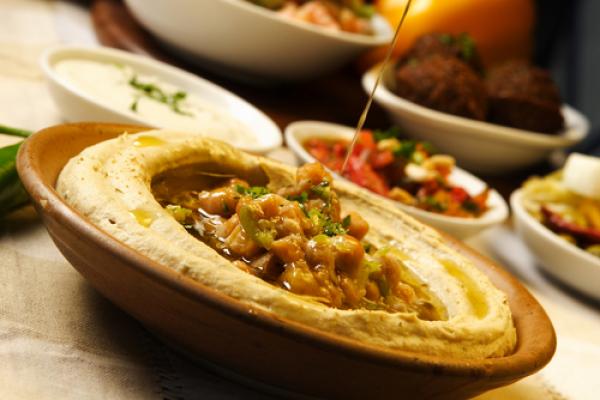
Freedom is hummus. Perhaps not to you. But to me, hummus is what freedom tastes like. The relationships I have built with survivors of human trafficking have propelled me to redefine freedom, as it exists from their perspectives.
Watching a survivor taste hummus for the first time brought so much joy to me. In a room of 25 survivors, no one had ever tasted it; many were hesitant to even dip a chip in it, let alone a carrot stick or pita bread. But the wide smile on the face of the first survivor who ‘dove in,' was all they needed to form a new love for this strange chickpea blend. And that one smile led the rest of the women into a new world of ‘healthful’ eating. It was a bold move early on by one of our volunteers — but she knows that part of her volunteer work is to continue to introduce the survivors to freedom and choices that have been unknown and unavailable to them.

In The Last Shot, Frey has written a compassionate book. It is truly a compass that guides us into the sneakers and the hearts of children growing up in the housing projects of Coney Island, New York — inner-city kids defying the law of nature by growing in a tough place like flowers growing through concrete.
It is truly passionate about basketball and life, basketball as it is loved by children, coaches, and communities ... life as it is felt through the hearts of people who know human beings are human beings and not commodities.
What would Jesus do with guns?
Would he own guns? Sell guns? Perform miracles and multiply guns for 5,000 people? Would he use guns? Would he ask his followers and disciples to own guns? I’m no expert on the topic of Jesus and guns but I do know Jesus and for this Jesus who encouraged people to “turn the other cheek” and gave encouragement to be “peacemakers," my guess is that he wouldn’t be a member of NRA.
Few narratives in the Hebrew Bible are more foreign to us than this week’s lection. We do not give away our children. In a society determined by socio-economic forces utterly beyond the control of individual citizens (e.g., globalization), we do our best to prepare ourselves for the inevitability of change. But what happens when we lose our footing?
Contemporary life changes too fast for habits and routines to have any chance to settle into a pattern. Western individuals must navigate their way through the fears and anxieties that are endemic to such an existence. Such is the pace of change, that effective life-strategies today may be obsolete tomorrow. We will do everything in our power to hold back the floods that threaten to wash away that which we hold dear — especially our children.
What was it like for parents in the Bible? Hannah, Samuel’s mother, was beset by another set of insecurities than those faced by contemporary Westerners. In the socio-economic situation of twelfth-century B.C.E., an Israelite woman’s worth was held in direct proportion to her fertility. Hannah was barren and thus her spirit was troubled to the point that she refused to eat, weeping instead on account of her “great anxiety and vexation” (1 Sam. 1:16 NRSV). In desperation, she made a vow before the LORD of hosts that if God would grant her a son, she would dedicate him to the LORD. The LORD heard Hannah’s prayer and blessed her with Samuel, whom she turned over to Eli the priest, according to her promise.
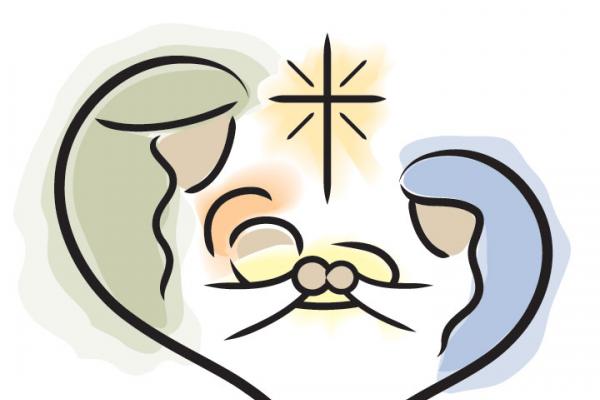
When asked to identify common features of the historical Christmas storyline, many speak of Mary, Joseph, shepherds, wise men, angels, King Herod, and of course, the newborn Jesus. But we too often fail to recognize the social circumstances in which Jesus was born; our understanding of the nativity narrative is too often left incomplete.
In the midst of our various congregational and community Christmas celebrations, we are confronted with the harsh reality that Jesus was brought into the world within a condition of homelessness. As a result, one can argue that we cannot fully commemorate Christmas without recognizing its social setting, for the context of Jesus’ birth points us toward the content and concerns of Jesus’ life.

What does the birth of the baby Jesus 2,000 years ago have to offer the violent, troubled world we live in? Or what would Jesus say to the NRA?
I want to suggest — a lot. A whole lot.
Jesus entered the world from a posture of absolute vulnerability — as an unarmed, innocent child during a time of tremendous violence. The Bible speaks of a terrible massacre as Jesus was born, an unspeakable act of violence as King Herod slaughters children throughout the land hoping to kill Jesus (which the church remembers annually as the massacre of the Holy Innocents).
Perhaps the original Christmas was marked more with agony and grief like that in Connecticut than with the glitz and glamour of the shopping malls and Christmas parades. For just as Mary and Joseph celebrated their newborn baby, there were plenty of other moms and dads in utter agony because their kids had just been killed.
From his birth in the manger as a homeless refugee until his brutal execution on the Roman cross, Jesus was very familiar with violence. Emmanuel means “God with us.” Jesus’s coming to earth is all about a God who leaves the comfort of heaven to join the suffering on earth. The fact that Christians throughout the world regularly identify with a victim of violence — and a nonviolent, grace-filled, forgiving victim — is perhaps one of the most fundamentally life-altering and world-changing assumptions of the Christian faith. Or it should be.
So what does that have to do with the NRA? Underneath the rhetoric of the gun-control debate this Christmas is a nagging question: are more guns the solution to our gun problem?

Some of my environmentally conscious friends have expressed concern about having a real Christmas tree in their house – it seems wasteful to cut down an entire tree just for a month or so of décor. After all, climate change is a huge problem, and its potential impacts on the world (most especially the poor) seem contrary to the Christmas spirit.
It’s not a new worry – Teddy Roosevelt actually banned the White House Christmas Tree during his time in office, as he was worried about the conservation implications of people running out to cut down the forest.
We can rest easy, though – the live Christmas tree industry that has developed since that time is actually a benefit to the global climate. Here’s why.

“The Little Drummer Boy” tells a wonderful short story of a poor boy who feels he has no gift to give to the baby Jesus. In spite of his lack of gifts, he offers to play his drum for him, to the delight of all in the stable, especially baby Jesus, who smiles at the drummer boy.
Not only is this song fun to sing with its drum-like “pa-rum-pum-pum-pums,” but also it embraces a non-materialistic message that we all need to hear, especially this time of year. In a society of hyper-commercialized Christmas, where we are bombarded with advertisements filled with the pressure to find the perfect gift, “The Little Drummer Boy” challenges this societal expectation. Perhaps the perfect gift is really just ourselves, being who we are, bringing our own gifts and talents to each other and to a world in deep need of healing.
While the boy is poor and feels like he has nothing to offer, he has a drum and plays for those gathered at the stable — and they are pleased. While our society pressures us to perform, to prove our love and appreciation for someone, it is actually the simple sharing of life, being together with family and friends around good food and drink — and maybe even dance and sing (with a drum!) — that is what we truly need or want around Christmas time. I know this is true for me.
For a child has been born for us,
a son given to us;
authority rests upon his shoulders;
and he is named
Wonderful Counsellor, Mighty God,
Everlasting Father, Prince of Peace.
~ Isaiah 9:6
On the flight home from Connecticut, where we’d buried my beloved father a few days before Thanksgiving, I watched the film Seeking a Friend for the End of the World and dissolved into a wailing heap of tears and snot.
The premise of the uneven dramedy starring Steve Carell and Keira Knightley is this: An massive asteroid named Matlilda is on a collision course with planet Earth and in three weeks’ time, the world will come to an end. The main characters and others decide how – and with whom – they want to spend the last days of their lives.
Given recent events, this led to some soul searching on my part. If I had three weeks to live, what would I do? Where would I go? Who would I want to make sure I saw? With whom would I want to share my last breaths?
For most of my life the answer has been the same: I’d want to be with my family and, in particular, with my father.
Which is why I ended up bawling my eyes out for the last 90 minutes of the flight home to Los Angeles, much to the dismay of the fellow in the middle seat next to me.
If I had three weeks to live today, I wouldn’t be able to spend any of those moments with Daddy.
He’s in the More, now. On the other side of the veil. In Heaven. Resting in peace. With Jesus.
And I will have to wait until my earthly life ends to see him again face-to-face.
We must be very careful about bringing theological judgments to political ones. Most policy decisions are prudential judgments — compromises between two political parties, neither of which represents the kingdom of God. But sometimes, political ideologies come to a place where they so clearly threaten the well-being of so many and the very foundations of the common good that they must be challenged by theology. This is a moment like that.
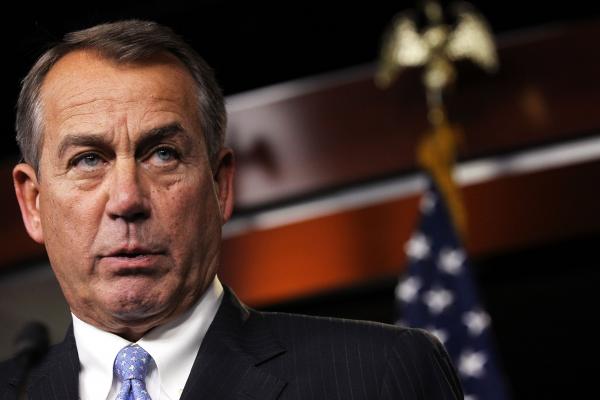
Speaker John Boehner’s tax bill that failed, and spending bill that passed in the House yesterday both fail the basic test of protecting the poor and vulnerable. While it does not look like even the spending bill has much of a future, what it portends for the future of the debate is grim.