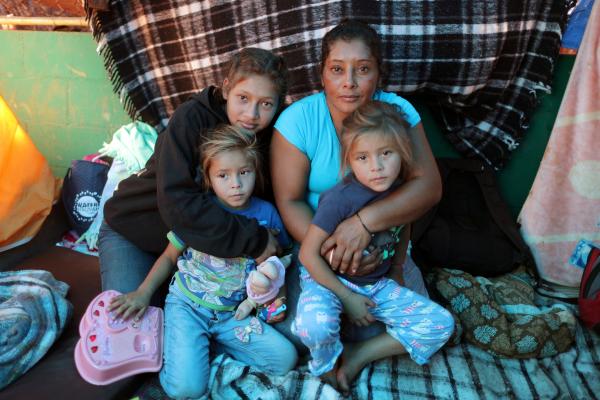
"The first thing I did was grab my children," said Meza. A photo of her clutching the hands of twin 5-year-old daughters Saira and Cheili, as her 13-year-old daughter Jamie runs alongside, has gone viral and sparked angry reactions from some lawmakers and charities.

As I’m reading this scripture with my friend on death row, he asks me to repeat the scripture again and takes my Bible to look at it himself. When you are on the row, it is almost a requirement to build up walls all around you so that you ensure that you are not inflicted with even more pain and suffering — death row is enough. He talks about all of the walls that he has built up over the years. He has become a fortified city. He wants to break free. He wants the walls to come tumbling down. But he worries what will happen if he is that vulnerable. So he looks at me and says, “I am glad God writes my name on his palm even though I have all of these walls around me.” “Me too,” I say.

Last week, the world was introduced to John Allen Chau, the U.S. American “adventurer” and missionary who was killed by an indigenous group on North Sentinel Island. According to a statement from missionary organization All Nations, Chau was a “seasoned traveler who was well-versed in cross-cultural issues” and had “previously taken part in missions projects in Iraq, Kurdistan and South Africa.” Now, Indian police have begun the dangerous mission of trying to recover the body even though a tribal rights group has urged officials to call off the search, claiming it puts them and the indigenous group in danger.
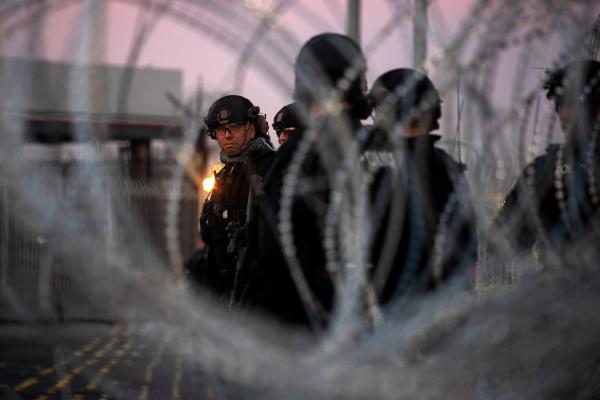
On Sunday, U.S. Customs and Border Patrol agents launched tear gas at parents and children seeking asylum. Far from an isolated incident, this is just the latest outrage in ongoing military escalation.
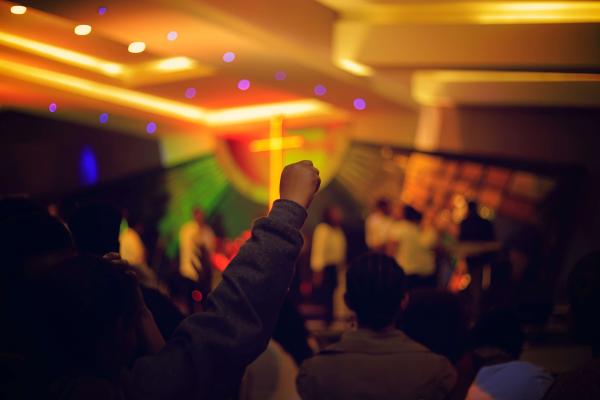
As a religion consisting of millions of voters, venerable institutions, and large organizations, Christianity is often viewed by governments and politicians as a tool to influence and manipulate. Spiritual jargon is used to lobby segments of Christians to support various agendas, often under the pretense of being “Biblical” and “Godly.” This is how faith becomes co-opted to transform into something it was never meant to be: a way to obtain votes, a method for fueling populist rage, or grounds for implementing oppressive social structures.

On November 12, news broke that Christian songwriter Kurt Kaiser had died at 82. His work, which included memorable songs such as “Pass It On” and “Oh How He Loves You And Me,” spanned nearly 50 years. Kaiser’s name appeared on more than 25 albums and he received a lifetime achievement award from the American Society of Composers, Authors, and Publishers for his contribution to Christian music. One of his songs remains one of the most important in my life, some 30 years after first hearing it.
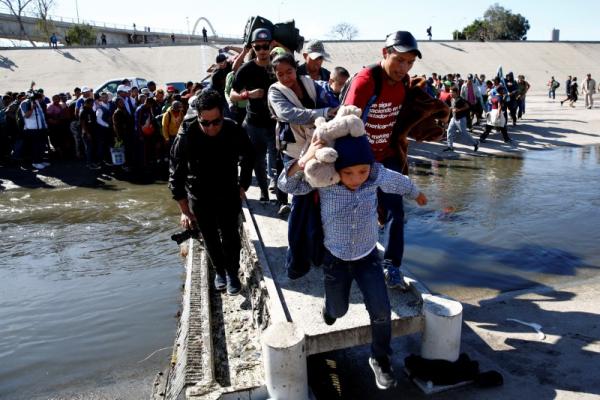
When children scream from tear gas where they’ve been told to wait,
when signs tell families, “Don’t pass!” outside our nation’s gate—
O Lord who welcomed children and loves each little one,
we cry, “Where is compassion?” We pray, “What have we done?”
1. How to Have a Conversation with Your Angry Uncle Over Thanksgiving
Get some practice, via the Angry Uncle Bot, courtesy of New York Times.
2. This Is the Face of the Reconquista
“They are too young to have heard how the words Mexican and American have used against one another. In their lives, they have been combined into one. The contours of their lives cross boundaries. The hard lines of difference and the borders of the past have not formed walls of divisions for them.”
Christians can overemphasize the importance of the Bible and underemphasize the life of Jesus. Thus, when people advocate for Christ-like things like helping immigrants, providing safety for refugees, empowering the oppressed, and loving others as we wish to be loved, Christians passionately refute such things — using the Bible. They spout verses and use pseudo theology to discredit the actions that are the most Christ-like —all under the guise of “Biblical Christianity.”
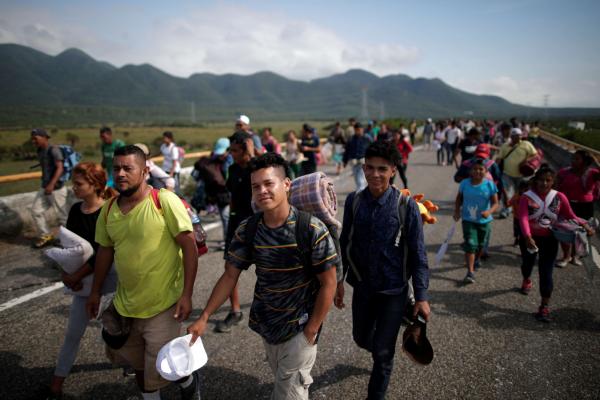
This Thanksgiving presents some of the most striking contradictions I can remember: The story of the first Thanksgiving, particularly as taught and internalized among many white Americans, is an optimistic story of radical welcome and hospitality. But what that simplistic story painfully leaves out is how quickly Native welcome turned to European conquest, colonization and, yes, the near genocide of America’s Indigenous people.