James Balog and Jeff Orlowski, makers of the documentary film 'Chasing Ice' sit down with the "Morning Joe" MSNBC crew to discuss the implications of climate change and arctic ice melt. Check our our Sojo review of the film.
Visit NBCNews.com for breaking news, world news, and news about the economy
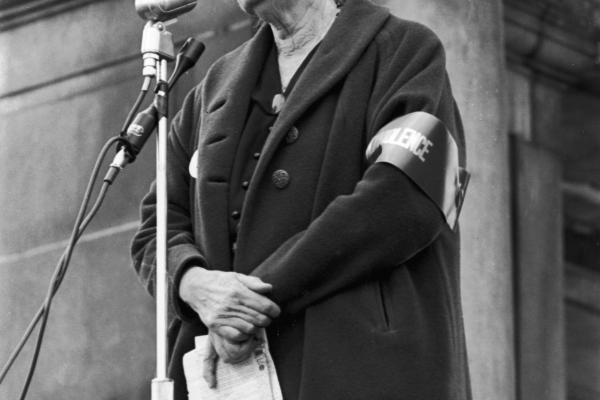
BALTIMORE — The Catholic bishops gathered here for their annual meeting couldn’t agree on a statement on the economy on Tuesday morning, but with a unanimous voice vote that afternoon they easily backed a measure to push sainthood for Dorothy Day, whose life and work were dedicated to championing the poor.
Indeed, it was a remarkable moment for the reputation of Day, one of the most famous figures in 20th-century Catholicism.
Born in Brooklyn in 1897, Day lived a bohemian life in New York City in the 1920s while working as a leftwing journalist. She endured a failed marriage, a suicide attempt, and had an abortion when suddenly, after the birth of her daughter, she converted to Catholicism.
That decision confounded her literary friends but launched her on a new path of activism and piety.
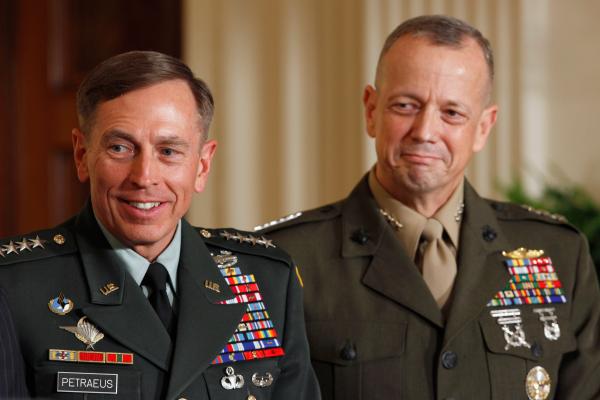
First, we had CIA Director David Petraeus being held over the fire for a possible affair with his biographer, Paula Broadwell. Then General John Allen, the top-ranking U.S. Commander in Afghanistan, drawn into the drama as allegations of indiscretions of his own with Jill Kelly (the credibility and severity of which remains to be determined), who also is linked to Ms. Broadwell and the related Petraeus drama. Then there’s rumor of FBI agents sending shirtless pictures of themselves to women and … anyway, you get the idea.
As if all of that wasn’t weird enough, now there’s the matter of Kevin Clash, inventor of and voice for Sesame Street’s Elmo, being accused by a young man of having an illicit relationship while the accuser was underage. The man has since recanted his claim, but not before Clash admitted to a consensual encounter with the accuser when he was of legal age, if just barely.
Why do they do it?
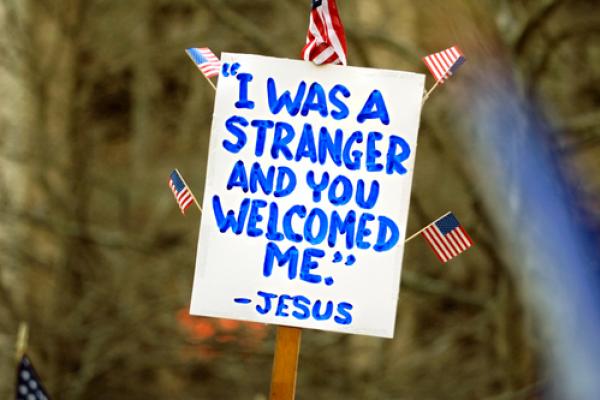
The election is finally over, and both parties understand the key role Latino voters played in the outcome. The balance of power in Washington remains the same, but the political winds have shifted dramatically on immigration. During the campaign, President Barack Obama promised to pass immigration reform if reelected. House Speaker John Boehner also recently stated that a “comprehensive approach is long overdue.”
Momentum is building. A new consensus is emerging. Progress is possible.
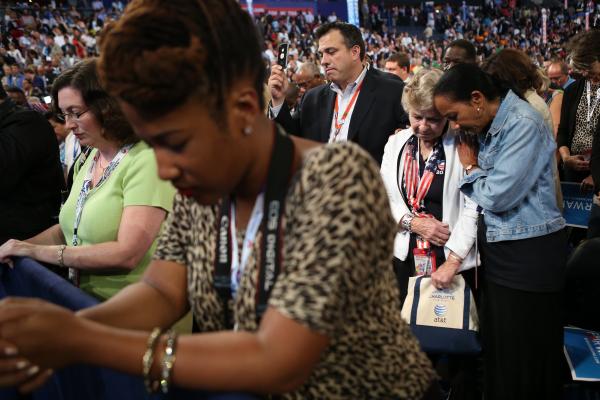
The day after the election, Southern Baptist Seminary President Albert Mohler said, “I think this was an evangelical disaster.”
Not really. But it was a disaster for the religious right, which had again tied its faith to the partisan political agenda of the Republican Party — which did lose the election. But Nov. 6 was an even deeper disaster for the religious right’s leaders, because they will no longer be able to control or easily co-opt the meaning of the term “evangelical.”
During this election, much of the media continued to use the word as a political term — as a key constituency of the Republican conservative base. But what the media really means when they use term “evangelical” is “conservative white evangelical.” All other kinds of evangelicals are just never counted.
Just as the 2012 electoral results finally revealed the demographic transformation of America — which has been occurring for quite some time — it also dramatically demonstrated how the meaning of the word “evangelical” is being transformed.
Evangelical can no longer be accurately used to mean “white evangelical.”

As the new Development Assistant here at Sojourners, I’ve already been deeply moved by the generosity of those who support our work financially. In just the last few months I’ve witnessed an incredible outpouring of support around issues at the heart of our mission.

Several weeks ago, the Washington Post reported that the CIA was proposing a “significant expansion of the agency’s fleet of armed drones.” The proposal was championed by Director David Petraeus to allow the agency to continue its attacks in Pakistan and Yemen, as well as shift drones to other perceived threats.
With Petraeus’ sudden departure, there are calls for a real debate on the role of drones. Questions and opposition to the drone assassination campaign were already growing, now there are more.
Heather Hurlburt, executive director of the National Security Network, writes in U.S. News & World Report of the need for guidelines on drone use.
“Drones and other forms of remote-control warfare aren't going away. The technological developments that empowered them won't be undone. The very real organizations that do seek to threaten Americans and U.S. interests aren't going to fold up on their own. But we do need, urgently, some theory around which we create legal, ethical, and practical guidelines for remote-control warfare, based on what we know about human nature, and what we have learned about human response to our efforts to date."
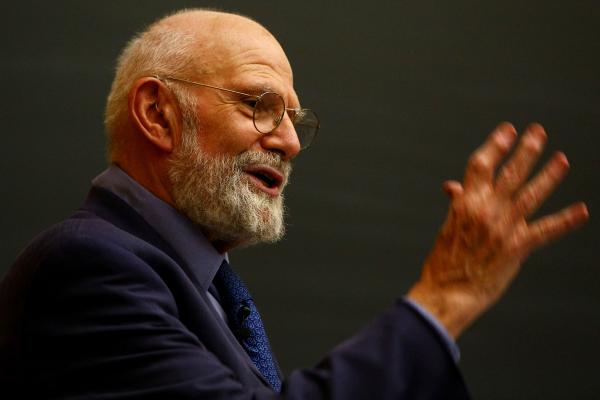
I remember the first time I saw the movie Awakenings. I was living at Jeff Street Baptist Center and working with a community of inner-city teenagers from the Clarksdale housing projects in Louisville, Ky.
Monday nights were Dollar Movie Nights for us and we would load up in our orange van (affectionately called The Great Pumpkin) and head out to the theater. On that Monday night I chose Awakenings as our movie of the week, hoping that my kids would identify with the 'helping each other overcome' theme in the story. My dream was deferred. They hated it!
Within 15 minutes of the start of the movie they were throwing popcorn at the screen. We got up and changed theaters to something faster paced with more action. I had to promise to check my movie choices with them before they agreed to go with me again.

I’m known for holding an alternative view on salvation than many Christians – even Disciples — maintain, in that I do not adhere to the doctrine that Jesus died for our sins. I know there are lots of scriptures to back this position, and one can also use scripture to justify other explanations for Jesus’ death. As many of us have seen, the Bible can be, and has been, used to justify nearly any position we care to use it to support. As for me, I’ve done years of searching, praying, discussing, and reading, and my conclusion is that it is the love of God as manifest by Jesus that is redemptive, and not Jesus’ blood.
I know some folks will likely stop here, discrediting anything else I have to say because of this perspective, which is unfortunate, but which I also understand. But a family member recently asked me about my take on communion if, in fact, I don’t ascribe to the idea that Jesus was saying “this is my body broken and my blood poured out for the remission of your sins.”
Charls C. Haynes writes in The Washington Post:
Buried in the mountain of demographic data preoccupying political pundits this week is one historic statistic that may have far-reaching consequences for religious freedom in America:
Seventy-nine percent of white Protestant evangelicals voted for Mitt Romney, a lifelong member of the Church of Jesus Christ of Latter-day Saints – popularly known as the Mormon Church.
After a bitter Republican primary season during which many evangelical leaders supported the “anybody but Romney” effort, prominent conservative Christian ministers lined up behind Romney for the general election. A defining moment came on Oct. 11 when America’s Preacher, the Rev. Billy Graham, publicly signaled support for Romney’s candidacy.
Read more here.