SHANDA MCMANUS HAD just finished her first semester of medical school when she found out her little brother, Monir Hall, had been struck down in a drive-by shooting. As she was becoming a doctor, Hall—an army veteran and father of two, just shy of his 21st birthday—was selling crack in their Philadelphia neighborhood. In a cold hospital room where Hall lay brain-dead, McManus pressed her hand to her brother’s chest and thought she felt faint beats of his heart. In her debut memoir Brother Epistles, McManus recounts the night when she walked out of that room. She “had the sense of facing two doors, one marked DIE and the other LIVE.” She “stepped, unfeeling, through the second.”
After her brother’s death, for her own survival, McManus took on a clinical detachment to his murder, living into the roles of surviving daughter, doting aunt, successful doctor, devoted wife, and loving mother. But in those ensuing decades, she buried the unique bond they shared, and with it, a large piece of her own heart.
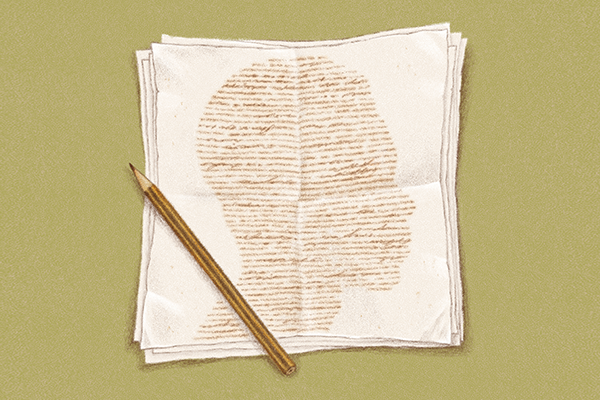
With Brother Epistles, McManus picks up where she left off as big sister. Clinicians have long recommended the practice of letter-writing for those reckoning with loss. And so, her healing emerges in this one-way conversation. In tender letters that each begin “Dear Monir,” she catches him up on much of the living as well as the parts of herself that died inside after his untimely death. She misses him fiercely, misses what they used to do and be together, and laments the unjust confluence of factors that endanger so many young Black men in the U.S.
Hall remains forever young, frozen in time, while his big sister tells him about her struggles with depression, anger, guilt, and the burden of being strong for everyone else. Every letter begins with questions McManus knows will never be answered and ends with the reminder that he is still dead. But there is a joviality as well. She misses her brother’s teasing and jokes and wishes he could laugh with her over fun memories and the ways the world has changed or stayed the same since the early ’90s, when his light was snuffed out.
These letters, just like the epistles of the Bible, contain messages for the living. “Some people complain about religion being a crutch,” McManus writes to her dead brother, “well, I’m thankful for it ’cause I couldn’t walk on without it.” She also delights in the act of writing itself. Line by line, she remembers the good things of Hall’s too-short life. She had tried not to think about him, but she discloses to her brother that through the letter-writing practice, “it’s better, somehow, talking to you.”
As McManus wrestles with survivor’s guilt and reclaims her voice and identity that had been hollowed out by loss, the seasoned doctor finds a healthy remedy. The grief in her letters “is not a series of five steps, but a spiral and a repeating loop.” And the prescription McManus uses is not an easy pill, but the arduous path of choosing each day to live with the infinite work of grief. Walking through that door marked “LIVE,” McManus found a way back to herself, and in some ways, the brother she lost.

Josina Guess is a Sojourners associate editor and a contributor to Bigger Than Bravery: Black Resilience and Reclamation in a Time of Pandemic.
Did this article have an impact on you? Tell us how! Whether you’re moved to take action, have a question, or want to share a comment (good or bad), we value your feedback!