
Rev. Adam Russell Taylor is president of Sojourners and author of A More Perfect Union: A New Vision for Building the Beloved Community. Follow him on Bluesky @revadamtaylor.
Taylor previously led the Faith Initiative at the World Bank Group and served as the vice president in charge of Advocacy at World Vision U.S. and the senior political director at Sojourners. He has also served as the executive director of Global Justice, an organization that educates and mobilizes students around global human rights and economic justice. He was selected for the 2009/2010 class of White House Fellows and served in the White House Office of Cabinet Affairs and Public Engagement. Taylor is a graduate of Emory University, the Harvard University Kennedy School of Government, and the Samuel DeWitt Proctor School of Theology. Taylor also serves on the Independent Sector Board, the Global Advisory Board of Tearfund UK, and is a member of the inaugural class of the Aspen Institute Civil Society Fellowship. Taylor is ordained in the American Baptist Church and the Progressive National Baptist Convention and serves in ministry at the Alfred Street Baptist Church in Alexandria, Va.
Speaking Topics
- Human rights and global poverty
- Racial justice
- Voting rights
- Climate justice
- Economic justice
- Immigration
- Peace and nonviolence
- His most recent book, A More Perfect Union: A New Vision for Building the Beloved Community
Speaking Format
- Virtual and in-person events, also available for preaching
Languages
- Fluent in English
Past Notable Events
- Tufts University’s Russell Lecture
- United Church of Christ General Synod Gathering Keynote
- Children’s Defense Fund Staff Retreat Keynote
- Parliament of the World Religions
- Christian Community Development Association Keynote Panel
Posts By This Author
How Christians Can Protect the Midterms From Trump's Interference
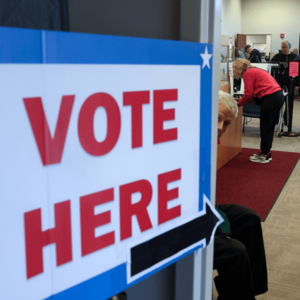
I need to level with you: The 2026 midterms are not a normal election.
Faith groups like Sojourners have long talked about the importance of elections. I have written about elections extensively in the past. But this year is different.
Specifically, there is a great risk that the Trump administration and its allies will attempt to disrupt or deny the election results; these attempts could very well succeed if we don’t act—or if they create enough chaos and fear to deter people from voting. It’s critical that Christians commit to pushing back on these attempts with faith-inspired activism—not just up to Election Day, but all the way through the seating of a new Congress on Jan. 3.
After 25 Years, We Must Let Love Cast Out Fear

Most people remember exactly where they were on the morning of Sept. 11, 2001. I was in Nairobi, Kenya, a full day removed from the moment everyone else calls “that morning.”
How Should Candidates Talk About Their Faith?
God-talk on the campaign trail, minus the cringe.
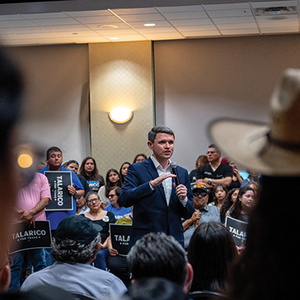
WE’RE APPROACHING ANOTHER polarizing election, with major implications for our future as a nation. As candidates try to appeal to prospective voters, one method is to bring their personal faith beliefs into their campaign. For example, in a 30-second ad for his congressional campaign, Florida Republican Austin Rogers tells voters: “In high school, I had a real encounter with God. It changed everything. Since then, my foundation is simple: faith, family, freedom.”
Trump’s Foreign Policy Is a Rejection of Jesus' Teaching

These days, it's rare for a political speech to capture my imagination. But a few months ago, Canadian Prime Minister Mark Carney spoke at the World Economic Forum declaring with moral clarity and candor that there’s been a “rupture in the global order” tied to a “brutal reality” where the strong can act without constraints and the weak must endure the consequences.
Pursuing A Faithful Response To Election Subversion
What Sojourners is doing, and what you can do.
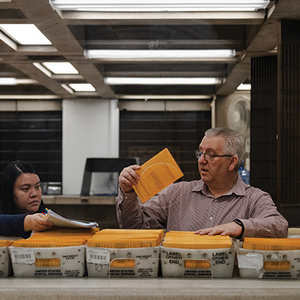
THE FIRST TIME I voted, at age 18, I was both nervous and filled with a sense of sacred responsibility. As someone mesmerized by the Civil Rights Movement, I was painfully aware that my African American mother couldn’t vote in most of the South when she was 18 in 1959, due to pernicious barriers such as poll taxes, grandfather clauses, and the threat of violence.
Celebrating America Without Losing Our Soul

After much fanfare, America’s 250th birthday is finally upon us. Here in Washington, D.C., the White House-sponsored Freedom 250 celebrations don’t seem to be going too well, from the algae-filled debacle in the reflecting pool to the sparse crowds at the Great American State Fair on the National Mall. Elsewhere around the city, the president has refused to sign a bipartisan housing bill in order to blackmail Congress into passing measures that would disenfranchise millions of eligible voters. Last week’s Supreme Court decision gave the administration the ability to cruelly deport hundreds of thousands of Haitian and Syrian refugees. None of that makes me feel like celebrating.
When I think about our present political moment, I see echoes of the prophet Micah, who forewarned of coming disaster because both Israel and Judah’s political and religious leaders abused their power and conspired to do evil (2:1, 7:3), stole and plundered (2:8), oppressed the poor (3:3), despised justice and distorted the truth (3:9), and engaged in violence and deceit (6:12). At every turn, President Donald Trump seems more fixated on punishing his enemies and cementing his legacy through vanity projects than on anything resembling our nation’s founding ideals of “life, liberty, and the pursuit of happiness,” among other “inalienable rights” set forth in the Declaration of Independence.
But if Trump’s hubris is all we see as we observe this national milestone, we’re missing the bigger story.
What Can We Give the U.S. For Its 250th Birthday?
Voting and participating in elections is vital, but we can do something more.
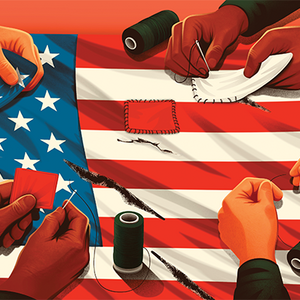
How do we commemorate the 250th birthday of the United States while resisting the extremes of either hubris and triumphalism or apathy and self-loathing? This semiquincentennial year arrives amid great peril and polarization: Our democratic freedoms and our system of checks and balances are under severe threat, distrust of institutions is pervasive, and even the term “democracy” has become fraught and partisan. So, perhaps one of the best and most unifying ways we can mark this birthday is to make this a year of civic renewal.
The Prophet Micah on Trump's $1.8 Billion Fund for His Allies

Micah 6:8 is one of the most well known and most quoted scriptures of the Old Testament prophets. “He has shown you, O mortal, what is good. And what does the Lord require of you? To act justly and to love mercy and to walk humbly with your God.” These words are eternally relevant, but sometimes they ring more urgently than others.
This week, the Trump administration announced a nearly $1.8 billion fund to compensate his allies who he believes have been unfairly investigated and prosecuted by the Department of Justice. As others, including legal experts, have noted, this amounts to Trump looting the nation to pay off his friends and supporters. In terms of scale, it may well be the most corrupt act in U.S. political history.
You Will Know Them by Their Fruits—and Their Rulings
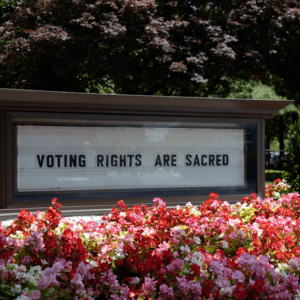
A recent ruling from the U.S. Supreme Court reminded me of Jesus’ words at the end of the Sermon on the Mount: “Watch out for false prophets,” Jesus says. “They come to you in sheep’s clothing, but inwardly they are ferocious wolves. By their fruit you will recognize them” (Matthew 7:15-16).
Last week, in Louisiana v. Callais, the court voted 6-3 along ideological lines, rendering the Voting Rights Act practically meaningless. When it was passed in 1965, the act was the crowning achievement of the Civil Rights Movement. The law created enforcement mechanisms to uphold the 15th Amendment and prevent states from discriminating against Black and other minority voters. Section 2, the specific provision weakened by the court last week, prohibits voting procedures—including districting maps—that hinder voter participation on the basis of race. In 1982, Congress amended this section, making it easier to challenge voter district maps that, intentionally or otherwise, diluted the power of minority voters.
Trump Admits That the U.S. Simply Cares About War More Than Kids
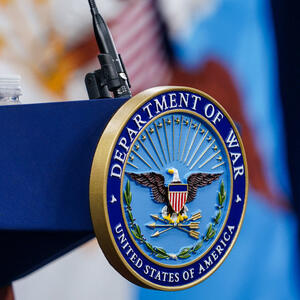
Earlier this month, at a private Easter luncheon at the White House, President Donald Trump delivered some of the most revealing comments of his second presidency.
What Most Concerned Me About Trump's State of the Union
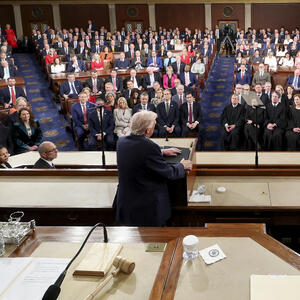
I thought about skipping President Trump’s State of the Union address, but out of a sense of civic duty—or perhaps misplaced hope—I watched it anyway. In what became the longest such address in U.S. history, Trump’s joint address to Congress devolved from political theater into vicious partisan baiting and derision.
The Year-Long Experiment Killing Foreign Aid Has Been a Disaster
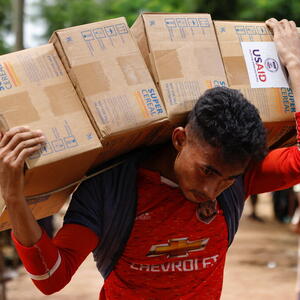
I’ve dedicated a major part of my life and career to the cause of foreign aid, so it was heartbreaking to see it scorned and set back by the Trump administration. And yet, this heartbreak pales in comparison to the needless suffering loss of life and careers caused by the administration’s reckless and cruel dismantling of the U.S. Agency for International Development and evisceration of foreign aid.
Imago Dei vs. American Bigotry
Who is included in “We the people”?

AS THE UNITED STATES celebrates its 250th birthday this year, I am thinking about who is included in the “We the people” of the Constitution’s preamble. This is particularly urgent in light of the MAGA movement, the largest effort in over a generation to redefine who and what is truly American.
Since its inception our nation has been in a tug of war between those seeking to narrow “We the people” to primarily white men and those seeking to expand it to include every person. Sadly, white evangelical Christians remain more fearful and resistant to the nation’s changing demographics compared to all other religious groups, as recent surveys from both Pew and PRRI have shown. Rather than a source of hope and a glimpse of the kingdom to come, our increasing diversity has been used to build political power by stoking anxiety and prejudice.
To Stop ICE Killings, More Christians Need To Tell the Truth

What does it mean to bear witness? This past Friday, bearing witness felt close to frostbite. It meant weathering subzero temperatures in Minneapolis, with an even colder windchill biting my face. My body braced against the bitter cold, but my spirit was on fire. Along with hundreds of other faith leaders from around the country, I’d dropped everything to respond to a call from the city’s clergy to see firsthand how the administration’s increasingly aggressive and unlawful mass deportation efforts were impacting their community.
Clergy who arrived on Thursday attended trainings from a local interfaith group and monitored neighborhoods for signs of Immigration and Customs Enforcement agents. On Friday, I joined an interfaith prayer service at Temple Israel while ISAIAH, a different local organizing group, led nearly a hundred faith leaders in civil disobedience against airlines that contract with ICE. We later joined tens of thousands of people in the ICE OUT of Minnesota march and a general strike supported by Minnesota unions, progressive faith leaders and community activists. I was inspired to see nearly the entire city—schools, restaurants, businesses—closed down in solidarity with the protests. One of my favorite signs, made by the Minneapolis group Multifaith Antiracism, Change & Healing, echoed Micah 6:8: “Do justice, Love mercy, Get ICE Out.”
Will the U.S. Church Be Silent on Venezuela?
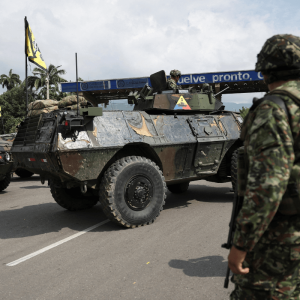
Blessed are the peacemakers, for they will be called children of God (Matthew 5:9). As followers of Jesus, this beatitude from the Sermon on the Mount offers a moral compass for how we treat our neighbors, including those in other nations. Jesus isn’t calling us to be passive; he’s calling us to actively make peace. I’m reminded of the Hebrew and Greek words for peace, shalom and eirene, which evoke a sense of repair or a “setting right” of what is broken. Jesus modeled this active pursuit of peace in his own life. Born into a community occupied by violent, imperial powers, Jesus rejected the logic of might-makes-right and instead ushered in something more powerful: God’s promised reign of justice, righteousness, and love. Today, that kind of restoration often requires combating the fear, hatred, hubris, and greed that so often undergird conflict.
Jesus’ call to be peacemakers feels especially urgent given that this year began with a literal bang: On Jan. 3, the Trump administration launched a military assault on Venezuela to abduct and arrest President Nicolás Maduro and his wife, Cilia Flores. At least 80 Venezuelans were killed by an attack that did not have congressional approval, violated international law, and set a dangerous precedent for a presidency characterized by extending and imposing U.S. power and influence on other countries through military force. Most significantly for us as Christians, the administration’s actions in Venezuela signal a further U.S. retreat from a commitment to protect human dignity, freedom, human rights, and peace.
Our Prayers for You in the New Year

As we say goodbye (maybe even good riddance) to 2025, I’m reminded just how much prayer has served as an essential balm, refuge, and strong tower in the midst of such a trying and tumultuous year. Whatever 2026 has in store, I’m confident that we will need to flex our prayer muscles. Prayer centers us in God’s presence. Prayer prepares and equips us for courageous action. Prayer empowers us when we feel weak and encourages us when we feel demoralized.
I’m deeply grateful that we have a staff team that believes in the necessity of prayer, evidenced through the many short ones that they have shared below. My prayer as we sojourn together into 2026 is that our fervent prayers guide and embolden us to advance God’s reign of justice, peace, and steadfast love with greater urgency and courage.
Don’t Ignore the Darkness of Advent
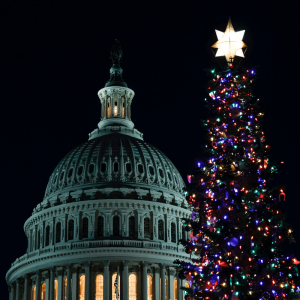
One of my least favorite December rituals is putting up Christmas lights. I loathe having to untangle the strands and can never quite summon the patience to put them up as beautifully as many of our neighbors. Needless to say, our house will never win any Christmas light competition. At the same time, I love the beauty of a well-adorned house, glowing with light that cuts through the darkness and communicates joy.
But before we get to the light, we must first contend with the darkness.
The Cost of Staying Quiet When Murder Becomes Foreign Policy
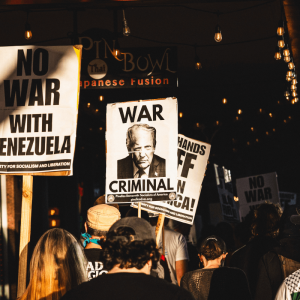
The Trump administration is blowing boats to pieces off the coast of Venezuela.
At different points this year, I’ve been left with the unsettling feeling that I don’t have the emotional bandwidth to fully process—let alone respond to—all of what’s happening. Early in the year, we all acknowledged that this overwhelmed feeling was by design, part of the Trump administration’s “flood-the-zone” strategy, intended to weaken and divide its opposition.
I’ve been wrestling with this in light of the attacks the Trump administration is orchestrating in Venezuela. On one hand, I’m perplexed at why such a costly, unlawful, and frankly evil operation isn’t garnering louder public outcry; on the other hand, I know there is so much else on people’s minds. It’s not that we don’t care about it all—from Chicago to Palestine to Sudan to so many other places where we know there’s urgent suffering—but there’s only so much outrage we can process before weariness takes over.
And yet I can’t ignore what’s happening in Venezuela
When Giving Thanks Feels Hard
Gratitude reminds us that a better world is possible.
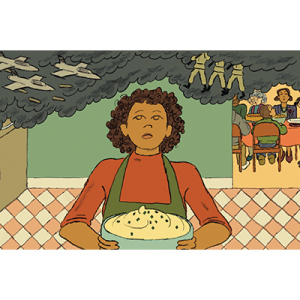
WE HEAR A lot about gratitude as both spiritual practice and a boost to our mental health. But I confess: Lately I’ve caught myself asking what, exactly, is there to be so thankful for?
In the U.S., Thanksgiving is upon us. We are expected to be thankful and celebratory. In the face of so many national and global crises, however, feeling gratitude can be challenging. Authoritarianism and political violence are rising in the United States. Preventable suffering and death around the world are surging due to ongoing war in Ukraine, the Middle East, Sudan, and beyond and the Trump administration’s dismantling of foreign assistance programs for health and food security.
Who Deserves SNAP? Jesus Has a Parable for That

Whenever government food assistance programs enter the news cycle, the conversation tends to focus on whether recipients are deserving. For example, Republican members of Congress have accused SNAP recipients of not having jobs and wrongly claimed the program benefits undocumented immigrants. Louisiana Rep. Clay Higgins said on X that any SNAP recipients who didn’t “have at least 1 month of groceries stocked” in advance should be ineligible to continue receiving benefits and “stop smoking crack.”
It’s ugly sentiments like this that underlie the Trump administration’s cruel use of hunger as leverage to pressure Democratic senators into signing the Republicans’ continuing resolution, all while Trump himself drags its feet on a court order to make full SNAP payments despite the shutdown. Meanwhile, food pantries are being stretched beyond capacity, with families, children and the elderly going hungry just weeks before Thanksgiving. Given this, the question of whether or not these people are truly deserving is not just political negligence. It is deeply immoral.