News
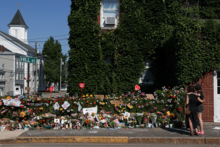
Bee Moorhead was surprised by the turnout at a July 7 press conference in San Antonio, calling for free and fair elections. The event was simple: a group of clergy, standing in front of San Fernando Cathedral on the city’s Main Plaza, announcing their intention to ask individual lawmakers to sign commitments to defend constitutional voting rights. Important work, she knew, but not usually the stuff of headlines. Moorhead has been organizing clergy around the state as executive director of Texas Impact for more than 20 years, and she said she’s accustomed to being all but ignored by the media and everyone else.
“Faith leaders all over the country, and certainly in Texas, keep speaking up and what comes back is, ‘Why aren’t you saying anything?’” she said. But suddenly, there were microphones and cameras. People were listening to what the group of interfaith pastors, imams, rabbis, and priests were saying about the need to protect voting rights. Something was changing.
Moorhead had launched the policy initiative and called the press conference in coordination with national interfaith organizing group Faith In Us, which formed after clergy from multiple faiths in Minneapolis and St. Paul took a visible role in the resistance movement during Operation Metro Surge. In January, when Immigration and Customs Enforcement was overwhelming the Twin Cities, clergy there began to call for sustained national mobilization of their peers. Faith leaders invited colleagues from around the country to come and train with community organizers and unions in Minneapolis.
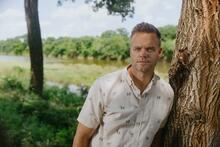
Matt Long stood before the Granbury City Council at an April zoning meeting to oppose the influx of proposed data centers in Hood County, likening them to a spiritual abomination.
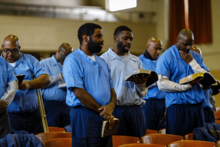
While each of the nearly 2 million incarcerated people in the U.S. has their own story, they all share one experience: losing access to their neighbors on the outside.
The majority will be released after their sentences are served, but an atrophied social life and the stigma of incarceration mean they face a long uphill battle to take care of themselves, much less fully rejoin society. Christians have long stepped into this gap, many seeking to live out Jesus’ parable in Matthew 25 and visit those in prison. In the era of mass incarceration, religious volunteers visit incarcerated people to bridge the gap between them and life outside.
In March, Families Against Mandatory Minimums, a nonprofit devoted to fighting unjust prison policies, launched its “Visit a Prison” campaign, urging lawmakers and faith groups to visit their local prisons, including a guide for people interested in getting involved with incarceration ministry.
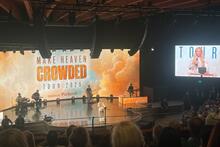
Jesus Christ was spotted in Kirkland, Washington, Friday night among about 100 protesters outside the Turning Point USA (TPUSA) event at The Pursuit Northwest megachurch, where Erika Kirk, Charlie Kirk’s widow, was the headliner.
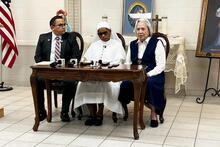
The South Texas nun who was detained by immigration officers last month spoke publicly for the first time since the incident and as her future in the country remains in limbo.
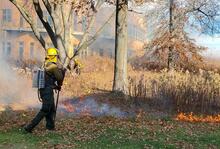
In the spring, on a day when the weather was just right, the conservation team at the Sisters of St. Joseph in Brentwood, N.Y., set part of their meadow on fire. The “prescribed burn” is a land management technique that helps control invasive species and reduce the risk of wildfires.
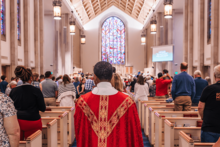
Citing dangers to LGBTQ+ and immigrant communities, the Oregon-Idaho Conference of the United Methodist Church voted last month to move next year's annual conference out of Idaho.
At this year’s annual conference — a meeting where representatives from Oregon and southern Idaho United Methodist churches gather to vote on and make decisions — held at the Cathedral of the Rockies in Boise, Idaho, the Rev. Heather Riggs of Montavilla United Methodist in Portland brought a motion to the floor to change the location of next year’s conference.
Dozens of clergy and laity gave public comment, arguing why they believed the event should remain in Idaho or move to Oregon in 2027. The vote was close, but the end result was that the conference would either move to Oregon or be held virtually.
Editor’s note: This story includes reference to suicide. If you or someone you know needs help, the national suicide and crisis lifeline in the U.S. is available by calling or texting 988. There is also an online chat at 988lifeline.org
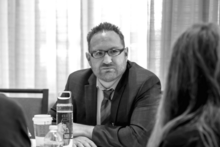
Ryan “R.L.” Stollar, a theologian and advocate whose work focused on children, abuse survivors, and homeschooling, died by suicide this week, leaving behind a legacy of tenacious and occasionally combustive activism. He was 41.
Stollar co-founded the blog “Homeschoolers Anonymous,” which garnered scores of media attention in the 2010s as more homeschool alumni began sharing stories of their experiences. He later helped found the organizations Homeschool Alumni Reaching Out and the Coalition for Responsible Home Education, both dedicated to resources and advocacy around safer homeschooling in the U.S. In 2023, Stollar published The Kingdom of Children: A Liberation Theology with Eerdmans.
“We [adults] need to give children the freedom to be their own theologians — to discover and love who God is and what God values on their own terms,” Stollar wrote.
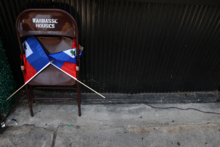
Despite preparing for the possibility, advocates still felt the grim reality set in when the Supreme Court decided to allow the Trump administration to end Temporary Protected Status for immigrants whose home countries were previously deemed too dangerous to force their return.
Christopher Kerr, executive director of the Ignatian Solidarity Network, said in a statement that the ruling “strips vital humanitarian protections from our migrant neighbors and leaves families in a dangerous place.
“This ruling separates families and uproots students in our schools, leaders in our parishes, and friends in our communities. Catholic teaching reminds us that every person has a right to life and the conditions necessary for human flourishing,” Kerr said. “To force individuals back to nations gripped by violence and instability is a moral failure of our obligation to our neighbors.”
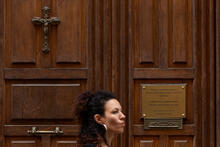
The Vatican said on Thursday that priests and lay Catholics who are part of a breakaway right-wing Catholic group that ordained bishops without Pope Leo's approval were in schism with the wider Church and now excommunicated.
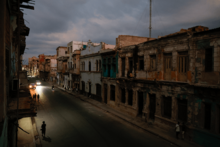
As Cuba continues to face severe blackouts, economic crisis, and political pressure, Christians on the island and their allies in the U.S. are working to save lives and advocate for Cuban freedom.
In recent months, the nation of Cuba has been experiencing blackouts so severe that journalists at the New York Times have mapped the effects in satellite photos taken from space. The island’s economy, which had been in crisis for several years, has all but come to a standstill since January’s U.S.-led capture of Venezuela’s President Nicolás Maduro, a key ally of the island’s government. Later that month, the Trump administration also renewed and hardened a longstanding comprehensive embargo on the island, citing “actions of the Government of Cuba directly threaten the safety, national security, and foreign policy of the United States.”
More so than ever, U.S. pressure on the island has made daily life difficult. Jorge González Núñez, president of the Movimiento Estudiantil Cristiano de Cuba, spoke to Sojourners in voice messages over the course of three days, originally in Spanish.
“We’ve had only two hours of electricity each day for a week, or more,” González Núñez said.

The Supreme Court backed on Monday state laws that allow mail-in ballots received after Election Day to be counted, rejecting a Republican-led challenge to a five-day grace period in Mississippi and dealing a setback to President Donald Trump.
The justices in a 5-4 ruling overturned a lower court’s decision that had deemed Mississippi’s law inconsistent with U.S. statutes that set the timing of federal elections—for the presidency, Senate, and House of Representatives. Trump last year vowed to end the use of mail-in ballots nationwide before this November’s congressional elections, when his fellow Republicans are seeking to retain control of Congress.
The court has a 6-3 conservative majority. Conservative Chief Justice John Roberts and fellow conservative Justice Amy Coney Barrett joined the court’s three liberals in the majority. Barrett wrote the opinion.
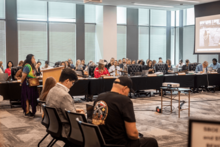
Texas elementary and middle school students will likely see redesigned social studies and reading lessons that minimize racial, geographic, and cultural diversity while emphasizing the Bible — but changes for high schoolers have suddenly hit a pause.
The Republican-led State Board of Education decided Thursday evening to allow final votes on a rewrite of Texas’ K-8 social studies lessons and a mandatory reading list for all public schools that includes Christian stories. Those votes are expected Friday.
However, the board delayed proposed changes to high school U.S. history, world history, geography and government.
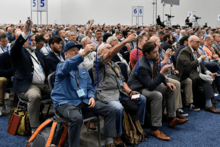
Political theorist Stephen Wolfe, along with ministers Zachary Garris and Sean McGowan, all believe the government has a role to “promote true religion.”
Wolfe is a self-avowed Christian nationalist. However, Garris and McGowan don’t use that title.
The three men teamed up to write a book that presents an alternative view on religious liberty for peers within the Presbyterian Church in America (PCA), which just advanced a report denouncing Christian nationalism.
“Many American Christians assume a secular form of government,” Garris, a New Mexico pastor in the PCA, said in an interview. “And our book challenges that. It’s rather simple.”
The U.S. Supreme Court cleared the way on Thursday for President Donald Trump's administration to strip hundreds of thousands of Haitian and Syrian immigrants of a humanitarian status that protects them from deportation, giving another boost to his hardline approach toward immigration.
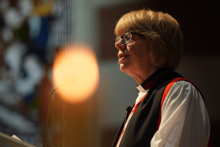
Sarah Mullally, the Archbishop of Canterbury, apologized for the Church of England’s coercive adoption practices and treatment of pregnant mothers during the post-World War II period through 1976.
“We are profoundly sorry for the pain, trauma and stigma experienced—and still carried—by many people because of historical adoption practices in homes linked to the Church of England,” said Mullally in a video released online on June 18.
In its own report, the church acknowledged that leadership knew pastoral guidance to keep mothers and babies together was disregarded in some cases and muddled with other language in church records, including “dehumanising and dismissive attitudes, falling short of what would be expected towards anyone in the church’s care, not least people who were rendered especially vulnerable by their circumstances.”
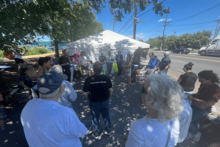
In New Jersey on Saturday, Catholic activists gathered near the front gates of Delaney Hall to pray the rosary in solidarity with those detained in the Immigration and Customs Enforcement detention facility.
It was the latest act of Catholic witness at Delaney Hall, where several hundred detainees initiated a hunger and labor strike in May to protest the facility’s inhumane conditions. Outside the facility, ICE agents deployed pepper spray and shoved protesters into the street, leading to the deployment of state police, the establishment of protest perimeters and curfews, and dozens of arrests While those measures have been lifted, the situation within and outside Delaney Hall remains in flux, with mutual aid organizers—including many people of faith—adapting daily to support the families of those detained.
On June 13, about 50 people gathered to pray near a colorful chalk drawing of the Sacred Heart of Jesus. Catholic sisters distributed rosaries outside the “radical hospitality tent,” where mutual aid organizers once provided food and toys to families visiting those detained inside before the facility instituted “draconian” rules to dissuade visitations. Now there were no families, and few protesters or news cameras in sight.
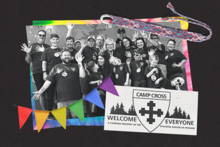
The Episcopal Diocese of Spokane, Washington, has maintained Camp Cross—a 130-acre property on the west side of Lake Cœur D’Alene, Idaho—for more than a century. Each week throughout summer, the church hosts themed retreats, from Arts and Music Camp to Clergy Camp.
One of those retreats is Queer Camp, a session for LGBTQ+ people and allies of all ages that the church has hosted since 2024. Registration is now open for Queer Camp’s third year, which will run August 28 to 31.
“My hope is folks can know there is a place where they can be Christian and be their full self,” said camp director Alex Flannagan. “It’s not conditional, no one’s trying to change you, you’re fully welcome.”
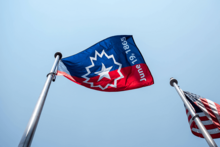
Resounding Love, a diverse interfaith choir, is bringing a message of love and hope to its Juneteenth concert in Seattle.
The group offers the most powerful and uplifting elements of church gospel music to people of many faith backgrounds, the Rev. Angela Farrar Small, director of chaplains, said. Resounding Love’s Juneteenth performance will center on African American identity, culture, history and social justice.
Juneteenth commemorates June 19, 1865, when enslaved African Americans in Texas learned of their freedom, more than two years after the Emancipation Proclamation. Now it’s a federal holiday celebrating the end of slavery in the United States.
African American gospel and spiritual music has brought people together “from the deepest depression to the biggest joys,” Small said.
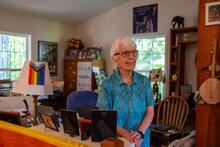
On “Moral Mondays,” a group of locals—sometimes 10, sometimes 100—gather on the town square in Brevard, N.C., holding signs advocating for voting rights, economic justice, and more. Carter Heyward, an Episcopal priest and vice president of the Transylvania NAACP, which organizes the events, will “often come in her collar with a bright stole on,” said Diane Livingston, an NAACP member. “That's how I always picture her, with a clergy collar on.”
Heyward’s clergy collar and her advocacy for a more democratic society did not come easily. She was one of the first women to be ordained in the Episcopal Church in 1974. It was an “irregular” ordination: The 11 women ordained at the predominantly Black Church of the Advocate in Philadelphia, prefiguring the Episcopal Church officially ordaining women in 1976, became known as the Philadelphia Eleven.