electoral college
TRUE CONFESSIONS: WE hoped this issue of Sojourners might be commenting on the first woman U.S. president. It would have felt like progress to see Kamala Harris, a woman of Black and South Asian heritage, in conversation with other female heads of governments, such as those in Mexico, Peru, Italy, Thailand, and Tanzania. We also planned for election results that would take time to finalize. Then, just days before our deadline, Donald J. Trump won the election — and by Electoral College votes it wasn’t even close. We feel weary and defeated. Like many of you, we worked hard to protect voters’ rights to a free and fair election. We trust that’s what we got. But the results have also moved a well-funded authoritarian movement closer to its goals, as journalist Katherine Stewart explains in our interview with her. This anti-democratic movement has hijacked parts of our Christian faith. We say it here plainly: The principles, methods, and policies of white supremacy and authoritarianism are incompatible with the message of Christ. As senior editor Rose Marie Berger writes, “The new authoritarians amassing around Trump see themselves as Nietzsche’s ‘supermen’” — superior to all others and with an immoral drive to dominate, not democratize. We will undermine them with revolutionary love every step of the way.
What has been happening since the outcome of the November presidential election has been historic: continuous acts of sedition aimed at overturning the results of an American election by the current president of the United States.
The Electoral College has racist origins. Southern states were granted votes for three-fifths of their slave populations, even though those enslaved people were themselves unable to vote. This effectively gave white southerners an outsized influence on the electoral process until the end of the Jim Crow era. Today, the system favors voters in a small group of battleground states at the expense of most Americans and over-represents white voters while ignoring many voters of color. A growing chorus of legal and policy experts, along with the majority of Americans, believe it should change. However, the Electoral College’s racist legacy has also impacted efforts to change it.

The reporter asked President Trump about the rise of anti-Semitism in America. His answer — or seeming lack of one — angered many prominent Jewish Americans.
“Donald Trump’s inability to simply condemn antisemitism boggles the mind,” said Stosh Cotler, CEO of Bend the Arc Jewish Action.

On Nov. 26, Art Sisneros, a Texas presidential elector and Republican, announced in a blog post his resignation from the Electoral College and the reason behind his decision. “I do not see how Donald Trump is biblically qualified to serve in the office of the Presidency,” Sisneros wrote.

Americans voted largely along the lines of race, education, and party identification. Nonwhites strongly preferred Clinton, while whites decisively chose Trump. Compared with past Republicans, the businessman received a stunning surge of votes from non-college-educated white voters.
None of this is surprising.
And yet the result upends so much conventional wisdom.
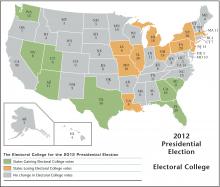
The United States is the only democratic country in the world where a candidate can be elected as president without earning the highest number of votes.
In the midst of competing campaigns and critical choices leading up to Election Day, one of the most common assumptions is that U.S. citizens directly select their president. However, far too many fail to fully understand that such direct selection is not our reality, for within our complex electoral system – known as the Electoral College – the will of the people does not always translate into final results. During the presidential elections of 1876, 1888, and 2000, the leader in popular votes did not claim victory, and some believe a similar scenario may take place in the near future. And so, when a candidate receives the majority of votes but is not sworn into office, we recognize a gross injustice that requires immediate and significant transformation.