clean energy
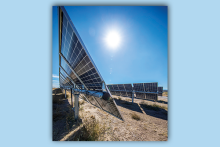
SINCE I AM a Christian, I worship the Son, not the sun. That said, I’ve been spending most of my time lately thinking about that large ball of gas the good Lord was kind enough to hang in the sky, 93 million miles away. In fact, we’re getting ready for an entire weekend devoted to considering the most important object in our physical world — though it is the only one you can’t look at directly. SunDay will happen on September 20 and 21, 2025 (details at SunDay.earth), and I hope it’s a chance for real reverence.
The sun already supplies light, heat, and photosynthesis, and now it’s ready to provide all the power we could ever need. In the last decade, engineers have dropped the price of solar power by 90%; they have done similar work for batteries that store power for when the sun goes down. We now live on a planet where the cheapest way to generate power is to point a sheet of glass at the sun.
If we take full advantage of those new facts, we stand some chance of limiting the damage from the climate crisis. Last year, California reduced the amount of natural gas it used to generate energy by 25% compared to its usage in 2023. This is the most hopeful statistic I’ve come across in my 35 years of working on global warming. California was able to do this because it had put up enough solar panels to really make a difference. And this could happen everywhere. Texas is currently building clean energy faster than anywhere else in North America but is miles behind China, which put up about 60% of the planet’s solar panels last year.

IN MARCH, CIVIL society groups across the Pacific — including churches — unveiled a landmark declaration to end fossil fuel expansion in the Pacific region. The Naiuli Declaration provides a moral rudder from Pacific communities to guide the international Fossil Fuel Non-Proliferation Treaty.
Pacific Islanders are championing the treaty as a legally binding mechanism to end new exploration and to support the rapid, equitable, and lasting phaseout of fossil fuels, core drivers of climate change and sea-level rise. To date, 12 nations have endorsed the treaty, including fossil fuel-producing countries Timor-Leste and Colombia. In the U.S., Maine, California, and Hawaii have also endorsed the treaty.
In envisioning our fossil free future, the Naiuli Declaration carries the twin aspects of vulnerability and resilience (the term Na i Uli draws from indigenous Fijian words for the steering oar in traditional double-hulled ocean canoes). There is the vulnerability of communities facing an existential crisis caused by climate change, putting at risk livelihoods, culture, our deep spiritual relationship with land and ocean, and the possibility for climate-induced displacement. The sense of exile evoked by this vulnerability resonates with the psalmist, who laments: “For there our captors asked of us songs, and our tormentors asked for mirth, saying, ‘Sing us one of the songs of Zion!’ How could we sing the Lord’s song in a foreign land?” (Psalm 137:3-4).
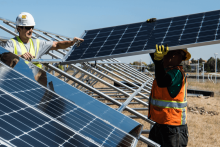
The American Jobs Plan invests in rebuilding our economy, creates millions of good-paying jobs, helps workers transition out of the fossil fuel industry, and protects our health, land, air, water, and global climate.
Juliana was in high school when she first joined Our Children’s Trust to sue the Governor of Oregon for a stable climate. During my environmental education classes, I’ve discussed the litigation to illustrate the importance of a long-term view even for an urgent planetary crisis. When my undergraduates prepare conservation workshops for local schools, they know that Juliana once sat in their places. She hopes to advocate for them in the U.S. District Courthouse in Eugene, Ore. in what may be the lawsuit of their lifetimes. And regardless of this Supreme Court’s decision, youth will gather on the courthouse steps to call for their right to a stable climate.

Pope Francis is a straight shooter who does not mince words: "If we destroy creation, creation will destroy us,” the pontiff said last year. “Never forget this!”
The pope’s warning and calls for action have galvanized many religious leaders from across Maryland to step up our efforts to protect God’s creation from climate change disruptions. We understand that it is the poor and most vulnerable among us who are bearing the brunt of human-induced climate change. Unless we act now, the impacts of devastating super-storms, massive floods, droughts, and crop failures will only accelerate. Refusing to bury one’s head in the sand and facing squarely the reality of climate change is a fundamental issue of justice and respect for life.
This is why I, a Franciscan friar priest, have joined more than 230 Maryland religious leaders, including Bishop Dennis Madden of the Catholic Archdiocese of Baltimore and six other leaders of Christian denominations across Maryland, in issuing an urgent, moral challenge. We are calling on Marylanders — including our elected officials — to take action on climate change by helping to shift our state’s energy policy towards renewable, clean energy sources.
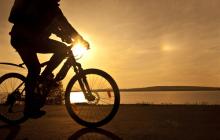
I just completed my first Climate Ride, journeying 300 miles by bicycle over five days with 200 other climate activists. Climate Ride began five years ago, and the riders raise money for organizations that work on sustainability and climate change. They’re also a way to spread the word about the growing and increasingly determined climate movement. For those of us who take part – by now, thousands of us have – the rides have a deep and lasting impact.
These are my reflections from the last day of the ride; you can read reflections on the first four days of the Climate Ride here.
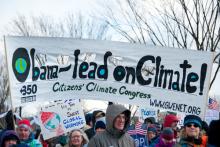
Yesterday was a momentous day for the creation care movement: after years of inaction from Congress, President Obama announced a major, comprehensive plan of action on climate change. President Obama’s new “Climate Action Plan,” which he laid out in a speech at Georgetown University Tuesday, addresses the country’s largest source of climate pollution — carbon dioxide from power plants — as well as boosting energy efficiency standards, renewable energy production on public lands, and resilience for cities, towns and roads.
The fiscal cliff deal passed Tuesday included an one-year extension of a tax credit for the wind industry. The tax credit has encouraged investment in wind energy for the past two decades. USA Today reports:
[The tax credit extension] would allow any project that begins construction in 2013 to claim the credit, even if it goes online in 2014, according to industry insiders. The tax credit that expired Monday could be claimed only for projects that were up and running in 2012.
Read more here.
On November 6, I will join Jim Wallis, staff members from Sojourners, and 15,000 others in Washington, D.C.'s Lafayette Park to tell President Obama to stop the Keystone XL pipeline project.
If approved by the Obama administration, the pipeline would transport non-conventional tar sands oil from Alberta, Canada, 1,700 miles south -- through the American Heartland -- to the oil refineries in Texas on the Gulf of Mexico.
Won't it reduce our dependence on Middle Eastern oil? Won't somebody else develop the Alberta tar sands if the U.S. doesn't do it -- someone like China, perhaps?
I've been wrestling with many of these issues as I contemplate risking arrest as part of two weeks of sustained protest by leading environmentalists, climate scientists, and faith-based groups at the White House forth to pressure the Obama Administration to block the Keystone XL Pipeline. This pipeline project will connect Canadian tar sands -- containing the second largest and dirtiest oil reserves on the planet -- with the oil refineries in Texas.
Off-the-shelf renewable power can meet 100 percent of world need -- if we have the will.
One year after the Deepwater Horizon Oil Spill, life has not returned to normal in the Gulf.
Before the 2011 State of the Union address, Senator Mitch McConnell (R-KY) said that President Obama would speak about "investments" and that it was Latin for spending. I looked it up. The Latin root for "investment" is in + vesti meaning to clothe or surround. The definition of "invest" according to Dictionary.com is: "to put money to use, by purchase or expenditure, in something offering potential profitable returns, as interest, income or appreciation in value." The difference between an investment and spending is the difference between buying a new pair of shoes and buying stock in the company that makes the shoes. I may enjoy the shoes, but stock in the company will pay dividends long after the shoes are old and gone. The shoes are of little value or benefit to my children, but stock in the company, especially if the company grows and prospers, will benefit them. In his State of the Union address, President Obama spoke about winning the future. In order to do this, the United States ought to attend to innovation and education. We, as a nation, ought to rebuild the country's infrastructure, bring down national debt, reorganize government for more efficiency, and continue our support for the democratic aspirations of people across the globe. All of these will require investments.