teenagers
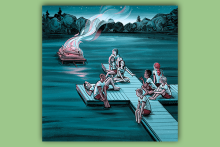
WE WERE DEEP in the thick heat of a Virginia summer when my teenage campers gathered to argue one night on the volleyball court.
It was 2011 and I was a counselor at Camp Hanover, a Presbyterian summer camp and retreat center. It was my third summer working at the outdoorsy camp, and prior experience with campers told me this group was at a breaking point. The issue that divided them? Whether it was okay to be queer and Christian.
I had seen this group go through the first of the classic team formation norms (“forming, storming, norming, and performing” developed by psychologist Bruce W. Tuckman). I knew they were itching to storm. Sure enough, as we sat on the cooling sand of the court, stars piercing through the cloud layers above and the volleyball net swaying in the breeze, they finally opened up.
Some had pastors in their home churches who preached against queer affirmation. Some were queer themselves, grappling with their self-understanding in the context of their teenage faith. All of them were questioning what they had been told by adult leaders and were digging through their collective wisdom for answers.
That moment is the perfect illustration of why religious summer camps are important: They provide places for personal and spiritual growth beyond what kids can access in their regular home and church environments. Camp provides space — external and internal
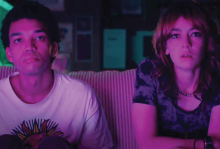
IT'S HARD TO understand what motivates Owen, in part because he is almost always alone. The lead in I Saw the TV Glow (played by Ian Foreman and later Justice Smith) is near-always inert, save for when it comes to his favorite television show: The Pink Opaque.
When the lonely seventh grader discovers that a disaffected girl two grades older than him, Maddy (Brigette Lundy-Paine), also stays up late to watch the monster of the week show, he sneaks out to watch it with her. It is one of the most radical acts he takes.
Set in an anonymous suburb in 1996, the two gather every Friday to watch the show, a Buffy the Vampire Slayer and Twin Peaks composite about supernaturally empowered teens who defend their suburban county against the evil Mr. Melancholy. Together they fall into the show’s immersive lore to escape their own hardships — an abusive stepfather, a chronically ill mother. As Maddy explains, the show “feels more real than real life.”
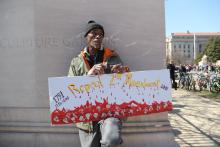
“I went to the Million Man March — that was about gun violence,” Broady said. “Black Lives Matter, that’s about gun violence. And here’s another rally where gun violence is attacking school and everything — not just streets, it’s going into school. It has to stop, and it has to go back to the Second Amendment.”

The term "rape culture" is a sociological theory in which individuals who sexually harass and assault others are given a social license to do so, as they live in a society that makes excuses for perpetrators and blames victims for their own abuse. Feminist theorists often argue that rape culture beliefs are socialized into young men and women from childhood. Young men are socialized into beliefs that they have power and/or control and entitlement over others' bodies from a very young age. Likewise young women are socialized into believing they control men’s desire and lust via their clothing, behavior, and attractiveness. The theory of rape culture argues that these social beliefs facilitate sexual harassment, inappropriate sexual touch, sexual assault, and sexual objectification of others by reducing the stigma of engaging in unwanted sexual behavior and by increasing a since of entitlement from men towards women.
In Christian spheres of influence there has been an increasing focus — via Sojourners, Christians for Biblical Equality, and likeminded groups — to exposing how social beliefs, church leaders, and authoritarian theology has contributed to rape culture beliefs in the church and in the larger community. This focus comes in the midst of a media debate between social conservatives and social progressives about the very existence of rape culture. Inspired by conservative opposition to the recent publicity from the White House on the epidemic of sexual assault on college campuses, this debate was further inflamed by the retraction of a Rolling Stone article about allegations of sexual assault at the University of Virginia. In response, it has become popular in recent months for conservative commentators to argue that there is no such thing as "rape culture."
This escalation of rhetorical debate is dangerous because it distracts from the real concern that rape culture theory was developed to address — that we help socialize dangerous behavior in children by our actions, inactions, and modeled beliefs.

I flew to Houston over the weekend to speak at the Conspire Conference. I stood on a stage looking out over a few hundred students in grades 6-12, telling them my story of having breast cancer in my 20s.
I talked to them about what a dark season of life it was for me. The chemo and radiation were difficult, but on top of that I also lost a good friend to cancer, I was out of work for seven months, while in my apartment building’s parking lot, my car was hit by a truck, and my boyfriend broke up with me. After all of that, I ended up in the hospital with a raging lung infection and a good chance that I would die.
On the nights I spent in the hospital, I’d lie awake and stare at the ceiling and wonder where God was. “Do you see me? Do you love me? Do you care about what’s happening in my life?” I prayed. “And if you see me and love me and care about my life, why don’t you come down and make this all go away?”

As a teen, I was taught abstinence-only sex education. I pledged purity, and I made it known to all the boys around me. In my freshman year of high school, I was even voted “Most Likely to Wait Until Marriage” by my peers. The very next year, at age 15, I became pregnant.
Today, nearly half of American high schoolers, aged 14 to 18, are sexually active, according to a Centers for Disease Control survey. Even Christians aren’t waiting until marriage. Among unmarried adult evangelicals under 30, 8 in 10 have had sex.
Somebody has to say it: Our approach isn’t working, and it’s time to rethink “the talk.” It’s time to expand the conversation into territory where many evangelical parents dare not go.
I love words. They nourish me more than food. As a child (and even now, as an adult) I read novel after novel, losing myself in the characters, the plot, and the effortless descriptions of good writers. If I could swallow the New York Times, I would. (There are also many other fantastic newspaper publications out there; I'm not partial.) The discovery of Google reader has been my biggest internet distraction to date. A picture may be worth a thousand words, but I'd rather the thousand words.
Something sort of mystical and magical happened after a 19-year-old kid named Papito was killed on our block a few weeks ago. As our neighborhood ached and grieved and cried with his family, we began to create a memorial for Papito where he died
[Continued from part 1] I have no idea how the United States will or can get out of the economic mess we've spent the last 50 years getting ourselves into. As individuals, though, we can take steps to avoid disaster.