Medicaid

In New York City, many home care workers work 24-hour shifts for up to five days straight, and are only paid for 13 hours of each shift. If they do not agree to this, they risk losing their job.
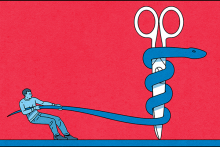
Home care workers provide 24-hour, live-in care for elderly and disabled patients, as defined by Medicaid. Home care workers feed, bathe, and administer medicine to patients. These workers attend to their vulnerable patients’ unpredictable needs around the clock. But because insurance companies like UnitedHealthcare and New York Healthfirst receive fixed public Medicaid payments to manage care, they make a profit by hiring only one worker for an entire shift.

As part of the ongoing assault on essential services for the most vulnerable, the One Big Beautiful Bill Act, signed into law on July 4, includes $1 trillion in cuts to Medicaid over the next 10 years. As Emily Crawford noted for NPR in August, “The Congressional Budget Office estimates that these cuts could cause 10 million Americans to lose health insurance by 2034.”
As a caregiver for my disabled mother, who relies solely on Medicaid for health insurance, these estimates are terrifying. Also terrifying is that House Speaker Mike Johnson, the Louisiana Republican and Christian, gave glory to God when the bill that created these cuts was passed.
Budgets reveal our true values. Americans have long prioritized that everyone, including people with disabilities, have access to high-quality health care, essential long-term services, and nutritious food. However, the new tax cut and spending package signed on July 4, 2025, reorders U.S. budget priorities and creates significant hurdles to access or use Medicaid and the Affordable Care Act marketplace insurance. This new budget is designed to deny coverage to those who need it, even if they qualify, by burdening them with additional administrative and paperwork barriers.
Medicaid covers more than 70 million low-income or disabled people, including nearly half of the nation’s children. Congress slashed nearly $1 trillion from Medicaid, a staggering 20% cut, the largest in the program’s history. Approximately 11 million people will lose coverage. If Congress also fails to extend enhanced ACA subsidies, that number could rise to 17 million. New mandated work requirements for Medicaid recipients will result in more red tape and lost coverage. Medicaid is the primary payer for long-term supports, including home and community-based services, known as HCBS, that many people with disabilities rely on to live independently. Federal cuts mean that costs will shift to states, forcing them to reduce these “optional” Medicaid services.
The new law also cut nearly $200 billion from the Supplemental Nutrition Assistance Program, the country’s largest food assistance program, and expanded its work requirements. People with disabilities are twice as likely to live in poverty as those without, so many depend on both Medicaid and SNAP. Imagine losing access to health care and food simultaneously.
If you’re a Medicaid or SNAP beneficiary or an organization supporting those who are, now is the time to learn how to defend benefits and demand your rights. Here are five essential actions you can take.

THIS YEAR, REPUBLICAN House Speaker Mike Johnson pushed through a budget resolution that calls for cutting at least $880 billion over 10 years from funding that includes Medicaid. A number of Republicans see these cuts as damaging to voters in their districts. Johnson’s job, however, is to advance the budget set forth by the Trump administration — a budget aimed at increasing spending on border security and deportations while also extending the tax cuts from the first Trump administration.
Those 2017 tax cuts saved households with incomes in the top 1% and the top 5% three times more than they did for those with incomes in the bottom 60%, according to the Center on Budget and Policy Priorities. The Trump administration wants Medicaid to foot the bill, effectively stealing money from disabled children to give tax cuts to billionaires.
Medicaid is widely popular, but we can get so caught up in rhetoric and budget numbers that we fail to understand it. Broadly known as a joint federal-state health insurance program for low-income and disabled people, Medicaid also covers services for 47% of all disabled children in the United States. My daughter Zoe is one of them.
So is Mia, daughter of Adam and Joy Beth Crownover, who gave me permission to tell their story. Mia was born with lissencephaly, a condition in which the brain is smooth where it should be wrinkled. Many babies like Mia don’t live past their second birthday, but Mia is already 2.
For me, this faith has always been rooted in Jesus’ lived example of how we are to be unapologetic in our support for each other. And when Jesus says, “love thy neighbor as thyself,” I imagined this meant, well, help thy neighbor, assist thy neighbor, care for thy neighbor, nurture thy neighbor — all without condition or justification, just as Jesus did. But since then, I’ve learned a serious lesson about the limitations of the Christian imagination in politics. Despite our shared faith, many lawmakers in this country don’t seem to envision a country where we actually put these values into practice. My latest disappointment? Millions of people losing Medicaid coverage — our nation’s primary public health system that provides health care and support for folks with low income and/or disabilities — because states refuse to do the right thing.

For 30 years before she was ordained, Rev. Morgan Gordy was a nurse in Georgia, Mississippi, and Tennessee. She saw the link between poverty and death firsthand, and it often came down to lack of access to affordable health care.

Budgets are moral documents: They signal what and who we prioritize and seek to protect or uplift. As Christians we can disagree on many issues, but it should be hard to argue that there is an overriding call in the Bible to demonstrate a particular concern for the poor and prioritize the welfare of the vulnerable. This is the moral test by which we must evaluate every budget, perhaps most importantly the federal budget. Based on this test, the Trump administration’s proposed budget priorities for Fiscal Year 2020 fails miserably and must be rejected.

The Trump administration is pushing to impose work requirements on Americans who rely on the Medicaid program for their health care. Sixteen states have taken up the President’s team on its explicit invitation to place this extra demand on their states’ residents who count on Medicaid for access to their medicines and treatment. There are high-level discussion about applying Medicaid work mandates across the country.
Republicans realize that work requirements can undercut the ACA’s most effective component: the expansion of Medicaid. They are counting on these regulations inflicting their damage outside of congressional and popular scrutiny. In the process, they are promoting false information on what Medicaid work requirements will do.

PRAYER, FASTING, and advocacy are all spiritual disciplines—ones that we need right now. Several faith leaders came together this spring to call our brothers and sisters in our diverse faith communities to tie these three spiritual disciplines together “for such a time as this.”
What kind of time is this? We are living in a time when vulnerable people in the United States and around the world are facing tremendous threats from this administration and this Congress—threats that will be on vivid display in the budget debates that will consume Congress after Labor Day:

"Work requirements do not create jobs; they instead create barriers to assistance for those who need them, oftentimes when their situation is most dire," House Democratic Whip Steny Hoyer (M.D.) and Rep. Barbara Lee (D-C.A.) said in a joint statement. "This executive order perpetuates false and racist stereotypes about certain groups supposedly taking advantage of government assistance."
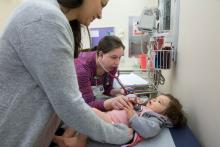
The stall in funding for CHIP, federally-funded program that covers moderately low-income children in the U.S., leaves nearly nine million children and their families in a worrisome limbo.

I’m grateful for the 10 governors — Republican and Democrat — who wrote to senators asking them to reject the so-called “skinny repeal” because of how it would affect their residents.
I’m grateful for the thousands of you who heeded Sojourners’ call and contacted your member of Congress to voice your opposition to any bill that would hurt the poor with devastating cuts to Medicaid.
1. ICE Officers Instructed to Take Action Against All Undocumented Immigrants, Regardless of Criminal Histories
“Between February and May, the Trump administration arrested, on average, 108 undocumented immigrants a day with no criminal record, an uptick of some 150 percent from the same time period a year ago.”
2. Officials Say the Answer to Chicago’s Violence Is Jobs. But On What Scale?
WBEZ Chicago did the calculation. Here’s how much it would cost in the first year to employ the target group of more than 30,000 people.
3. Liberating Theology from the Intellectual One-Percenters
How can people who do not reside within academia gain access to the treasure trove of knowledge that is Christian theology?

We come as women and men of faith. Though separated by physical distances, cultural differences, and faith traditions, many of us united in prayer and fasting in May, directed toward God’s intervention in the politics of the United States, especially as it relates to the poor and vulnerable. We pray for wisdom for our governmental leaders, but we are committed to continued advocacy for those most in need of society’s safety nets.

Coming together from all streams of American Christianity to speak in opposition to cuts on the safety-net programs is no minor achievement. We have a widespread consensus on the priority of providing essential life saving support to poor people in our country. We also agree in that the ultimate goal is to create a just society in which everyone live an abundant life that includes meaningful work with fair salaries, affordable health care and education, and time for leisure and recreation.

When we say the most vulnerable or the “least of these” we are not talking about numbers on a page. We are talking about the elderly — grandmothers and grandfathers, deacons, trustees, and ushers, children’s ministry workers, community leaders, and those who have worked for decades to provide for themselves and their families. We are talking about children and youth who were born with purpose and possibilities, who have their whole lives ahead of them, future pastors, and lay leaders, lawyers, teachers, journalists, and members of Congress — those who will determine the future our nation. We’re talking about those who have disabilities and those who work hard every day – sometimes two and three jobs to make ends meet and provide for their families but get paid low wages that do not cover the high cost of living in most cities and towns in our nation.

Several years ago, Sojourners asked that question, leading a campaign to remind our leaders in Washington that: “A budget is a moral document. Our faith tells us that the moral test of a society is how it treats the poor. As a country, we face difficult choices, but whether or not we defend vulnerable people should not be one of them.” As we look at the priorities outlined in the Trump administration’s 2018 budget released today, it’s worth asking again: What would Jesus cut?

We celebrated the failure of a cruel bill. We celebrated our powerful unity across other theological and political differences and our clear opposition to cutting the poor out of the critical budget decisions which now lie ahead. Yes, we celebrated. But we remain vigilant.

THE AFFORDABLE CARE ACT, which has now been the law of the land for five years, is beginning to reshape the national landscape in significant ways.
According to a New York Times analysis of the ACA’s first enrollment period, about 10 million additional people gained insurance in 2014. Many of them fall into demographic groups that have historically struggled to access coverage, such as low-income Americans, people of color, and women. Ultimately, President Obama’s health law is slowly making the country more equal.
There are a few ways the ACA is accomplishing that goal. It has built-in consumer protections to ensure that insurance companies treat people more fairly. It’s created state-level marketplaces to give people new options for purchasing private plans. And it’s expanded the pool of people who are eligible for public coverage through the Medicaid program.
Health policy experts agree that adding more low-income people to the Medicaid rolls represents one of the biggest successes of the ACA so far. According to the Urban Institute, a nonprofit research group, the states that agreed to expand their Medicaid programs—27 so far, plus the District of Columbia—have seen about a 40 percent drop in their uninsured rates.