ancestors
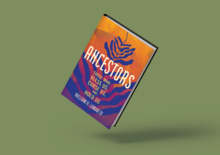
WHO ARE THE ancestors shaping our lives, churches, and nations? And what are they saying to us? These are the questions Rev. William H. Lamar IV invites us to reflect on in Ancestors. Interweaving his personal story with commentary on the Bible, music, and contemporary events, Lamar brings our attention to the ancestors who journey with us. The ones who “beckon our limbs, our loves, and our very lives—sometimes for good and ... sometimes for ill.”
Ancestors live on as “human energy beyond time and space,” Lamar writes. They are a spiritual presence that we can feel and hear when we take time to listen. To Lamar, ancestors aren’t just blood relatives. They can also be found in the books we read, the music we listen to, and the buildings and statues that bear their names.

IN 2012, a group of scientists from the University of Washington discovered Y chromosomes in the autopsied brains of female cadavers. Finding so-called male DNA in cis women’s bodies certainly complicates our notions of gender! But the focus then was on introducing the sci-fi-sounding concept of fetal microchimerism. Fetal cells, we learned, can remain integrated at the genetic level in someone’s body long after the fetus or baby is not. These cells can be passed on to future siblings, thus embedding visceral relations within our bodies that even the most adept family-systems theorist would struggle to disentangle.
The scientific community labeled this a discovery. But for anyone already skeptical of the mind-body dualisms in Western culture, this was simply science catching up with how we already experience our ancestral relations. Intergenerational wisdom and trauma aren’t simply intellectual concepts. Rather, our ancestors’ presence in our lives connects at sites where body, spirit, mind, and soul inextricably intertwine. And these sites are in desperate need of some decolonizing attention if we’re to reclaim our ancestral relations in our practices of Christian faith. Of course, that might not be something we all want to do. But this month, I’ll engage the lectionary readings through this lens to see what questions and insights might arise. And I’ll do so with the hope that our wide, wondrous communion of saints will read along with us.
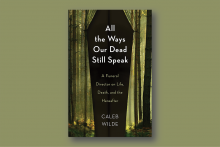
CALEB WILDE is familiar with death. He is the descendant of two long-term generational funeral home families and went into the funeral industry himself. His first book, Confessions of a Funeral Director, delved into some of the more uplifting stories he’s had in death care. His latest book, All the Ways Our Dead Still Speak, is more introspective.
The early chapters detail a few death experiences — an atheist seeing the dead parents of her husband as he dies, for instance — and at first, that’s what I thought the book would be about: exploring what people’s deathbed visions meant to them, regardless of whether those visions were real. But for Wilde, that’s missing the point. What matters is that the dead are still speaking to us. Death isn’t necessarily an end, Wilde argues — it’s a transformative experience; the living carry inside us the essence and dreams of the dead. Open conversations about death and dying can lead to a healthier society.
Wilde specifically calls out white people, his ancestry and mine, for being disconnected from their ancestors. He cites the difference between the polite, private, quiet funerals of white people versus the communal, intensive, emotional funerals of Black people. Many white people believe that grief is a personal, private journey. However, in many Black families and cultures all over the world, grief is a communal process. People come together to remember, love, and support each other. In these times, they cease to become individual selves and instead focus on the plural self — on community: A community of people both dead and alive.
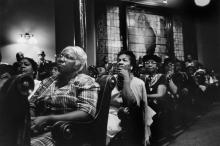
Our stories — and our futures — are the ways we have stood up for what’s right and kept on living when dreams were deferred, hopes unrealized, lives lost, and bodies wearied, and our hearts beating fast as our feet moved across red carpets in old churches rejoicing that we are given of life. These stories are our shining joy. They have become gospel to a people bent and broken.

It is also from this rage and this discontent that Black people in America created and orchestrated their own culture, ensuring that legacy and heritage would exist for their children. They gathered in “hush harbors” to worship their God and Maker, absent of slaveholder religion and influence, tapping into the untampered presence of the Holy Spirit and the deities of the Motherland. They took the slop and remains of the plantation and created a delicacy now known as “soul food”.

If we have learned anything from the past several decades, healing from a 500-year heritage of slavery will take more than a generation or two. I am humbled when I think of this because I realize that the relentless, demonic agony inflicted for 500 years will not be undone or healed by a single generation. My body will have flitted through the breeze as dust many times over once this 500-year heritage has been unwound and restitched. Healing takes more than just time.
? U.S. troops on the front line believe that the war will go on for another 10 years after they leave.
? An audit shows that the surge of U.S. civilian advisers has cost nearly $2 billion.
? The U.S. mission in Afghanistan has suspended the transfer of detainees to several Afghan jails, following torture allegations.