
During his visit to Bolivia in July, the pope addressed an audience of farmers, trash-pickers, craftspeople, and un-unionized workers. He expressed his compassion for the poor and the marginalized and advocated passionately for them, but he did not stop there. As he did in his encyclical on climate change, the pope identified and condemned the systemic and structural causes of their suffering: the global idolization of capital and the pursuit of wealth.
The book of Esther also reflects on a political and cultural system that venerates status and wealth, sets people against one another, and thwarts human flourishing. Even if the book does not explicitly call for change, the story’s ironic reversals, which result in increasingly absurd levels of violence and destruction, reveal just how vulnerable every person in the empire is, including those with the ability to influence the king.
Set in the Persian court in Susa (the capital of the ancient Persian Empire), the book of Esther reads like farce, brimming with political intrigue, sexual innuendo, and murderous plotting. However, for all its comic revelry, the book of Esther is concerned with the serious business of survival in a system driven by vanity, gluttony, and greed.
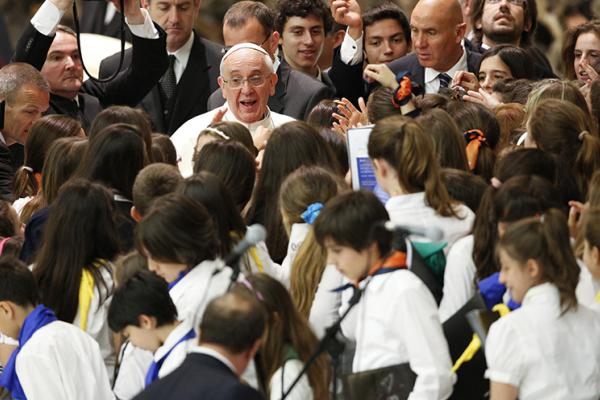
Figuring out why Pope Francis has upended so many expectations and what he might be contemplating for the future of the Catholic Church has become a parlor game almost as popular as the pontiff himself.
A single key can unlock these questions: Francis’ long-standing identity as a Jesuit priest.
It’s an all-encompassing personal and professional definition that the former Cardinal Jorge Bergoglio brought with him from Buenos Aires, and one that continues to shape almost everything he does as pope — even though he is the first pontiff to take his name from the 13th century Italian monk from Assisi who was famous for living with the poor and preaching to the animals.
“He may act like a Franciscan but he thinks like a Jesuit,” quipped the Rev. Thomas Reese, a fellow Jesuit who is a columnist for National Catholic Reporter.
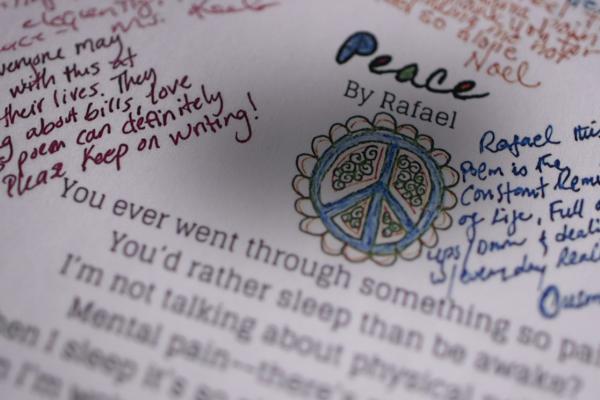
This short documentary profiles Rafael, a member of the Free Minds Book Club, as he explains what writing poetry from prison means to him.
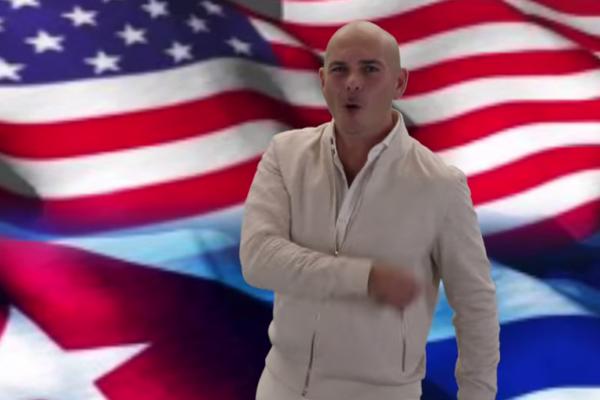
In a new music video, Pitbull, Carlos Santana, Eva Longoria, and others proclaim “we’re all Mexican,” in a celebration of Hispanic Heritage Month and protest against anti-immigrant political rhetoric, reports CNN.
Hispanic Heritage Month runs from mid-September to mid-October.

Ta-Nehisi Coates is at it again — this time in The Atlantic’s newly released October 2015 issue.
In “The Black Family in the Age of Mass Incarceration,” Coates wrestles with the dark underside of criminal justice in the United States. As he is apt to do, Coates effortlessly teases out the connections between our nation’s present situation — unimaginably high rates of incarceration, particularly among black Americans — and our historical plundering of the black community. Conceptually nuanced, historically rigorous, and artfully crafted, “Family” is a success on every level.
Yet soon after Coates’ piece was published, Thabiti Anyabwile issued a cogent response decrying Coates’ apparent hopelessness. Anyabwile’s response highlighted fundamental differences in the two writers’ worldviews. Physical bodies and the violence they endure, not theologies, are afforded primacy of place in Coates’ analyses.
In this sense, Anyabwile serves as an interesting counterweight to Coates. A pastor at Capitol Hill Baptist Church and council member with The Gospel Coalition, Anyabwile is unabashedly Christian. The “comforting narrative of divine law,” eschewed so often by Coates, is one in which Christians like Anyabwile and myself regularly take solace.

Viola Davis became the first black woman to win an Emmy for best actress in a drama at the 67th Emmy Awards on Sunday night.
Davis won the award for her role in How to Get Away with Murder, in which she plays Annalise Keating, a brilliant criminal defense professor.
In her stirring acceptance speech, Davis spoke about the difficulties women of color have often faced getting lead roles.

Restoring the Bible to the heart of the Anglican Communion should be the goal of a meeting called this week by Archbishop of Canterbury Justin Welby on how Anglicans should move forward, said the head of the Global Anglican Future Conference.
Welby’s meeting of Anglican leaders is planned for mid-January 2016 in Canterbury, England. It is being viewed as an attempt to heal the 80 million-member communion, which remains deeply wounded by disputes over homosexuality and women’s ordination in the global church.
GAFCON’s chairman, Archbishop Eliud Wabukala, the primate of Kenya, said the meeting was a recognition of the deep concerns of the faithful Anglican Church leaders in the world. GAFCON, started in 2008 in Jerusalem, says its aim is to restore the integrity of the Anglican faith and order.

Fort Worth, Texas, native Amneh Jafari never expected to help spark an international movement.
But when the senior University of Texas Arlington psychology major saw a picture on the news showing Irving teen Ahmed Mohamed in handcuffs for bringing a homemade clock to MacArthur High School, it felt personal.
“It really saddened me,” Jafari said.
“I have younger siblings, and I felt like I was looking at them.”

On my way home from working at the Little League World Series in South Williamsport, Pa., I decided to do something that I’ve dreamed about for many years.
I would visit the lake.
There’s a lake just west of Youngstown, Ohio, that’s been special to me since I was about seven years old. It’s called Lake Milton. I don’t know the story behind how it got its name. But I can share my story of why it’s special.
Some of my friends know that my dad was an alcoholic. He didn’t drink every day, but when he did, he couldn’t stop. And he’d get loud and angry and abusive toward my mom. It was awful and frightening. I remember listening to the arguments and shaking uncontrollably. This went on for several years.
Fortunately, my dad eventually recognized he needed help and joined Alcoholics Anonymous. His sponsor was a funny, kind man named John. He became part of the family — we called him Uncle John. He and his wife, Fran, owned a cottage by Lake Milton. They encouraged us to use it for a week each summer.

Pope Francis is not an innovator in his approach to the topic of nuclear weapons (though he did extend the logic of earlier ethical thought). The consistent teaching of the Roman Catholic Church since Pope John XXIII has been that the use of nuclear weapons in war is immoral because it conflicts with the principles of just war theory. Problematically for the principles, the violence wrought through nuclear war is extensive enough that there can be plausible victor in a nuclear exchange, and no chance to protect noncombatants from becoming involved. In short, the church teaches, the use of nuclear weapons is indiscriminate and always disproportionate to the good that can be hoped to be achieved.
Pope Francis' whole papal agenda was brought into focus by Dr. Love when she summarized his mission as care for the three 'P's — his concern for the poor, for the planet, and for peace. Various elements of this are obvious from his Laudato Si', among other addresses and initiatives, but all three of these come together in Francis' concern to see a world free from the threat of nuclear weapons and potential of nuclear catastrophe.