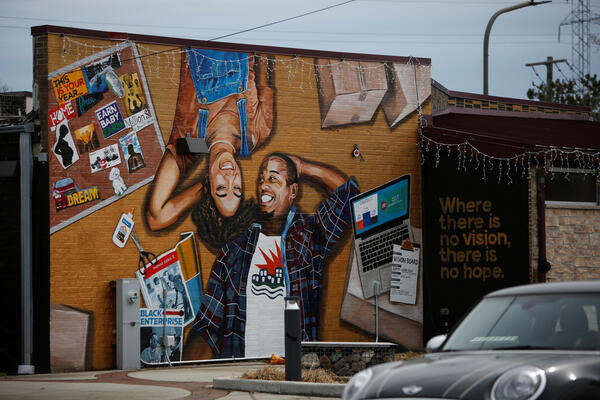
As the United States approaches the 250th anniversary of the Declaration of Independence, the Justice Department’s Civil Rights Division announced a lawsuit against the city of Evanston’s first-in-the-nation municipal reparations program. The DOJ claims that Evanston’s reparations program is “race discrimination, pure and simple.”
Such an act taps into the country’s heritage of discriminating against African Americans. There are surely more constructive ways to mark the nation’s semiquincentennial, but in President Donald Trump’s America, our nation’s abysmal history of discrimination is not a point of embarrassment but a point of pride. The lawsuit is part of a broader effort to roll back protections for Black Americans.

Political theorist Stephen Wolfe, along with ministers Zachary Garris and Sean McGowan, all believe the government has a role to “promote true religion.”
Wolfe is a self-avowed Christian nationalist. However, Garris and McGowan don’t use that title.
The three men teamed up to write a book that presents an alternative view on religious liberty for peers within the Presbyterian Church in America (PCA), which just advanced a report denouncing Christian nationalism.
“Many American Christians assume a secular form of government,” Garris, a New Mexico pastor in the PCA, said in an interview. “And our book challenges that. It’s rather simple.”
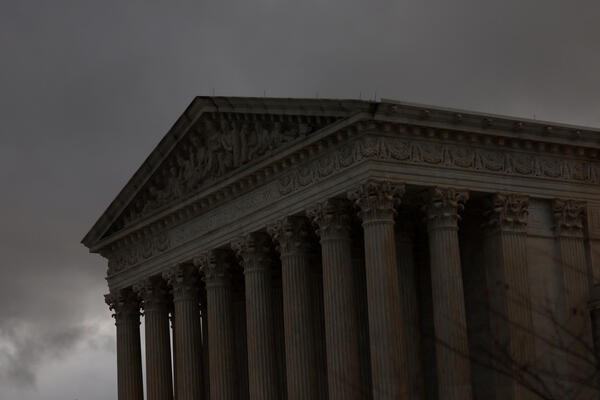
The U.S. Supreme Court cleared the way on Thursday for President Donald Trump's administration to strip hundreds of thousands of Haitian and Syrian immigrants of a humanitarian status that protects them from deportation, giving another boost to his hardline approach toward immigration.
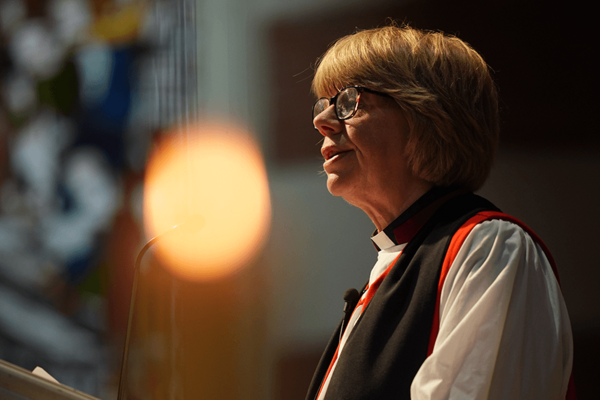
Sarah Mullally, the Archbishop of Canterbury, apologized for the Church of England’s coercive adoption practices and treatment of pregnant mothers during the post-World War II period through 1976.
“We are profoundly sorry for the pain, trauma and stigma experienced—and still carried—by many people because of historical adoption practices in homes linked to the Church of England,” said Mullally in a video released online on June 18.
In its own report, the church acknowledged that leadership knew pastoral guidance to keep mothers and babies together was disregarded in some cases and muddled with other language in church records, including “dehumanising and dismissive attitudes, falling short of what would be expected towards anyone in the church’s care, not least people who were rendered especially vulnerable by their circumstances.”
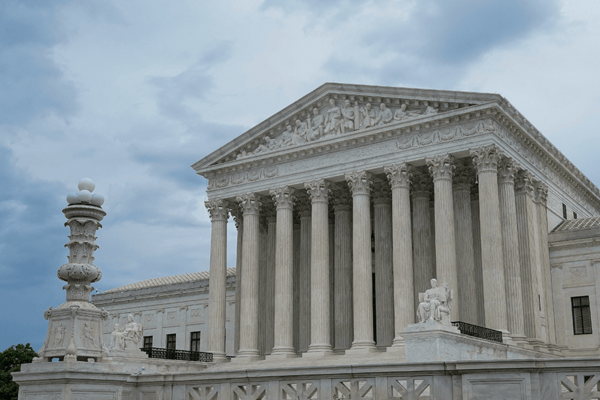
The Supreme Court refused on Tuesday to let a Rastafarian man sue state prison officials in Louisiana after guards held him down and shaved him bald in violation of his religious beliefs in a case brought under a federal law protecting incarcerated people from religious discrimination.
The court in a 6-3 ruling powered by its conservative justices upheld a lower court’s decision to dismiss Damon Landor’s lawsuit because it found the statute at issue did not permit him to sue the individual prison officials and guards for monetary damages. Landor’s religion requires him to let his hair grow.
The court’s three liberal justices dissented from the ruling, which was authored by conservative Justice Neil Gorsuch.
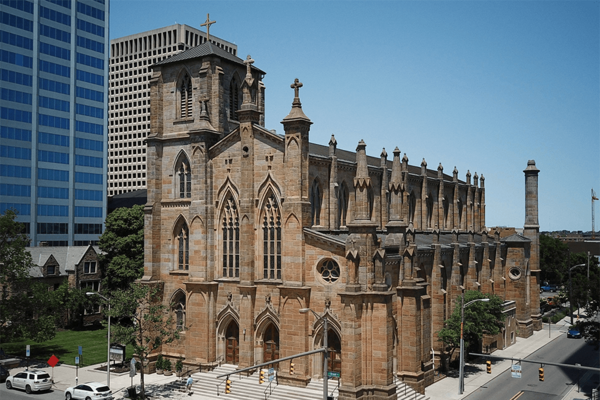
Ohio’s Catholic bishops described the potential end of temporary protected status for Haitians in Ohio as a “moral and social failure unfolding before our eyes.”
In a statement issued June 22 ahead of the country’s 250th anniversary and the soon-expected ruling from the U.S. Supreme Court on the future of many Haitian immigrants, the Catholic Conference of Ohio wrote that the current conditions in Haiti are unsafe for people to return.
“As many parts of their home country suffer from incessant violence and utter despair, those in Ohio and elsewhere in the U.S. may be forced to abandon familial stability, jobs, and community due to policy decisions,” the statement says. “We find no moral justification for terminating their Temporary Protected Status (TPS) without an alternative way to adjust their immigration status.”
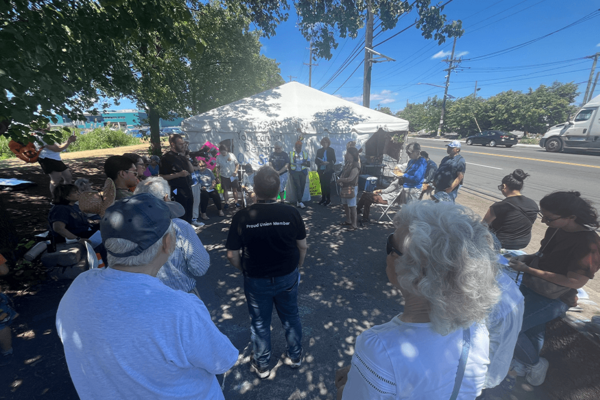
In New Jersey on Saturday, Catholic activists gathered near the front gates of Delaney Hall to pray the rosary in solidarity with those detained in the Immigration and Customs Enforcement detention facility.
It was the latest act of Catholic witness at Delaney Hall, where several hundred detainees initiated a hunger and labor strike in May to protest the facility’s inhumane conditions. Outside the facility, ICE agents deployed pepper spray and shoved protesters into the street, leading to the deployment of state police, the establishment of protest perimeters and curfews, and dozens of arrests While those measures have been lifted, the situation within and outside Delaney Hall remains in flux, with mutual aid organizers—including many people of faith—adapting daily to support the families of those detained.
On June 13, about 50 people gathered to pray near a colorful chalk drawing of the Sacred Heart of Jesus. Catholic sisters distributed rosaries outside the “radical hospitality tent,” where mutual aid organizers once provided food and toys to families visiting those detained inside before the facility instituted “draconian” rules to dissuade visitations. Now there were no families, and few protesters or news cameras in sight.

Sometimes the book of Proverbs can seem a little simplistic, its cause-and-effect declarations sounding nice but not very realistic. Proverbs 10:28 teaches us that “the prospect of the righteous is joy, but the hopes of the wicked come to nothing.” As Jake tells Brett at the end of Ernest Hemingway’s The Sun Also Rises: “Isn’t it pretty to think so?”
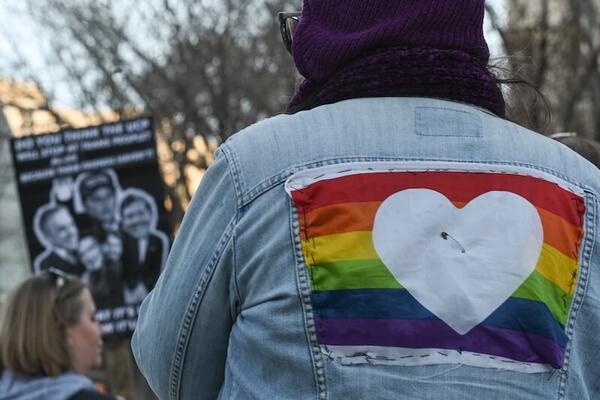
This Pride Month, I’ve been thinking a lot about the fullness of love. Recent polling from Gallup found that support for same-sex marriage has fallen noticeably since its previous height in 2022-23. This shift is largely due to Republicans, whose support for same-sex relationships fell from 55% to 37% in just a matter of years. While I find these numbers upsetting, I don’t find them surprising. After all, Pride itself didn’t begin as a celebration of love but as a protest against those determined to push that love back in the closet.
Love is at the heart of the gospel as well. Jesus taught that the greatest commandments were to love the Lord your God with all your heart, soul, mind, and strength, and to love your neighbor as yourself (Mark 12:30-31). All of Christianity can be condensed into these commandments (Matthew 22:38-40). However, Jesus also gave a third commandment regarding love, and it’s been weighing on my mind for some time now. Christians aren’t just called to love God and love our neighbors; we are also called to love our enemies (Luke 6:27-36).
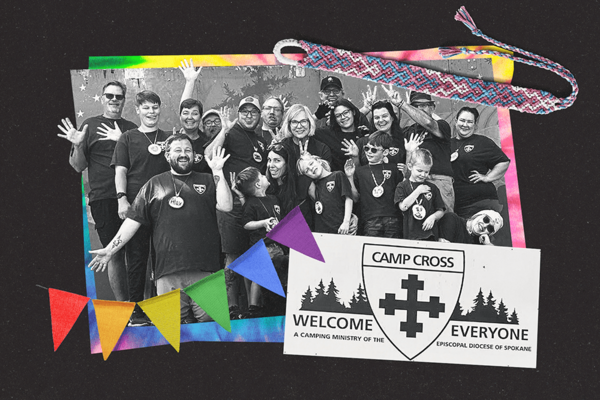
The Episcopal Diocese of Spokane, Washington, has maintained Camp Cross—a 130-acre property on the west side of Lake Cœur D’Alene, Idaho—for more than a century. Each week throughout summer, the church hosts themed retreats, from Arts and Music Camp to Clergy Camp.
One of those retreats is Queer Camp, a session for LGBTQ+ people and allies of all ages that the church has hosted since 2024. Registration is now open for Queer Camp’s third year, which will run August 28 to 31.
“My hope is folks can know there is a place where they can be Christian and be their full self,” said camp director Alex Flannagan. “It’s not conditional, no one’s trying to change you, you’re fully welcome.”