Political theorist Stephen Wolfe, along with ministers Zachary Garris and Sean McGowan, all believe the government has a role to “promote true religion.”
Wolfe is a self-avowed Christian nationalist. However, Garris and McGowan don’t use that title.
The three men teamed up to write a book that presents an alternative view on religious liberty for peers within the Presbyterian Church in America (PCA), which just advanced a report denouncing Christian nationalism.
“Many American Christians assume a secular form of government,” Garris, a New Mexico pastor in the PCA, said in an interview. “And our book challenges that. It’s rather simple.”
Garris, McGowan, and Wolfe's book, “Reformed Christian Politics,” promotes a more hardline view of Christianity’s role in government. It may be a minority perspective for members of the PCA, an influential evangelical Christian denomination. But the fact that they’re promoting those ideas at all is why some peers felt it was crucial for the denomination to study Christian nationalism and release a formal report.
So a special committee presented a 35-page report at the PCA’s annual legislative gathering, called the general assembly, on June 24. The body of delegates, called commissioners, voted to provide that report to churches and regional governance bodies known as presbyteries.
That study committee will come back with a final report at the 2027 PCA General Assembly. Garris, McGowan, and Wolfe hope their book will inform any revisions to that final report.
With the new report, the PCA became the first major evangelical denomination to take such a strong stance against Christian nationalism. The denomination and its sibling evangelical group, the Nashville-based Southern Baptist Convention, have been wrestling with how to respond to those within their ranks who are trying to inject more right-wing political ideals into these already politically conservative religious spaces. The Southern Baptist Convention affirmed a resolution at its recent annual meeting in Orlando condemning political violence and extremism.
“One concern (about the report) is that addressing multiple topics together is a means to smear Reformed political theory. I think that’s why it would be good to not address them all in the same report,” Garris said. He and Wolfe commented on how the report conflated Christian nationalism with ideologies that believe in racial hierarchy, such as “race realism” and “kinism.”
According to the Anti-Defamation League, kinism is a “white supremacist religion” that claims white people have a “God-given right” to live separately from other races. The new PCA report on Christian nationalism condemns kinism and other forms of racism, which are embraced by some Christian nationalists.
260626-PCA2.png
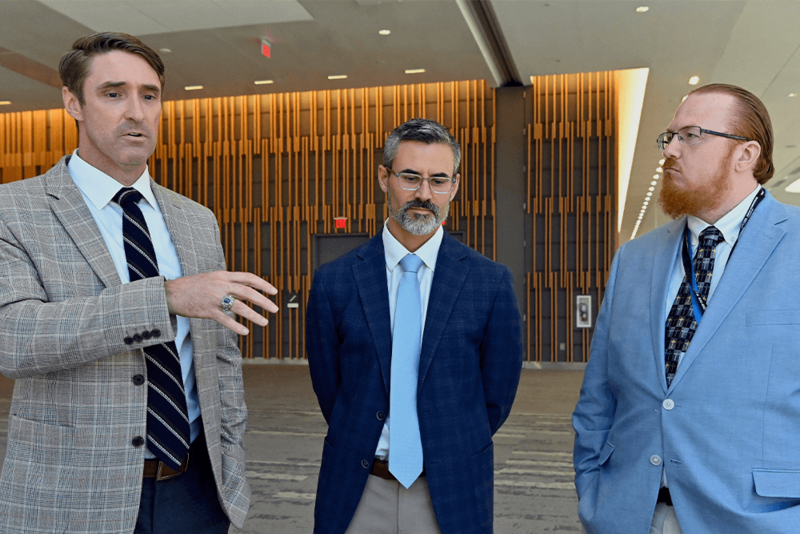
Wolfe, Garris, and McGowan all said they are not “kinists,” but don’t think it was appropriate for the report on Christian nationalism to address that topic. McGowan said they would prefer that a different report address those topics.
Michigan pastor Mark Prim felt otherwise. The study committee’s report on Christian nationalism helped deepen his awareness, he said in an interview.
“Some stuff I didn’t know before I read this report, such as this whole idea of kinism,” Prim said. “It’s a conversation that we need to have now. If we don’t have it now, it’s going to happen no matter what. … If you let it go too long, you’re not going to have a conversation. It’s going to be an argument.”
Christian nationalism report offers radical message for American Presbyterians
Other Presbyterians, like Bill Nikides, saw the Christian nationalism report as a necessary tool for the conservative evangelical PCA.
“The denomination has to learn to be a bigger denomination,” said Nikides, a North Carolina-based church planter. “The denomination has to learn how to be one body. We have very diverse opinions about how everybody is against racism. But how do you recognize it? What does it look like or what’s the tone you ought to set?”
Some of the tension within the PCA is that it’s a “confluence of 20th century Reformed evangelicalism and very old school Southern Presbyterianism,” Nikides added. During the Civil War, some Presbyterians in the South split from their northern counterparts over the issue of slavery. Today, that same level of contention revolves around how Christians should engage in politics.
The PCA is ripe territory for a debate on Christian nationalism because of Presbyterian history. The denomination’s catechism, called the Westminster Standards, is a revised version of the original 1646 edition in which the church and the state, also called the magistrates, were interconnected. The Church of Scotland held to the 1646 edition, but American Presbyterians separated the church and the magistrates in a 1788 revision.
Now, in 2026, the PCA’s study committee on Christian nationalism elaborates on that revision.
“We deny that the Westminster Standards, as modified and adopted by the General Assembly of 1788…allow for the establishment of the church by the state,” the study committee’s report said. “We further deny that the Constitution of the PCA allows the civil magistrate to favor in law any denomination of Christians above the rest, has the right to call synods, ensure orthodoxy in the church, or to order worship.”
McGowan, Garris, and Wolfe differ on this historical interpretation.
“In our own Reformed Presbyterian tradition … everybody assumed America was a Protestant nation,” McGowan said. “So, these ideas aren’t radical to our history.”
McGowan said that he, Garris, and Wolfe are arguing for a return to those earlier notions in their book. Wolfe said the book doesn’t go as far to argue the government should “round up heretics.”
Still, the three of them embrace beliefs about church-state relations that their peers in the PCA consider radical, as evidenced by the June 24 vote on the Christian nationalism report.
“We would say that religious tests for office are permissible but we’re not necessarily arguing further implementation today,” Garris said.

Liam Adams covers religion for The Tennessean, part of the USA TODAY Network. Reach him at [email protected] or on social media @liamsadams.
Did this article have an impact on you? Tell us how! Whether you’re moved to take action, have a question, or want to share a comment (good or bad), we value your feedback!