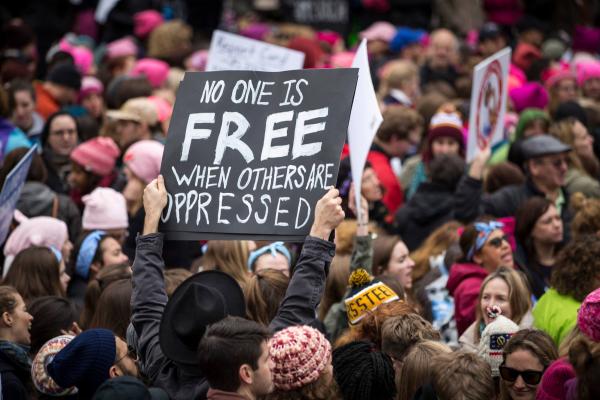
On Jan. 21, more than 1 million women and men around the world rose up and became part of a resistance.
Here are just a few of those faces — six people who showed up to make their voices heard at the Women's March on Washington. They each marched for individual reasons, but found common ground among the crowd.
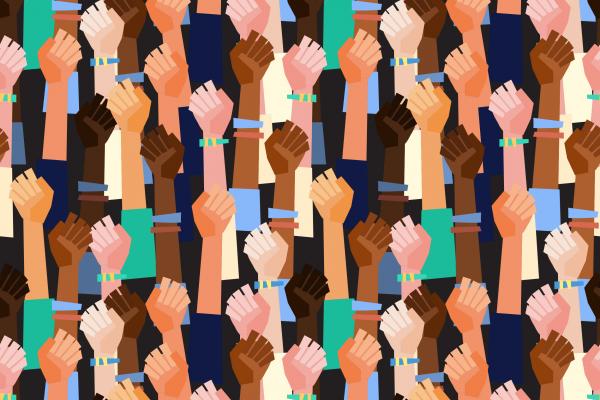
It is the covenantal relationship with God that calls what one must do: Do justice, love mercy-kindness, and walk humbly with your God
This tremendous love from God compels us to act similarly to our fellow humans. God has loved us and will continue to love us. Accordingly, we must love one another, regardless of any governmental system, whether Moabite or Assyrian — or anything modern
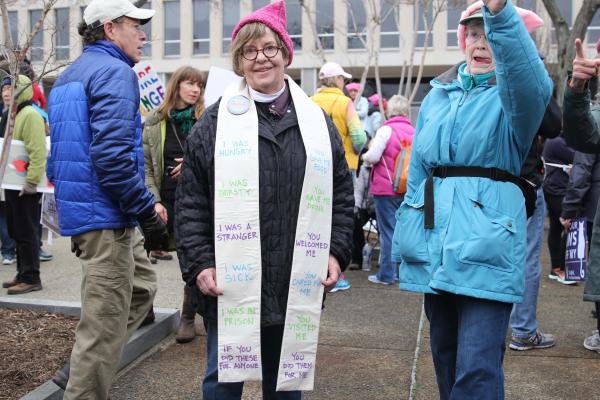
Last week, organizers for the Women’s March on Washington encountered pushback on multiple sides for removal of pro-life sponsors, leading many to wonder if there was space in the movement for Christians or women who are opposed to abortion. But many who attended the march on Jan. 21 were driven there by their religious convictions — saying President Donald Trump’s positions “violate the gospel” by showing a lack of compassion for Muslims, people of color, and women.
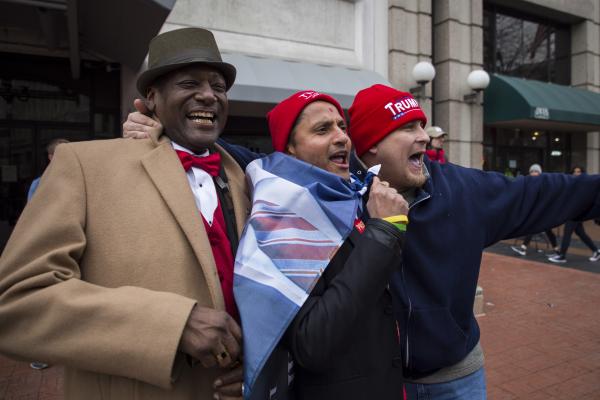
America is beautiful because we have the power to define what it means to be American.
Too often, we immigrants define what is "American" by what white culture tells us it should be. We internalize colonialism and let it run thickly in our veins: We give our offspring English names because we’re embarrassed of our language, or afraid that our children won’t be accepted with anything too “exotic.” We eagerly give up a culture that so proudly raised us. I’ve watched as we villainize black people and turn our backs on undocumented immigrants.

Their signs spoke of support for abortion rights, immigrants, Black Lives Matter, and science — and of their disgust with newly inaugurated President Donald Trump.
Politics drew hundreds of thousands to the Women’s March on Washington on Jan. 21. But many said they were also compelled by their faith.
1. TODAY in the D.C. Metro: Nonviolence and Active Bystander Intervention Training
If you’re in town, churches and other facilities across the Washington, D.C., metro area are offering FREE trainings this afternoon and spots are still available. Sign up at the link!
2. A Christian Packing List for the Women’s March on Washington
“… when we march, when we work, when we write and call, we have a uniform, we have the gear we need.”
3. Where Women’s Marches Are Happening Around the World
While an estimated 200,000 people could descend on Washington, D.C., for the Women’s March on Washington, sister marches are happening throughout the country — and the world. This map illustrates the magnitude of the movement.

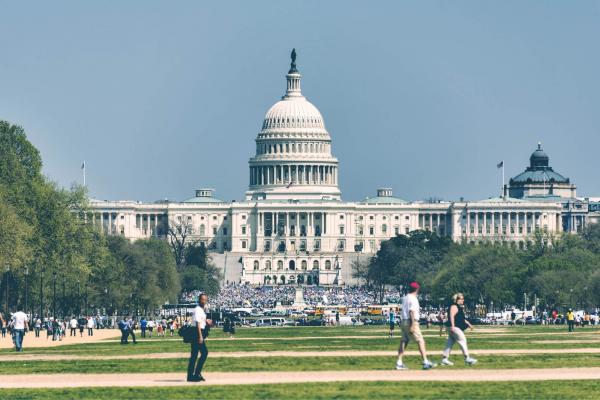
This weekend, hundreds of thousands will flood the streets of Washington, D.C., to take part in the Women’s March on Washington, a massive rally that organizers describe as an opportunity to “stand together in solidarity with our partners and children for the protection of our rights, our safety, our health, and our families — recognizing that our vibrant and diverse communities are the strength of our country.”
The march calls for unity, and indeed, such a public event has the power to shape and energize the future of feminism, at least in the months ahead. But many are asking who that future will serve, and who might be left behind.

Bills criminalizing peaceful protest have been introduced to state legislatures in five U.S. states, reports The Intercept. The five states are Iowa, Michigan, Minnesota, North Dakota, and Washington. The bills have been proposed by Republican lawmakers.
The bills proposed in Iowa, Minnesota, and North Dakota aim to effect highway protests. The bill introduced in North Dakota, if passed, would give motorists the legal right to kill with their vehicles any protesters standing in the road, if the protester is struck accidentally.
I believe at the heart of this election campaign was the deeply biblical, theological, and spiritual issue of how we treat “the other.” Many of the white people who voted for Trump, especially many of the white Christians who voted in majorities for him, are quick to say they didn’t vote for him because of his use of racial bigotry and exploitation of xenophobic attitudes toward immigrants. But many people of color, who voted in overwhelming majorities against Trump have responded, “OK, you say you didn’t like his racism, but it wasn’t a deal breaker; it wasn’t a disqualifier for your vote.” The result of this highly and overtly racialized election and Trump’s early appointees are what make many people of color fearful. It’s what is already happening to them — and their children — on playgrounds, schools, trains, and planes, and just on the street on their way to work or class or church. The personal stories told to me by black church leaders of being verbally abused or threatened have been very disconcerting. A man who clearly capitalized on our divisions now claims he will be a president for all Americans. So that is a commitment he should now be held accountable to — by all of us.