
Last month, White House counter-terrorism adviser John Brennan acknowledged in a public speech at the Woodrow Wilson Center that the United States was using armed unmanned drones to kill alleged militants.
Brennan’s acknowledgement was the only “new” news.
Beginning in earnest under President George W. Bush and dramatically escalating under President Barack Obama, the United States is now using drones in four countries (Afghanistan, Pakistan, Yemen, and Somalia), and has used them in two others (Iraq and Libya). Going by the names Reaper and Predator, firing missiles named Hellfire, the drones are responsible for thousands of deaths, including hundreds of women and children.
Why drones?
There are three major reasons opponents of the unmanned death planes usually give. First, in fighting against terrorist and insurgent organizations, the United States has adopted a kill — not capture — strategy. With a “kill list” of targets, the attacks aim at known or suspected leaders.
Second, the attacks can be carried out with no danger to American troops. Remotely guided from distant locations, drones are a way of carrying out risk-free military operations. Third, with the attacks increasingly under the control of the CIA rather than the military, they can be conducted with a high degree of secrecy. Whom the drones targeted and killed, and how many civilians may have also been killed, is free of scrutiny.

It seems that America is on the verge of a zombie apocalypse.
First, Ronald Poppo had most of his face eaten off by Rudy Eugene, and now, Alexander Kinyua reportedly killed his roommate, Kujoe Bonsafo Agyei-Kodie and then ate his heart and part of his brain.
Is it just coincidence that this spate of violent attacks comes when the county’s fascination with zombies is at its height, or is there a connection?
From movies to video games, Zombies are the big ticket these days. The undead top the media charts, gnawing and clawing their way into the forefront of our imaginations. Move over vampires; Zombies are the new black.
It’s hard to say if the pop culture popularity has influenced similar copycat killers, or if the zombie craze simply has made us more sensitive to similar real-life stories. Either way, both the fictional tales and actual news items may speak to something going on in our collective imaginations.
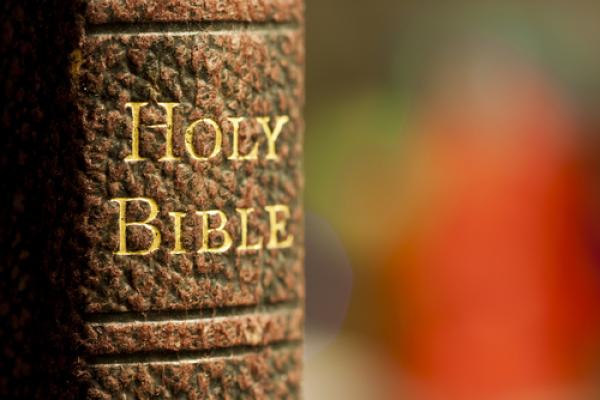
After reading my post about Randy Wolford, the snake-handling pastor, died from a venomous snakebite, fellow God's Politics blogger Tim Suttle sent me a link to his own post on the subject. Suttle’s angle was different, and I found it fascinating.
Basically, he contends that the verses in Mark that Wolford and others use to justify handling snakes as an act of worship (among other bizarre practices) should not ever have made it into the Bible to begin with. His article cites what he calls a “nerdy academic journal article” from Bible scholar Robert H. Stein. In it, Stein notes a few reasons why the text in Mark chapter 16 beyond verse 8 should never have been included in the Bible.
First, there have been older copies of the manuscripts from which Mark was produced that stop at Mark 16:8. In addition, there’s the historical agreement among scholars that scribes (the guys who copied the texts by hand) did have a propensity for adding to the documents they copied but seldom, if ever, deleted anything. There’s also the fact that ancient scholars whose commentaries on Mark have been found do not mention these verses at all, as well as the agreement among many Biblical scholars that the tone of those verse suggests a different author wrote them.
 On the road?
Under the weather?
O could you just not get yourself together to make it to church this weekend?
Bless your heart. We've got you covered.
Here for you edification and instruction, are three good lessons in video and audio form, from pastors Tripp Hudgins, Jeff Tacklind and Grace Imathiu ... inside the blog.
Sweet 16 and never been theologically on point.
Got some good ones this week. Enjoy.

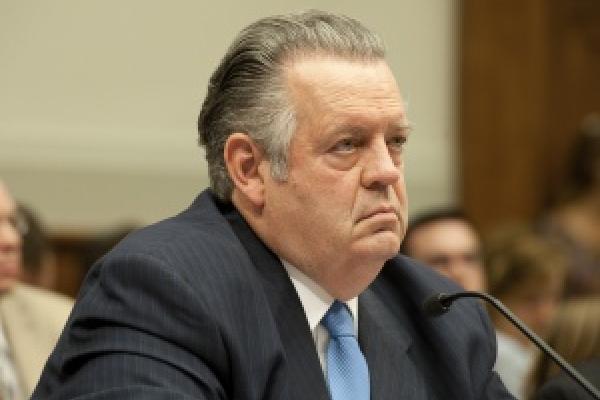
A top Southern Baptist official who was accused of plagiarism in a radio segment that claimed civil rights leaders and President Obama used the Trayvon Martin case to stir racial tensions will lose his weekly call-in program but can keep his main job, a church panel announced Friday.
Richard Land, the influential head of the Southern Baptist Convention's Ethics & Religious Liberty Commission and the denomination’s top policy spokesman, was rebuked for racial insensitivity and for not attributing the source of his radio commentaries after a review by ERLC trustees.
The controversy over Land’s explosive remarks in a March 31 radio program was especially awkward as Southern Baptists are expected to elect an African-American pastor, the Rev. Fred Luter, as the denomination's first black president later this month.
The investigators chided Land for “his hurtful, irresponsible, insensitive, and racially charged words” in a broadcast of the “Richard Land Live!” show in which Land accused Obama and black civil rights activists of using the Trayvon Martin shooting to foment racial strife and boost the president’s re-election chances.

Leaders representing most of the nation’s 57,000 Catholic nuns on Friday (June 1) answered a Vatican crackdown on their group by charging that Rome’s criticisms of the sisters were “unsubstantiated,” caused “scandal and pain” and “greater polarization” in the church.
“Moreover, the sanctions imposed were disproportionate to the concerns raised and could compromise their ability to fulfill their mission,” the 22-member board of the Leadership Conference of Women Religious warned in a statement issued after a special four-day meeting in Washington.
The LCWR board meeting followed the surprise announcement in April that Pope Benedict XVI wanted a Vatican-led makeover of the group on the grounds that it was not speaking out strongly enough against gay marriage, abortion and women’s ordination.
Rome also chided the LCWR for doctrinal ambiguity and sponsoring conferences that featured “a prevalence of certain radical feminist themes incompatible with the Catholic faith.”
The unexpectedly strong pushback to the Vatican may be an indication of how much backlash the campaign has sparked among Catholics, who value the sisters’ longstanding ministry in education, health care and social services, and who bristle at Rome's demands to focus instead on sexual morality and enforcing orthodoxy.
After releasing its first public statement in response to Vatican criticism, Leadership Conference of Women Religious president Sr. Pat Farrell did an exclusive interview with the National Catholic Reporter.
In the statement, you also say that the Vatican order has caused “scandal.” What is the nature of the scandal as you see it? How are you defining that?
I think the inference that many people could draw from the publication of the Vatican document is that we are unfaithful, that we are not in communion with the church. We really do not see ourselves in that way.
However, there are genuine questions that we bring -- the conversations that need to happen. And I think the outpouring of support that has been manifested across the country is another manifestation of that. There are conversations and questions that need to happen that are also shared by a lot of the laity of the church.
The insinuation that I think many people could draw from reading that Vatican document is that if we raise those questions, we’re unfaithful to the church. That’s not true. And I don’t think that’s really fair. I think, in fact, that that is a sign of our deepest faithfulness to the church -- questions that the people of God need to raise, that we need to talk about together in a climate of genuine dialog.
A batch of the best new audio and visual stimulation. Roman Mars' podcast explores the craft of Trappist beer — nature-loving artist trades the electronic equipment for some earthy sounds — Andrew Bird's hit "Eyeoneye" gets the stop-motion video treatment -- the iconic walls of Sydney's Opera House are the backdrop for a new artful video projection — a Super Mario Brothers themed aquarium — summer rock vibes, and more. See today's Links of Awesomeness...
Every year, somewhere between US$200 billion and $1 trillion are spent in “mandatory” alms and voluntary charity across the Muslim world, Islamic financial analysts estimate. At the low end of the estimate, this is 15 times more than global humanitarian aid contributions in 2011.
With aid from traditional Western donors decreasing in the wake of a global recession, and with about a quarter of the Muslim world living on less than $1.25 a day, this represents a huge pool of potential in the world of aid funding.
http://www.irinnews.org/Report/95564/Analysis-A-faith-based-aid-revolution-in-the-Muslim-world