
The third No Kings Day this Saturday is shaping up to be the largest day of nonviolent protests in American history. There were more than 2,000 protests during the first No Kings Day in June 2025 and more than 2,700 at the second No Kings Day in October 2025. More than 3,000 events are already planned for this third edition.

For the last decade, Sojourners has marked Women’s History Month by spotlighting women who embody the intersection of faith-rooted justice work. This year, our list includes women from many walks of life who fight for LGBTQ+ dignity, Black liberation and flourishing, Indigenous sovereignty, gun-violence recovery, immigrant rights, nonviolent resistance, and much more.
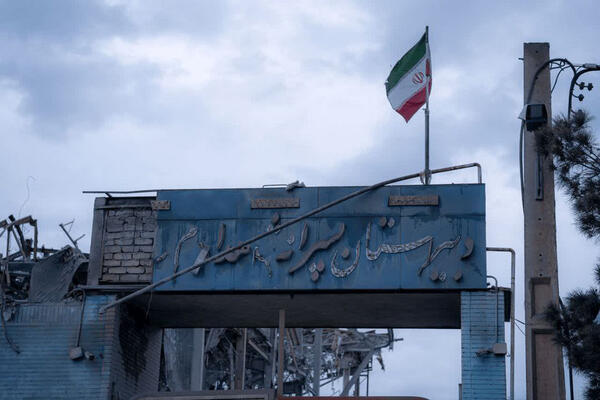
“All I want is freedom for the people,” President Donald Trump told The Washington Post on Feb. 28. “I want a safe nation, and that’s what we’re going to have.” But as missiles rain down on Tehran—and reports state that every major city in Iran has been bombed—Christians must be wise enough to discern that the destruction of a country does not make it safe.
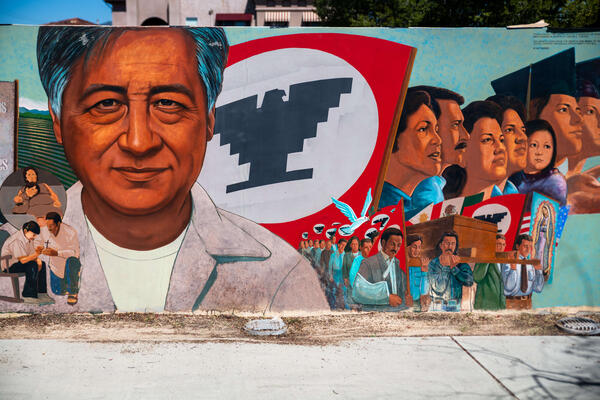
The New York Times’ report on allegations of sexual abuse by labor organizer César Chávez has been devastating to many people, me included. The news reminds me that long before I learned about power, faith, and movements from a church stage or a history book, I learned about them from an abuelita.

It has been a joy to deconstruct my religious trauma alongside 32-year-old comedian Taylor Tomlinson. Four years ago, as I was coming out as queer to my family, I found her Netflix special Taylor Tomlinson: Look at You to be a warm welcome into the community of formerly Christian queer kids and purity culture survivors. Dark humor gave all of us a silly sort of grace, a space where we could grieve and grow.
Tomlinson, who was raised in a conservative Christian household in Temecula, Calif., got her start in stand-up through the church comedy circuit. But as she grew up, she began deconstructing how her conservative Christian upbringing was hurting her mental health and sexual development, deciding instead to be a “secular” comic.

During a global press conference for Project Hail Mary, director Chris Miller explained that when he and his co-director, Phil Lord, make films, they’re not “building Macs”—Apple’s slick, impenetrable white computers.—they’re making PCs: films where “you can see how it works, you can get into it, and you can see the wires.” This PC aesthetic is apparent in watching the film, a sumptuous visual feast with awe-inspiring cinematography and frenetic editing. But this exposed- wire philosophy also drives the plot and heart of Project Hail Mary—a story of duct tape, musical chords, and the hard, holy necessity of empathy.
Based on the bestselling novel by Andy Weir, Project Hail Mary introduces us to Ryland Grace (Ryan Gosling, making a case for being the most capable physical comedian of his generation), a dorky middle school teacher drafted to save Earth from “astrophage,” a microscopic star-plague eating the sun. If Grace cannot find a cure, humanity will go extinct within a generation. Our only hope lies more than 11 light-years away, at the one star immune to the infection.
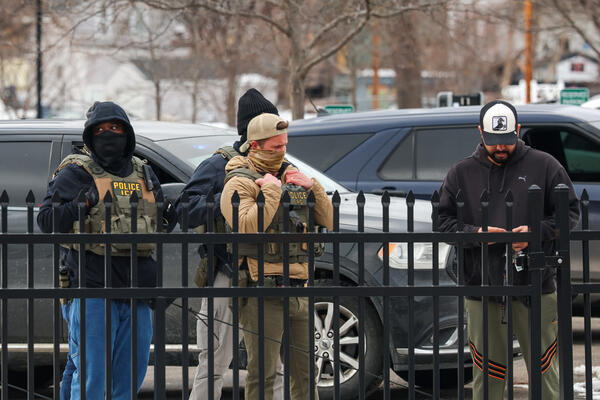
Across the country, thousands of men and women wake before dawn, put on a neck gaiter, sunglasses, and a baseball cap, and drive to work to separate families. They do this in the name of “law and order,” a phrase that sounds sturdy enough to be moral, and vague enough to hide what it requires. Under the current administration, that looks like intensified immigration crackdowns and scapegoating immigrants as the source of the country’s problems. It’s part of a long American tradition of fusing public safety rhetoric with racist and xenophobic policies. “Law and order” has always depended on certain people carrying out actions the rest of the public prefers to ignore.
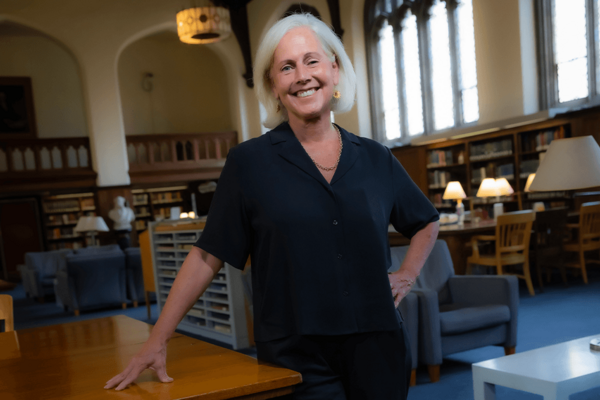
Rev. Serene Jones is looking forward to waking up naturally, without an alarm clock. After 18 years as president of Union Theological Seminary, Jones announced last summer that she would be stepping down after the current school year.

I don’t often think of the romance genre as a cinematic vehicle for social commentary. When your film is exploring the complications of modern love in the straitjacket of a “will they/won’t they” story, it can be hard to comment on larger themes. While there are, of course, exceptions to my bias, I often feel that romance films are too preoccupied with the inner lives of their characters to turn their lens outward to societal ailments. While director Vanessa Caswill didn’t entirely abandon the cheesy or saccharine for her latest film, Reminders of Him challenged my pre-conceived romance biases. Based on the Colleen Hoover novel of the same name, Reminders of Him is a tender love story that offers pointed commentary about forgiveness and redemption, as it delivers a humanizing portrait of those who have been victims of the criminal legal system.
Romances tap into the universal longing to be desired, seen, and known. But Reminders of Him raises those emotional stakes by centering Kenna (Maika Monroe), a woman recently released from prison who has been told by both the state and her community that she’s not worthy of redemption or love.
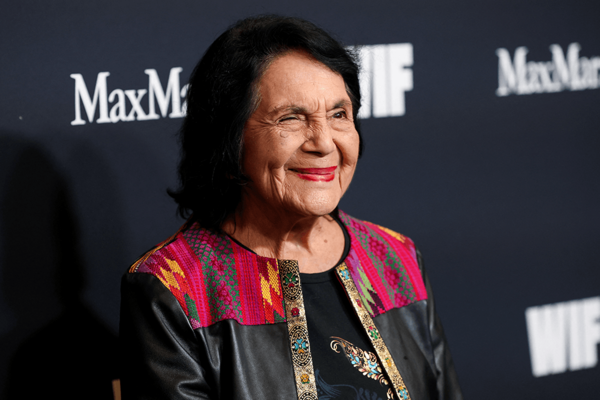
Civil rights leader Dolores Huerta, who co-founded the United Farm Workers union with Cesar Chavez and fought alongside him for decades to expand labor rights in the U.S., on Wednesday accused Chavez of sexually assaulting her in the 1960s.
Huerta said in a statement that she was sharing her story in light of a multi-year New York Times investigation, also published on Wednesday, that detailed a larger pattern of sexual misconduct allegations against Chavez, who died in 1993 at the age of 66, including testimonies by women who said he molested and raped them when they were minors.