
In Catholic theology, as in the popular imagination, the closed-door conclave to elect a new pope is supposed to be guided by the Holy Spirit.
There’s no horse-trading or lobbying, no insider deal-making or outside influences allowed. Just red-robed cardinals solemnly entering the Sistine Chapel, accompanied only by prayers and their consciences, sitting beneath Michelangelo’s fresco of the Last Judgment and discerning God’s will on who should be the next successor to St. Peter.
At least that’s the theory. The last millennium has shown that papal elections can be fraught with politics or worse, and can take months or even years of wrangling to reach a resolution.
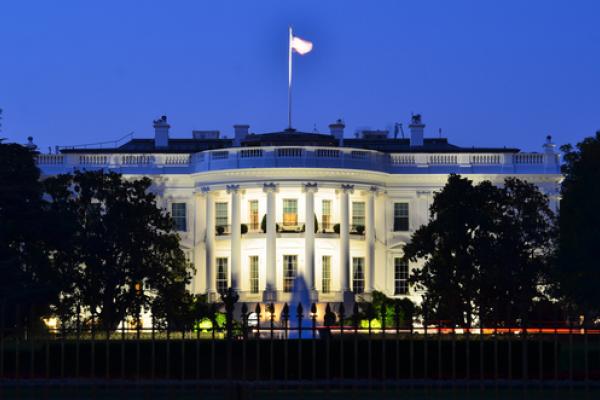
A meeting today of faith leaders with the president on immigration reform opened and closed with prayer.
This was my prayer at the end:
Thank you Lord, for this circle of leaders around the table and how you have brought us together to help welcome the stranger in our midst — to fix this broken immigration system that breaks families and lives.
Thank you for the leadership of Barack Obama in making comprehensive immigration reform such a high priority in these critical months ahead. Guide and direct him to find a genuine bipartisan political path to accomplish something so important that has been needed for so long. We thank you for both the Republicans and Democrats who are coming together to make that possible.
[Continued]

Five key Catholic bishops are opposing the newly authorized Violence Against Women Act for fear it will subvert traditional views of marriage and gender, and compromise the religious freedom of groups that aid victims of human trafficking.
The act, which was signed into law by President Obama on Thursday, is intended to protect women from domestic violence, sexual assault and human trafficking, and allows the federal government to spend money to treat victims and prosecute offenders.
That language disturbs several bishops who head key committees within the U.S. Conference of Catholic Bishops that deal with, among other issues, marriage, the laity, youth and religious liberty.But for the first time since the original act became law in 1994, it spells out that no person may be excluded from the law’s protections because of “sexual orientation” or “gender identity” — specifically covering lesbian, transgender and bisexual women.

While I stand with Sen. Rand Paul on the question of the use of militarized spy drones in American airspace and (potentially) on Americans, I am deeply troubled by our use of these weapons in other lands, too, where they are responsible for the deaths of hundreds of children and other innocents.
There's something dishonorable about killing without the risk associated with the act, no matter how heinous the target or valuable and beautiful the persons you put at risk in order to personally kill.
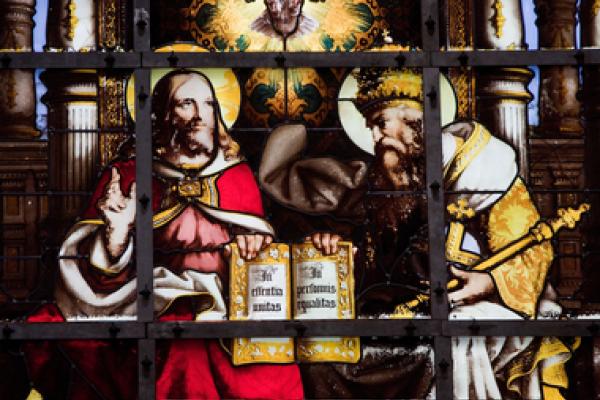
I read a lot of Trinitarian theology last semester at Duke Divinity school, most of it trying to discern how believing in a Triune God might affect the way people of different religious faiths relate to one another. The other great Monotheisms, Islam and Judaism, of course reject the Trinity as they reject Jesus as divine. But what if the Christian belief in the Triune God is the very basis on which Christians can accept Jews as Jews, Muslims as Muslims, and atheists as atheists? Different theologians have explored how the Trinity might be a good place to ground a Christian theory of religious pluralism. S. Mark Heim has gone so far as to say that God’s own inner diversity shows God’s intention for a diverse humanity, even including religious diversity. In other words: People might believe in a non-Trinitarian God because they were made by a Trinitarian God. Mind-blowing.
I wasn’t expecting to find resonance in Charles Darwin, whose name has been used in so much anti-religious fervor. But in his 1857 letter to Asa Gray, Darwin wrote about the “principle of divergence” and how “the same spot will support more life if occupied by very diverse forms.” We might not want to make a precise analogy to human society when Darwin concludes that “each new variety or species, when formed will generally take the place of and so exterminate its less well-fitted parent.”
That line of thinking could easily lead us to euthanasia. But, taken with his observation that diversity fosters life, we might say that co-existence with others forces a species to adapt, and everyone is better for it. Consider the converse of Darwin’s statement: The same spot will support less life if occupied by a unitary form. There is something life-giving – Heim might say “divine” – about difference.
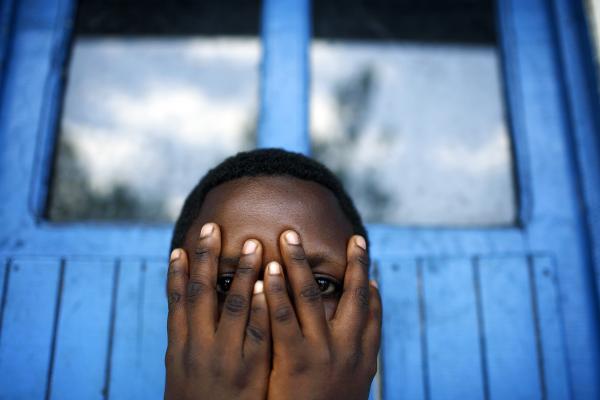
March 8 was designated as International Women’s Day by the United Nations in 1975. While the world has seen significant progress in rights and empowerment for women and girls, sexual and gender-based violence still touches every part of the globe and is tragically widespread in some areas. Women in the Democratic Republic of Congo face shockingly high rates of rape, including reports of mass rapes by soldiers, especially in the conflict-ridden province of Kivu. One Christian hospital, operated by the Free Methodist Church in the Nundu mission, works to treat injured women and heal psychological trauma.
Grace (not her real name) had spent the day working in the fields near her home in Kivu Province in the Democratic Republic of Congo (DRC). The 42-year-old mother was walking home with her two daughters, ages 20 and 16, when they were stopped by a group of 15 uniformed men. All three of the women were raped by the men and left with horrible injuries. They were brought to the Nundu Hospital, operated by the Free Methodist Church, where they received medical and psychological treatment for four weeks.
The Nundu Hospital identified 1754 survivors of sexual violence in 2012, and all but 98 of those were women or girls, according to Dr. Lubunga Eoba Samy, medical coordinator for the Free Methodist Church and coordinator of the hospital’s Sexual and Gender-Based Violence Project. This project aims to reduce the occurrence of sexual violence by promoting human rights, raising awareness and strengthening the capacity of community-based organizations to address the issue. It also includes training of local authorities and improving coordination among local non-governmental organizations.