In her 2023 book Doppelganger: A Trip into the Mirror World, Naomi Klein argues that the process of mirroring explains an essential dimension of today’s politics and culture. Instead of a clean divide between good and evil, just and unjust, where we can confidently position ourselves on the side of liberators, we find ourselves in a hall of mirrors, puzzled about which way to turn. Racists pursue their policy ends in the name of civil rights, quoting Martin Luther King Jr. Social media and video hosting services like Rumble, Gettr, and Truth Social replicate YouTube and Facebook, responding to “systemic bias” in the mainstream media and supposedly championing free speech. In its treatment of Palestinians, the state of Israel reflects the persecution and genocide once faced by Jews. Donald Trump’s first go-to insults are the ones that are most obviously true of himself.
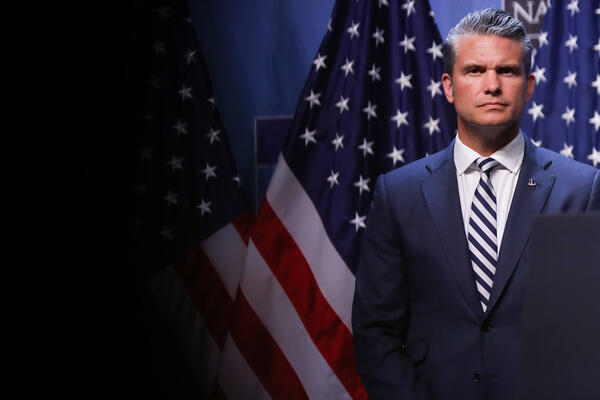
Defense Secretary Pete Hegseth’s short-lived plan to livestream the execution of Nidal Hasan was a product of our age of mirroring. While Hegseth was an officer in the U.S. Army, al-Qaida and Islamic State militants performed executions in public and circulated them online, shocking the world. Now, Hegseth shocks the world by recommending a similar practice, but ostensibly performed by the good guys, in the service of justice. While livestreamed execution might seem rather close to pornography—encouraging viewers to derive pleasure from dehumanizing another, and right-wing Christians find pornography deeply vexing as a political and personal matter—the world of mirrors we inhabit distracts us from noticing those similarities. That is, from making moral distinctions and judgments based on close attention to the particulars of a case and to our principles.
The headlines coming out of the Public Religion Research Institute’s 2026 American Values Survey seem simple: White evangelicals are less likely to view empathy as a foundational moral concept and more likely to say it can be a danger. But Sojourners analysis and an outside expert say PRRI’s question design and its own framing of results violate cardinal rules of survey research.

Dolores Huerta, who cofounded the United Farm Workers with Cesar Chavez and fought legislators and powerful growers in the US to improve the lives of a previously powerless constituency, died on Wednesday at the age of 96, her family said in a statement.
Huerta was one of the foremost women in U.S. labor history, serving the UFW as chief negotiator, strike organizer, lobbyist ,and reformer during its heyday in the 1960s and ‘70s in California’s agriculture-rich Central Valley.
Thanks to the contracts the UFW negotiated, farmworkers won job security, healthcare, retirement plans, a credit union and job-specific benefits such as guaranteed rest periods, toilets in the fields, clean drinking water and protection from pesticides.

As a queer person raised in Catholic purity culture, I’ve found horror films to be a vital way to confront and heal from my religious trauma.
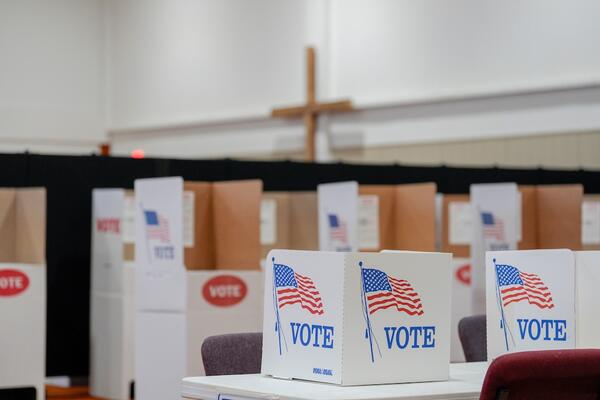
It’s tough to know what to do as a mainline Protestant pastor these days. Most of the news about churches has not been good. A recent article in The Hill by Rev. Jennifer Butler, Presbyterian minister and CEO of the nonprofit Faith in Democracy, made the case that mainline Protestants are the swing voters of the 2026 elections. It’s safe to say that mainline Protestants are at a crossroads, and how they handle this election will have ramifications for years to come.
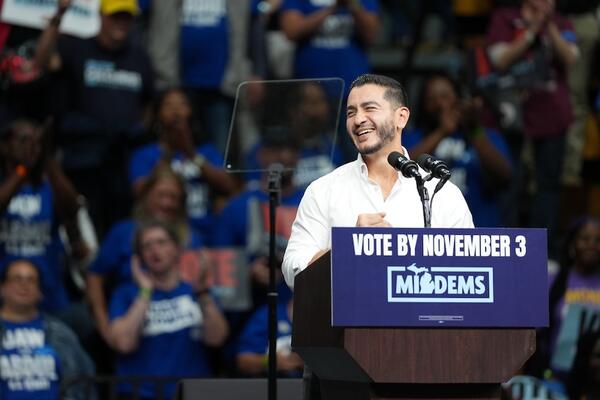
Last week at a town hall event in Caro, Mich., a heckler lobbed Islamophobic accusations at Democratic Senate candidate Abdul El-Sayed. That’s unfortunately unsurprising this cycle, as Republicans, panicked by a growing Democratic wave, have doubled and tripled down on bigotry. But what made this incident go viral is the way in which El-Sayed calmly turned the accusations around and demonstrated the extent to which Republican hatred of Muslims is rooted in an exclusionary Christian nationalism.
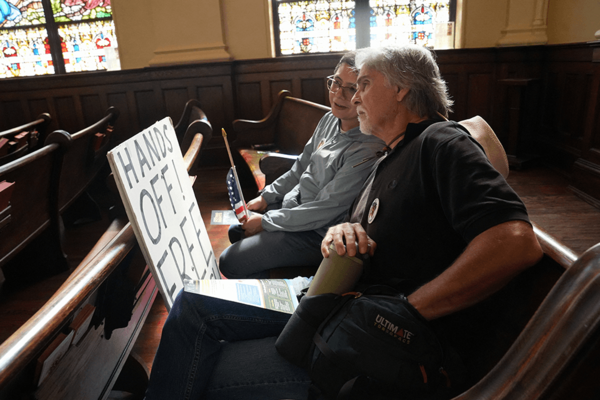
This past weekend thousands of people marched to the polls in nearly 3,000 events for the No Kings: Vote Early mobilization. This was a historic surge in getting people and communities mobilized for early voting in neighborhoods across the country. Whenever possible, voting early and ensuring an overwhelming voter turnout is arguably one of the most powerful tools and best defenses we have against the abuse of power and authoritarian consolidation.
But early voting, let alone voting on election day, still requires persuading and, in many cases, empowering people to actually vote. Given the challenging reality that an estimated 87 million eligible voters didn’t exercise their vote in the 2024 election, I’ve been thinking a great deal about what role our Christian faith can and should play in dramatically increasing voter turnout.

In Acts 5, the gospel writer Luke recounts the story of Ananias and Sapphira: a husband and wife who made a show of graciously donating the entire sum of a sale to the early church and the poor among them, all while secretly conspiring to keep a portion for themselves. The apostle Peter, prophetically seeing through the couple’s deception with total clarity, tells them, “You have not lied just to human beings, but to God.” In mere moments, both suddenly fall dead.
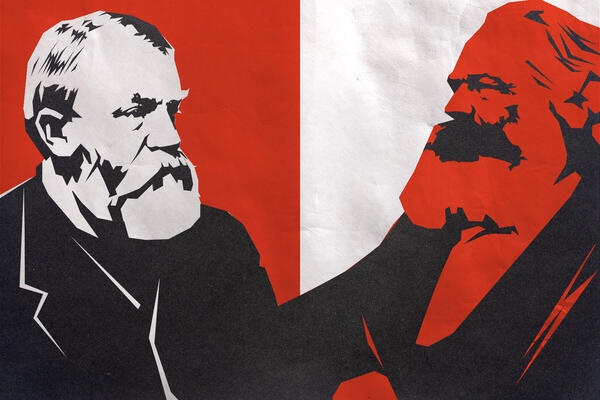
American evangelicals have long made a bogeyman out of Marx and his many inheritors. In 1952, Billy Graham made “Americanism”—his counter to communism—a central message of his crusades. Of course, this opposition finds its context in both the Cold War and evangelicals’ existing alliance with free-market capitalism.
The latest installment of this criticism comes from former Moody Church pastor Erwin W. Lutzer and former Moody Bible Institute professor Gregg Quiggle: Marx and Moody, published by Moody Publishers in September. Marx and Moody is broken into two clear sections. The first is written by Lutzer, and it primarily deals with Marx. The second is written by Quiggle, and it engages the life and social activism of Moody.
From the outset, the authors make clear their position: This is not a neutral, objective, or academic comparative study of two figures who helped shape their respective disciplines. It is a plea for readers to choose light over darkness, good over evil, Moody over Marx.
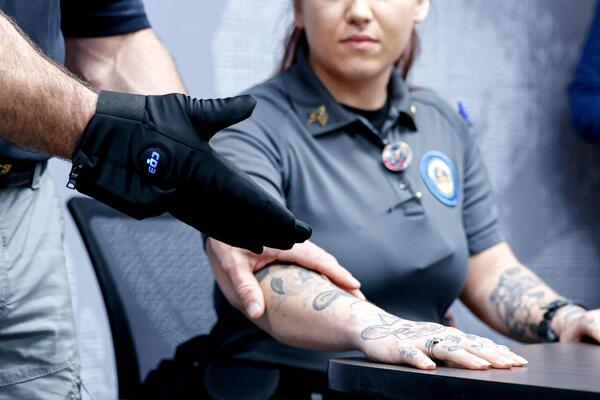
In August, U.S. Immigration and Customs Enforcement awarded a $16.7 million no-bid contract for 6,000 pairs of electric-shock gloves. The Generated Low Output Voltage Emitter, abbreviated as G.L.O.V.E., can be activated by an officer against bare skin, delivering pulses of up to 380 volts—more than three times the voltage of a standard U.S. wall outlet. ICE says the gloves give officers another way to control people in close settings while supposedly avoiding more serious or lethal force. They’re manufactured by a company called Compliant Technologies, because subtlety is dead in our current political environment.
The gloves arrive at a strange moment in the Trump administration’s ongoing immigration crackdown. ICE arrests surged to nearly 51,000 in August. From June to August, ICE set arrest records. But deportations haven’t followed that trend. They’ve plateaued around 1,200 per day, roughly the same pace as May 2026, when ICE made about 32,000 arrests. There are many reasons for this gap: asylum claims, court proceedings, diplomatic issues with receiving countries. But the gap also makes the continued buildup of ICE’s arrest-and-detention machinery more revealing. If they are not getting better at the deportation part of their mass deportation campaign, what exactly is all this additional force accomplishing?