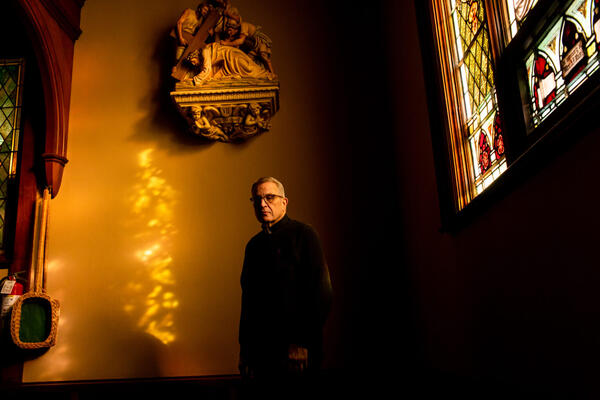
When Father Dale Korogi takes the podium to give the homily to the parishioners of the late morning Mass at Ascension Catholic Church in north Minneapolis, he is used to seeing hundreds of faces watching him—mostly the faces of immigrants from Latin America.
Now, he sees only a few dozen in the pews, as most of the immigrants in his congregation are staying home until the Trump administration withdraws the thousands of immigration agents who have been deployed in Minnesota as part of Operation Metro Surge.
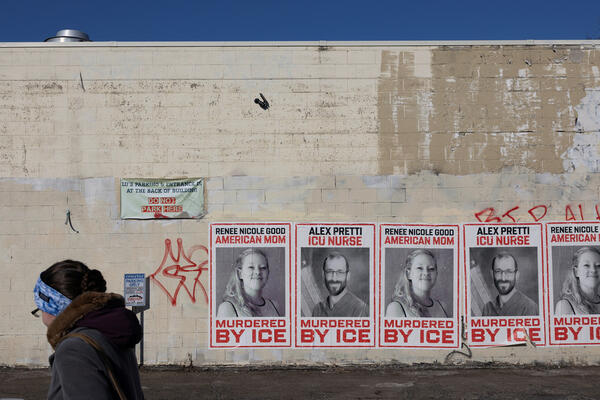
In Minneapolis, the places where Renee Nicole Macklin Good and Alex Pretti were killed by federal immigration agents have become sacred ground. People have returned to those sites with candles, signs, prayers, and grief. As far as community members are concerned, these memorials serve to remember those killed and what they stood for.

Benito Antonio Martínez Ocasio gave us a revelation.
At every turn of his spectacular Super Bowl halftime show, Bad Bunny countered death-dealing hatred with unabashed joy. He sang in his native tongue, and in all the glory of his unmistakable Puerto Rican accent. From tall, sugarcane fields tended by jíbaros in pavas to the bustling streets outside the marqueta and barbershop, there was dancing and singing from performers across generations and nationalities. In the middle of the show, we witnessed an actual wedding and fell in love with a little boy who held Benito’s Grammy tight to his chest as Bad Bunny whispered in his ear: Cree siempre en ti (“Always believe in yourself”). Echoing Kendrick Lamar on top of an ’87 Buick GNX in last year’s show, Benito stood on the cab of an old truck and paid tribute to reggaeton legends like Daddy Yankee, Don Omar, and Tego Calderón, who first gave the genre an international stage. He climbed electric poles and sang “El Apagón” (“The Blackout”), reminding the world of how Puerto Ricans flourish even as their power grids falter.

If things ever do go belly up, and we nuke ourselves into oblivion, I’m sure the Golden Rule will survive.
Part of my certainty is thanks to the retro-futuristic, darkly absurd, post-apocalyptic TV series Fallout. As a huge fan of the role-playing video games that the series is based on, I was skeptical that the show could live up to the legacy of the games; it surpassed my expectations. Fallout is brimming with stellar performances, superb writing, and deft political commentary that is relevant without being preachy. All eight episodes of Season Two are now streaming on Amazon Prime Video, which, given the series’ anti-corporate and anti-capitalist overtones, is rather strange.

I’ve never seen spiritual ecstasy put to screen in quite the unvarnished manner as director Mona Fastvold’s The Testament of Ann Lee. The film follows the life of Ann Lee (Amanda Seyfried), tracing her ascension to matriarch and religious leader of the Shakers, a religious sect in the 18th century. Fixtures of the Shakers’ expression of faith include religious rhapsody, often manifesting with their members shaking, shouting, dancing, and singing as a way to express prayer and communion with God.
Lee’s theology may be questionable to those who cling to orthodox views of Christianity. Known by the Shakers as Mother Ann Lee, the trailblazing leader was regarded as the female manifestation of God’s dual nature (i.e., the female equivalent of male divinity) and was regarded by her followers as the second incarnation of Christ. Yet the community Lee strove to create was one of radical inclusivity and belonging—a lesson churches today could stand to learn from.
The only time I heard my father speak Spanish was in prayer. Before dinner, he thanked God for the food we received and for our presence to each other in the language of his home country. He still does.
We lived in Minnesota from 1993 to 1999, and on wintry nights, when the wind chill might dip so low that Fahrenheit equaled Celsius, our meal was blessed with words that seemed out of place and yet essential to who we were—as prayer should.
At the time, the infrastructure of immigrant communities in Minnesota was only beginning to develop. The number of families from Southeast Asia and Somalia was just starting to increase; it was still far from the critical mass that would make possible civic and cultural organizations, restaurants, and stores, let alone political power. In my school, I recall no other families from Latin America. The local Mexican restaurant was Taco John’s.

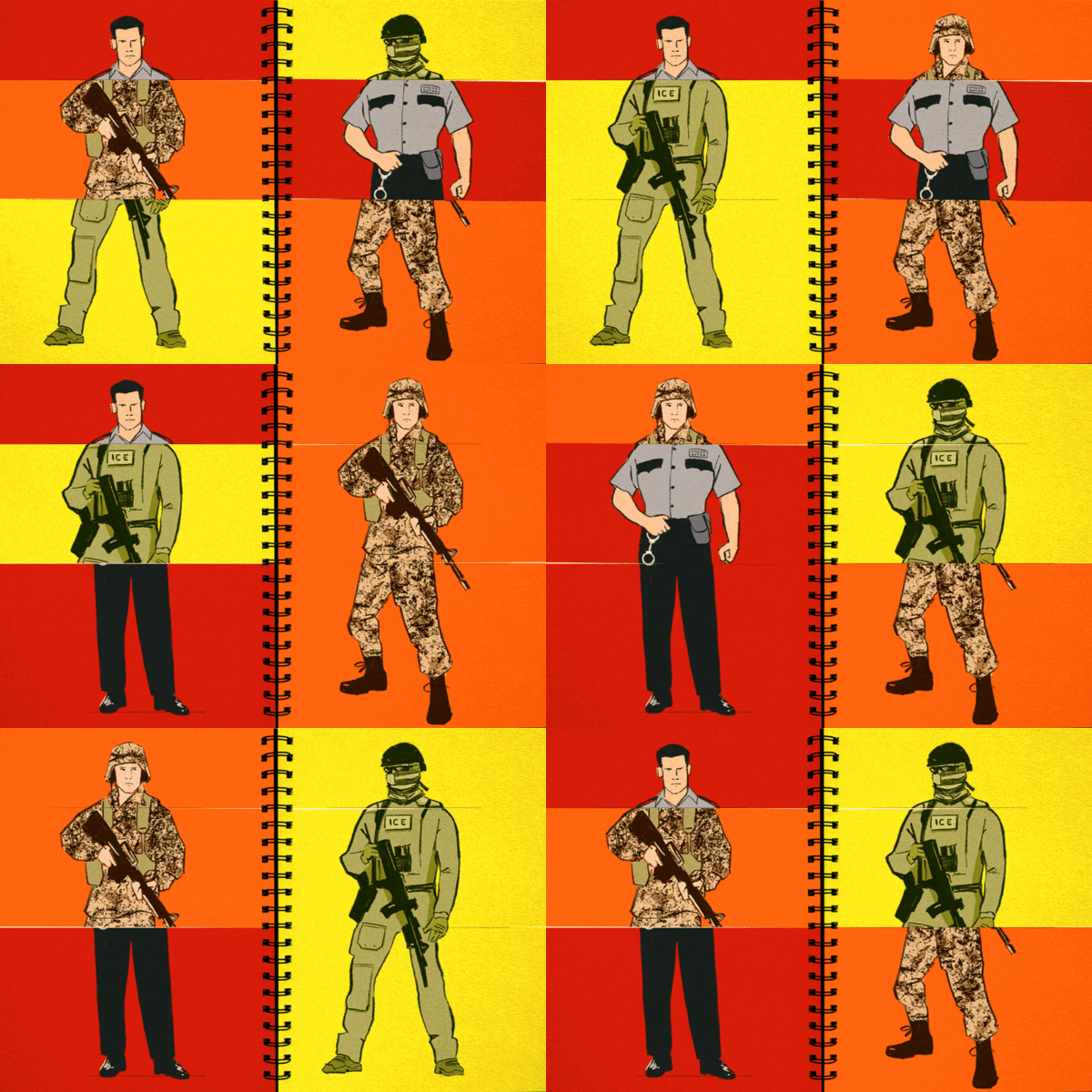
Church-supervised hubs to house and care for children separated from their parents. Phone chains to activate citizen networks if federal immigration agents are spotted in the community. Volunteers to deliver food to hungry neighbors from their own cars instead of food pantry trucks. Training on what to do if agents breach one of the churches planning to provide sanctuary to immigrant families.
These are just some of the preparations that residents of Springfield, Ohio, have made in recent days as the country barrels toward the end of an immigration program that has allowed some 330,000 Haitians to legally live and work in the United States because of the rampant violence and political volatility in Haiti. Though conditions there have not improved — and perhaps only worsened — Temporary Protected Status, or TPS, ends for Haitians on February 3. There are as many as 15,000 immigrants in the Springfield area, many of them Haitian, and the city of about 60,000 is ramping up efforts to try to protect their community from the type of chaotic, violent assault by federal immigration agents that claimed two lives in Minneapolis in recent weeks.

t’s more than likely that you have asked yourself in the early parts of this new year, “What am I supposed to do?” As we watch the country slip further into the abyss of “papers please,” and witness Immigration and Customs Enforcement agents operating as though they are a death squad, it’s fair to feel overwhelmed; it’s fair to wonder if anything can be done at all.
Sometimes, the best thing to do during times of authoritarian rule is to pause and reflect. When we do this, we realize two things: First, there are many ways, both materially and emotionally, to support those who are being targeted by a regime. Second, although we, like the Apostle Paul in 1 Corinthians 15, may wonder if we are “one untimely born,” our existence is perfectly timed for this moment.
A resource to help those of us looking to pause and reflect so that we can take action is Hanna Reichel’s new book, For Such a Time as This: An Emergency Devotional.
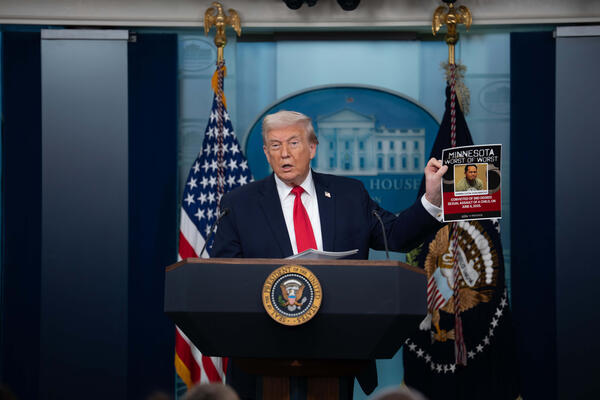
Chaos fills the streets as families are separated by force, and mothers cry out as their children are taken from them. To exert control and maintain power, a ruler orders agents to detain people off the street. Those the ruler labels as “subversive” are treated as a threat to his reign. The violence is indiscriminate and unrelenting. It does not matter who gets hurt, as long as the ruler stays on the throne.
If your mind went directly to President Donald Trump or the news of Immigration and Customs Enforcement agents shooting and killing two Minnesota residents—mom and poet Renee Nicole Macklin Good, and intensive care nurse Alex Pretti—you are not alone. But in this case, I am talking about Herod and his order to kill the children in Bethlehem and its surrounding region (Matthew 2:16). While the parallels are not identical, the shared logic of unrestrained state power is unmistakable.

As a lifelong resident of Minnesota’s Twin Cities and a minister trained in deescalation, Matt Moberg has spent many of his past mornings at the Whipple Building in Minneapolis alongside those protesting Immigration and Customs Enforcement descending on their cities. He’s spent his nights at the 19,000-seat arena in the Target Center, as a chaplain to the NBA’s Minnesota Timberwolves.
“Sports can be done and sports can be held—and I think the Timberwolves in particular do it well—not as a distraction from real-life unfoldings,” Moberg told Sojourners. “It's a way to go, we’re still going to come together, not in spite of that, but because of that, and figure out how we can move forward together.”
Now, Moberg’s found himself in a small spotlight after his words reflecting on faith and social justice went viral on social media, where he chastised churches for “posting prayers for peace and unity today while my city bleeds in the street.”
“Don’t dress avoidance up as holiness. Don’t call silence ‘peacemaking,’” he wrote. “Don’t light a candle and think it substitutes for showing up.”