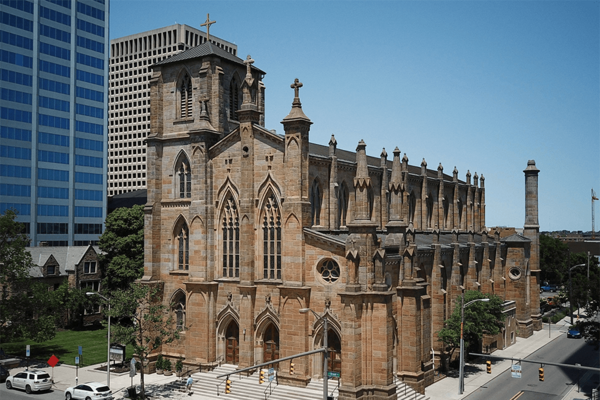
Ohio’s Catholic bishops described the potential end of temporary protected status for Haitians in Ohio as a “moral and social failure unfolding before our eyes.”
In a statement issued June 22 ahead of the country’s 250th anniversary and the soon-expected ruling from the U.S. Supreme Court on the future of many Haitian immigrants, the Catholic Conference of Ohio wrote that the current conditions in Haiti are unsafe for people to return.
“As many parts of their home country suffer from incessant violence and utter despair, those in Ohio and elsewhere in the U.S. may be forced to abandon familial stability, jobs, and community due to policy decisions,” the statement says. “We find no moral justification for terminating their Temporary Protected Status (TPS) without an alternative way to adjust their immigration status.”
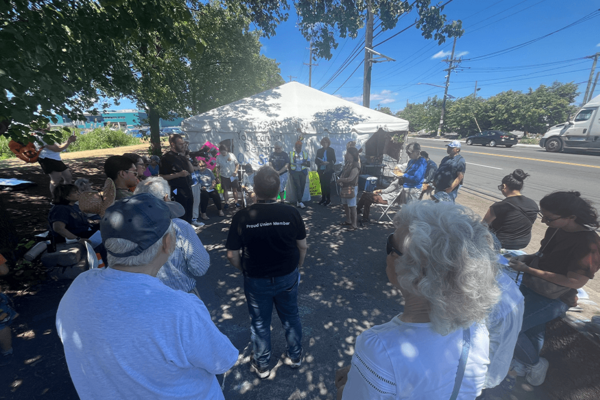
In New Jersey on Saturday, Catholic activists gathered near the front gates of Delaney Hall to pray the rosary in solidarity with those detained in the Immigration and Customs Enforcement detention facility.
It was the latest act of Catholic witness at Delaney Hall, where several hundred detainees initiated a hunger and labor strike in May to protest the facility’s inhumane conditions. Outside the facility, ICE agents deployed pepper spray and shoved protesters into the street, leading to the deployment of state police, the establishment of protest perimeters and curfews, and dozens of arrests While those measures have been lifted, the situation within and outside Delaney Hall remains in flux, with mutual aid organizers—including many people of faith—adapting daily to support the families of those detained.
On June 13, about 50 people gathered to pray near a colorful chalk drawing of the Sacred Heart of Jesus. Catholic sisters distributed rosaries outside the “radical hospitality tent,” where mutual aid organizers once provided food and toys to families visiting those detained inside before the facility instituted “draconian” rules to dissuade visitations. Now there were no families, and few protesters or news cameras in sight.

Sometimes the book of Proverbs can seem a little simplistic, its cause-and-effect declarations sounding nice but not very realistic. Proverbs 10:28 teaches us that “the prospect of the righteous is joy, but the hopes of the wicked come to nothing.” As Jake tells Brett at the end of Ernest Hemingway’s The Sun Also Rises: “Isn’t it pretty to think so?”
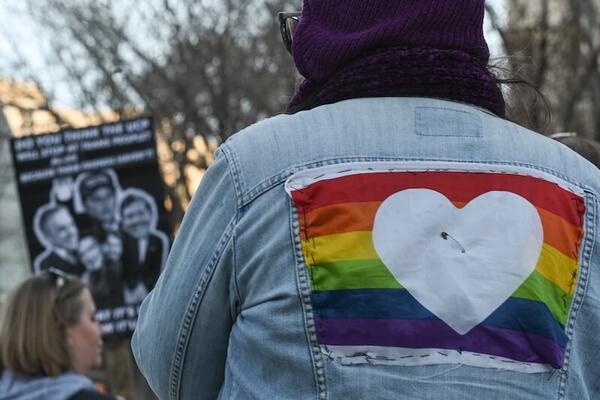
This Pride Month, I’ve been thinking a lot about the fullness of love. Recent polling from Gallup found that support for same-sex marriage has fallen noticeably since its previous height in 2022-23. This shift is largely due to Republicans, whose support for same-sex relationships fell from 55% to 37% in just a matter of years. While I find these numbers upsetting, I don’t find them surprising. After all, Pride itself didn’t begin as a celebration of love but as a protest against those determined to push that love back in the closet.
Love is at the heart of the gospel as well. Jesus taught that the greatest commandments were to love the Lord your God with all your heart, soul, mind, and strength, and to love your neighbor as yourself (Mark 12:30-31). All of Christianity can be condensed into these commandments (Matthew 22:38-40). However, Jesus also gave a third commandment regarding love, and it’s been weighing on my mind for some time now. Christians aren’t just called to love God and love our neighbors; we are also called to love our enemies (Luke 6:27-36).
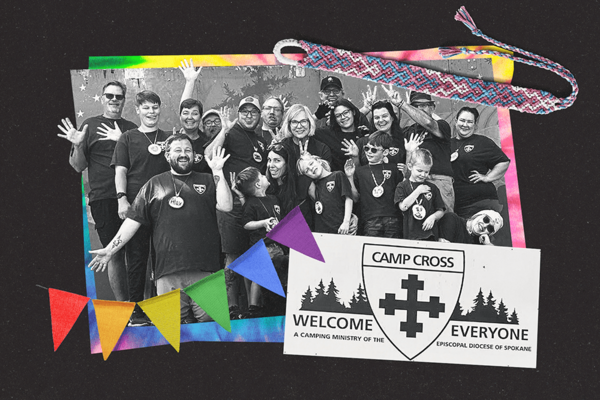
The Episcopal Diocese of Spokane, Washington, has maintained Camp Cross—a 130-acre property on the west side of Lake Cœur D’Alene, Idaho—for more than a century. Each week throughout summer, the church hosts themed retreats, from Arts and Music Camp to Clergy Camp.
One of those retreats is Queer Camp, a session for LGBTQ+ people and allies of all ages that the church has hosted since 2024. Registration is now open for Queer Camp’s third year, which will run August 28 to 31.
“My hope is folks can know there is a place where they can be Christian and be their full self,” said camp director Alex Flannagan. “It’s not conditional, no one’s trying to change you, you’re fully welcome.”
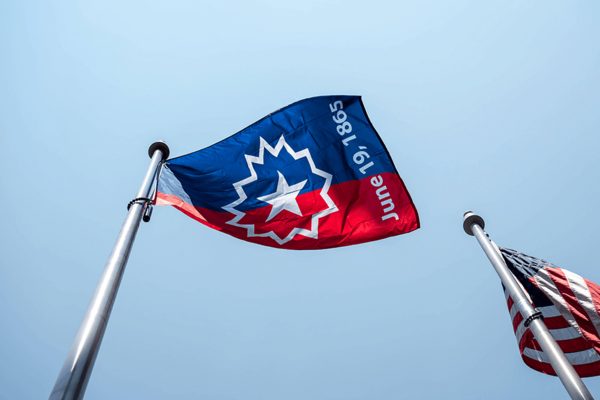
Resounding Love, a diverse interfaith choir, is bringing a message of love and hope to its Juneteenth concert in Seattle.
The group offers the most powerful and uplifting elements of church gospel music to people of many faith backgrounds, the Rev. Angela Farrar Small, director of chaplains, said. Resounding Love’s Juneteenth performance will center on African American identity, culture, history and social justice.
Juneteenth commemorates June 19, 1865, when enslaved African Americans in Texas learned of their freedom, more than two years after the Emancipation Proclamation. Now it’s a federal holiday celebrating the end of slavery in the United States.
African American gospel and spiritual music has brought people together “from the deepest depression to the biggest joys,” Small said.
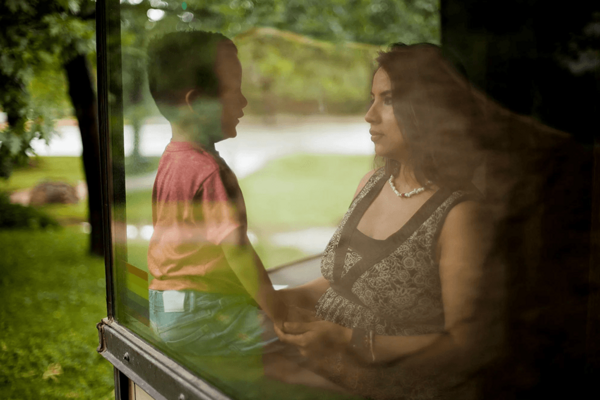
Theo Rigby’s new documentary Si Pudiera Quedarme/If I Could Stay follows sanctuary activists Jeanette Vizguerra and Ingrid Encalada Latorre as they resist deportation to stay with their families and communities. At its heart is a story of courage. Standing in front of a classroom in Denver, Vizguerra explains it like this: “Like all people I am afraid, but I also feel the moral duty to raise my voice as a person, mother, and woman. Because the problems I am facing are happening to thousands of others on the street. And someone has to be the person putting their finger on that problem.”
Sanctuary as a tactic emerged during the Vietnam War, when houses of worship shielded draft resisters from arrest. The 1980s saw the advent of the Sanctuary Movement, which focused on critiquing the Reagan administration and giving Central American asylum seekers platforms to speak about the violence happening in their countries of origin. After the success of that movement, Sanctuary saw a revival in the 2010s. The “New Sanctuary Movement” critiqued our unjust immigration system by housing undocumented immigrants and giving them a platform to share their experiences and build power.
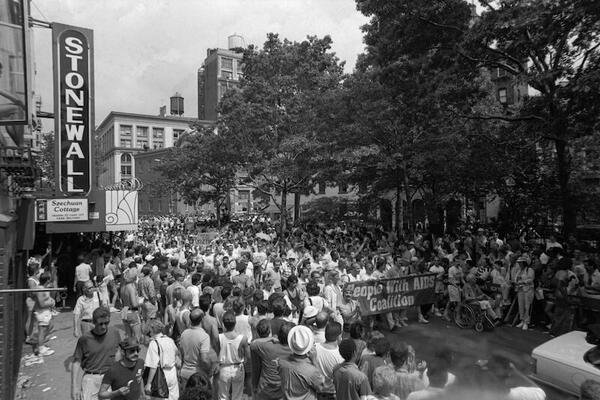
Stonewall is remembered for being the site of a riot. What I remember about that community is care.
By the time the New York Police Department entered the Stonewall Inn in lower Manhattan on June 28, 1969, a community already existed. The rebellion became famous because people fought back, but communities are not built in a single night. The Black and brown queer folk, transgender women, drag queens, sex workers, and young people who gathered at Stonewall had already spent years creating ways to survive. They had learned how to care for one another when families and churches would not and when the police attacked them. Stonewall was not the beginning of their steadfastness. It was the moment the rest of the world was finally forced to see it.
I have been thinking about what the church still has not learned from that historic moment. The church I am addressing here is not a monolith. I understand there are Christians for whom this entire conversation stops at the mention of the LGBTQ+ acronym. I am not writing for them today. I am writing for the rest of us. I am writing for people like me, who are resisting inequitable systems and imagining what liberation can look like for all that God has created.

On my last day of college, I went to my chaplain’s office to ask her a final theological question. “In case this comes up in the next few years and I don’t have a trusted faith leader nearby to ask: What does it mean for Christianity if we learn definitively that aliens are real?”
I wish I could recall her exact response. But I only remember that she was amused—and not worried at all about the existential impact of the extraterrestrial. If I had asked her today, she probably would have directed me to see Steven Spielberg’s latest aliens-are-real epic, Disclosure Day.
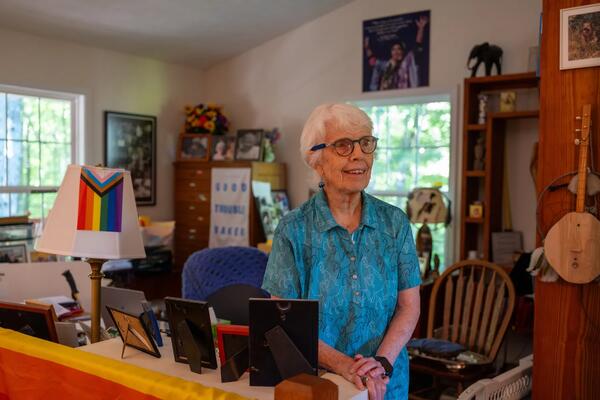
On “Moral Mondays,” a group of locals—sometimes 10, sometimes 100—gather on the town square in Brevard, N.C., holding signs advocating for voting rights, economic justice, and more. Carter Heyward, an Episcopal priest and vice president of the Transylvania NAACP, which organizes the events, will “often come in her collar with a bright stole on,” said Diane Livingston, an NAACP member. “That's how I always picture her, with a clergy collar on.”
Heyward’s clergy collar and her advocacy for a more democratic society did not come easily. She was one of the first women to be ordained in the Episcopal Church in 1974. It was an “irregular” ordination: The 11 women ordained at the predominantly Black Church of the Advocate in Philadelphia, prefiguring the Episcopal Church officially ordaining women in 1976, became known as the Philadelphia Eleven.