Editor’s note: This story includes reference to suicide. If you or someone you know needs help, the national suicide and crisis lifeline in the U.S. is available by calling or texting 988. There is also an online chat at 988lifeline.org
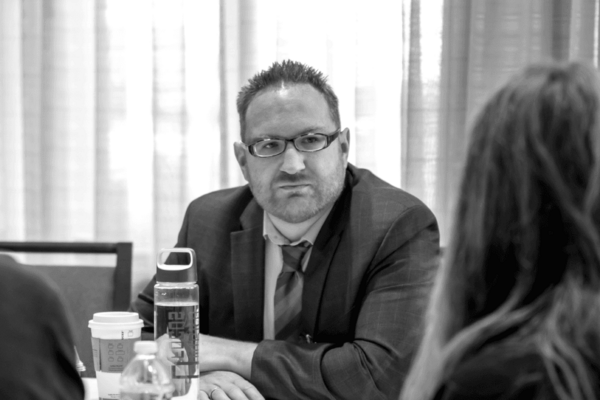
Ryan “R.L.” Stollar, a theologian and advocate whose work focused on children, abuse survivors, and homeschooling, died by suicide this week, leaving behind a legacy of tenacious and occasionally combustive activism. He was 41.
Stollar co-founded the blog “Homeschoolers Anonymous,” which garnered scores of media attention in the 2010s as more homeschool alumni began sharing stories of their experiences. He later helped found the organizations Homeschool Alumni Reaching Out and the Coalition for Responsible Home Education, both dedicated to resources and advocacy around safer homeschooling in the U.S. In 2023, Stollar published The Kingdom of Children: A Liberation Theology with Eerdmans.
“We [adults] need to give children the freedom to be their own theologians — to discover and love who God is and what God values on their own terms,” Stollar wrote.

I was a Mary Oliver skeptic for a long time. The first time I read “The Summer Day,” with its lines about feeding sugar to grasshoppers and considering your “one wild and precious life,” I found it preposterously sentimental. At the time, I resented being told it was more honorable to spend my time strolling through fields and hand-feeding bugs than to pursue my preferred activities of browsing library bookshelves and hovering over record store discount bins.
Then, a few years ago, I was helping my uncle water his garden when I noticed something out of the corner of my eye. There, balanced on a hosta leaf, was the biggest grasshopper I’d ever seen, about the size of a field mouse. I knew, without a doubt, God had made that grasshopper. More than anything, I wanted to feed it some sugar. That was the moment Oliver’s poetry finally clicked for me—a divine nudge to notice the world’s natural beauty and its intricate systems.

In the Hand of Dante is all over the place. The narrative advertised by its title, of medieval Italian poet Dante Alighieri’s struggle to write his epic poem, The Divine Comedy, competes for screen time with a neo-noir story in which a fictional version of Nick Tosches, the late author of the book on which this film is based, is recruited by a crime boss to authenticate the poem’s long-lost original manuscript.
Oscar Isaac plays both Dante and Tosches. Gerard Butler stars as an unpredictable, “I woke up and chose violence” hitman who accompanies Tosches to Italy, as well as Pope Boniface VIII, who exiles Dante from his native Florence. (The two belonged to opposing factions vying for control of the great Italian city-state, with Dante supporting civic independence from the Vatican.)
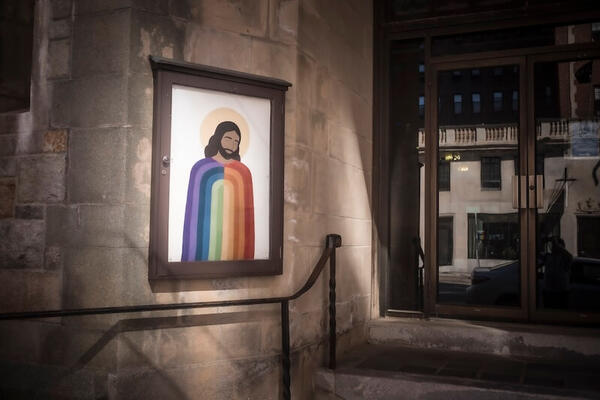
Last Tuesday, on the final day of Pride Month, Matthew Vines of The Reformation Project published an opinion piece for The New York Times called “I’m Gay, Not Queer. It Matters.” In it, he argues that in a national landscape growing increasingly hostile toward LGBTQ+ people, our movement would be better served by pivoting away from the word “queer”—both because of its umbrella quality, which “lacks clear limiting principles,” and because of its “adversarial charge” that implies we are, by nature, subversive and anti-normative. “Because the word ‘queer’ can describe any departure from social norms,” Vines argues, “it becomes an open door through which almost anyone can walk.” Because of what Vines reads as an overly expansive nature within the queer category, the public’s trust and understanding of the core parameters of what it means to be gay are being eroded. Vines asserts, instead, that his own self-acceptance came from acknowledging that “there is nothing inherently radical or subversive about being gay.” As such, he does not wish to be described as queer, with all the unwanted implications it brings.
In 1 Kings 19, God appears to the prophet Elijah. At this point in the biblical story, Elijah is the last remaining prophet who follows God, and many in the nation of Israel have stopped listening.
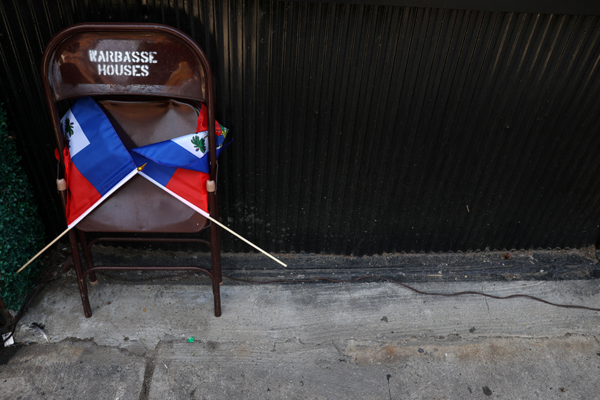
Despite preparing for the possibility, advocates still felt the grim reality set in when the Supreme Court decided to allow the Trump administration to end Temporary Protected Status for immigrants whose home countries were previously deemed too dangerous to force their return.
Christopher Kerr, executive director of the Ignatian Solidarity Network, said in a statement that the ruling “strips vital humanitarian protections from our migrant neighbors and leaves families in a dangerous place.
“This ruling separates families and uproots students in our schools, leaders in our parishes, and friends in our communities. Catholic teaching reminds us that every person has a right to life and the conditions necessary for human flourishing,” Kerr said. “To force individuals back to nations gripped by violence and instability is a moral failure of our obligation to our neighbors.”
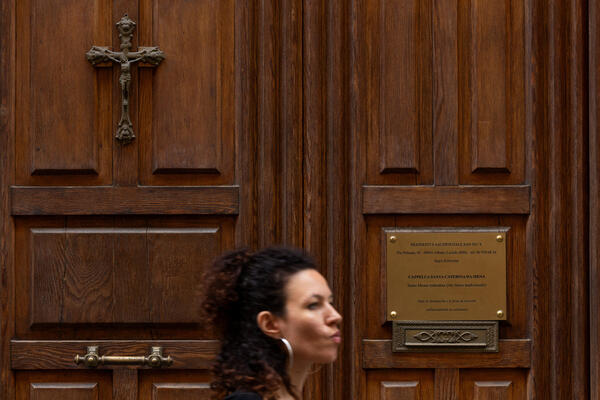
The Vatican said on Thursday that priests and lay Catholics who are part of a breakaway right-wing Catholic group that ordained bishops without Pope Leo's approval were in schism with the wider Church and now excommunicated.
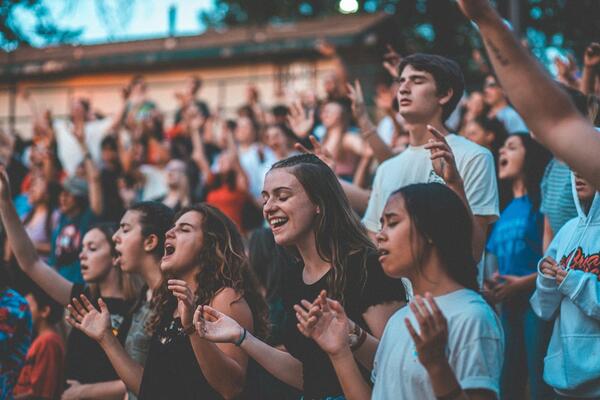
At the start of this year, Ruth-Ann Briscoe filled her calendar with different churches to try each Sunday, determined to find a community to call home. Belonging to Generation Z, Briscoe’s story is one anecdote in the flood of media and ecclesial narratives about young people and religious revival.
While religious service attendance has been on the decline globally for the last 15 years, multiple studies in recent years have sought to quantify those anecdotes.
According to the Public Religion Research Institute, “younger Americans continue to be less religious than older Americans, in terms of both religious affiliation and regular church attendance.”
Overall, young people are still significantly underrepresented in churches. Millennials and Gen Z make up about 43% of the U.S. population but only 14% of church attendees. Baby Boomers and the Silent Generation, those ages 65 and older, make up just 18% of the U.S. population, but account for about 35% of church participants.
But the frequency of church attendance among younger groups may be rising, especially since the pandemic.

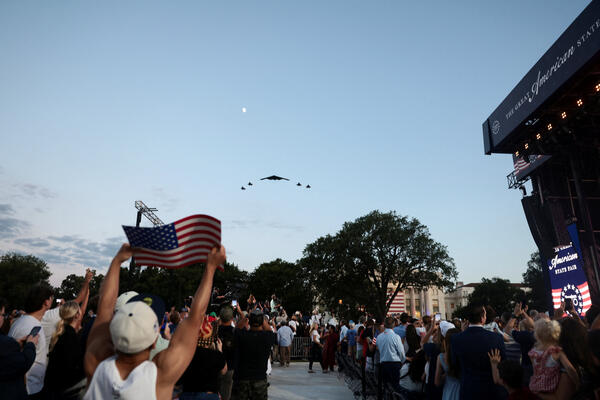
After much fanfare, America’s 250th birthday is finally upon us. Here in Washington, D.C., the White House-sponsored Freedom 250 celebrations don’t seem to be going too well, from the algae-filled debacle in the reflecting pool to the sparse crowds at the Great American State Fair on the National Mall. Elsewhere around the city, the president has refused to sign a bipartisan housing bill in order to blackmail Congress into passing measures that would disenfranchise millions of eligible voters. Last week’s Supreme Court decision gave the administration the ability to cruelly deport hundreds of thousands of Haitian and Syrian refugees. None of that makes me feel like celebrating.
When I think about our present political moment, I see echoes of the prophet Micah, who forewarned of coming disaster because both Israel and Judah’s political and religious leaders abused their power and conspired to do evil (2:1, 7:3), stole and plundered (2:8), oppressed the poor (3:3), despised justice and distorted the truth (3:9), and engaged in violence and deceit (6:12). At every turn, President Donald Trump seems more fixated on punishing his enemies and cementing his legacy through vanity projects than on anything resembling our nation’s founding ideals of “life, liberty, and the pursuit of happiness,” among other “inalienable rights” set forth in the Declaration of Independence.
But if Trump’s hubris is all we see as we observe this national milestone, we’re missing the bigger story.

Sometimes I have to remind myself that I believe in the supernatural. I mean God, not ghosts. One reason I love horror is because the genre insists that for all of the world’s attempts to explain everything that happens to us, there are still some mysteries.