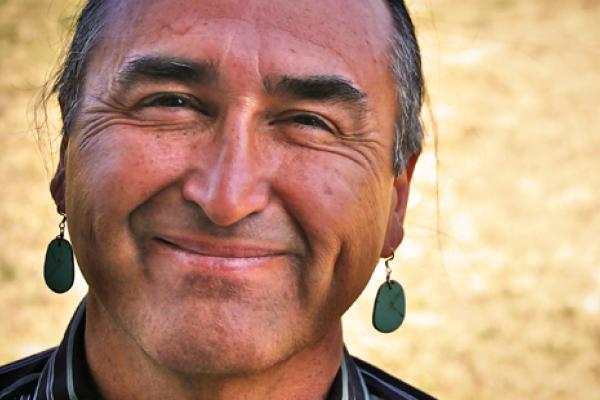
On Friday afternoon, I received an email and call from Sue Martel, the editor of Richard Twiss' forthcoming book,Rescuing Theology from the Cowboys: An Emerging Indigenous Expression of the Jesus Way in North America. As we finished the conversation, she shared that she had a vision of someone anointing Richard’s feet with oil. I shared that earlier in the day I felt called to do the same, but I didn’t know the meaning of the vision. On the way to the hospital, I read the story of Lazarus and the grave (John 11: 1-44) and felt called to read it over Richard. So, when I arrived at the hospital, I learned that during the day, Richard’s kidneys failed. I shared the conversation with Katherine Twiss, Richard’s wife and co-founder of Wiconi, and she blessed me to read and to anoint Richard’s feet. As I read, we all wept. I never noticed this before, but the scripture begins with an explanation that Lazarus was the brother of Mary — the one who anointed Jesus’ feet for burial. I anointed Richard’s feet and prayed.
In the prayer, it was clear that we were being called to believe that God was going to do a miracle. It was one of two kinds of miracles: either God was going to say “Richard, come forth!” and call him out of the grave to walk among us once more or God was going to say “Unbind him” (John 11:44a) from this broken body. “Let him go.” (John 11:44b) “It is finished … Well done good and faithful servant,” thus completing the miracle that was Richard Twiss’ life. As we stood around his bed that night we didn’t know which miracle it would be, so we waited.
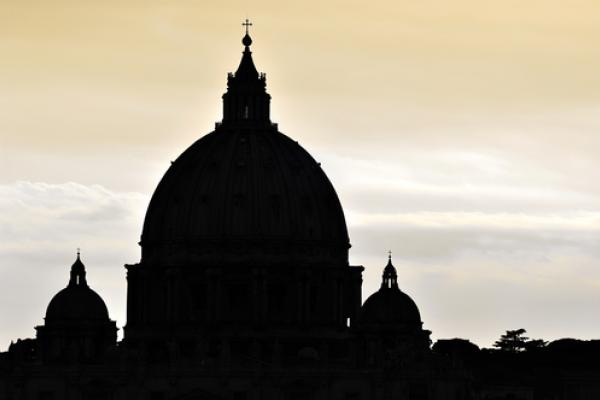
Pope Benedict XVI’s sudden announcement that he would resign by the end of the month took the church and the world by surprise, in large part because it was a move without precedent in the modern world.
But what comes next is as old and familiar as the papacy itself: Speculating about who will succeed to the Throne of St. Peter.
Indeed, within months of Benedict’s own election in 2005, church insiders and online oddsmakers were trying to figure out who might be next, given that Benedict — now 85 — was already aging, increasingly frail, and had himself declared that he did not expect his reign to be a long one.
So what will happen when the world’s cardinals gather before the splendor of Michelangelo’s Last Judgment fresco in the Sistine Chapel to elect a new pope? Who are the “papabile,” as the Italians say, the “pope-able” cardinals?
Will the conclave make the epochal break with the European monopoly and pick a cardinal from Latin America or Africa? The Catholic Church is booming in the Southern Hemisphere, as opposed to Europe and North America, where it is on life-support or barely treading water.
The president of the Lutheran Church–Missouri Synod apologized for his role in the “debacle” that led him to publicly reprimand a pastor in Newtown, Conn., for praying at an interfaith service following the mass shooting at Sandy Hook Elementary School.
In the initial incident, the denomination’s president, Matthew C. Harrison, requested an apology from the Rev. Rob Morris of Newtown’s Christ the King Lutheran Church for participating in an interfaith prayer vigil that followed the Dec. 14 shootings. Morris’ role in the vigil broke denominational rules against joint worship with other religions.
Morris complied and apologized — not for his participation, but for offending members of the St. Louis-based denomination. But the president’s request sparked a blaze of criticism — from within the denomination and outside it. Critics charged he was intolerant and insensitive to the town’s grieving residents.
“In retrospect, I look back and see that I could’ve done things differently,” Harrison said in a video posted on the denomination’s blog Sunday. “My deepest desire was to bring unity, or at least to avoid greater division in the Synod over this issue.”
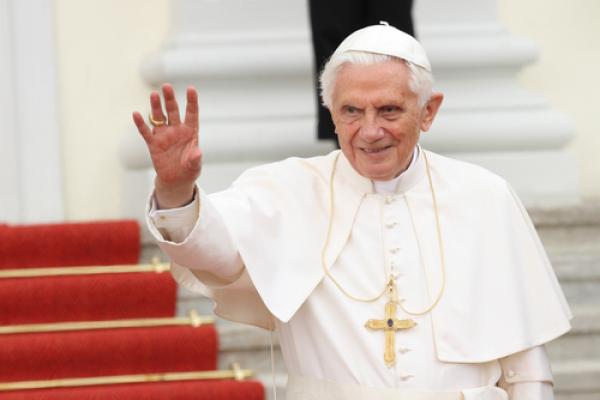
VATICAN CITY — Pope Benedict XVI will soon become the first pope to resign since 1415, short-circuiting many of the initial stages of electing a new pope. But the Vatican says the transition to a new papacy shouldn’t be all that different from normal.
Of course, the traditional rituals associated with confirming the death of a pope and planning his funeral will not be necessary. But the process outlined below, rife with secrecy and tradition, will largely follow centuries-old protocol.
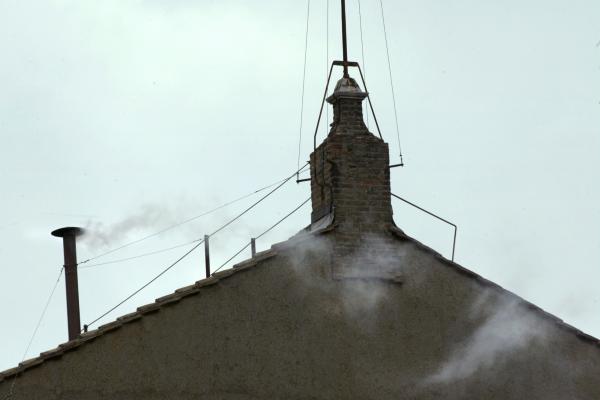
Following is a brief explanation of the process used in a conclave to elect a new pope.
Q: Who governs the church until a new pope is elected?
A: Day-to-day operations are handled by the Vatican curia, the central bureaucracy. All prelates who head Vatican agencies resign after the death or resignation of a pope. Provisions are made to oversee the papal household, the spiritual needs of Romans and to grant absolutions.
Q: What does the word “conclave” mean?
A: The word comes from the Latin, “with a key,” referring to the tradition of locking the doors until cardinals elect a winner.
Q: Who is eligible to be elected pope?
A: Technically, any baptized male Catholic is eligible, provided he is not married and in good standing with the church. Since 1378, however, new popes have come from within the College of Cardinals.
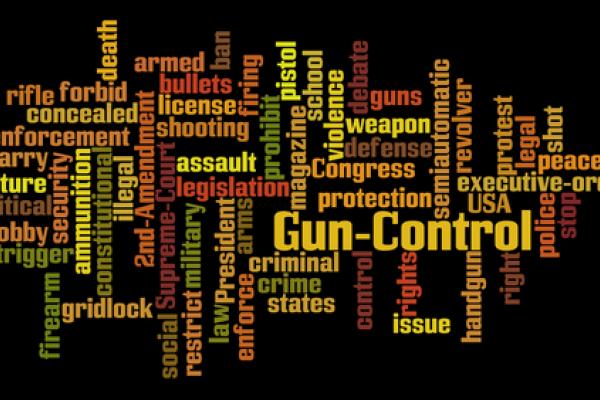
Red, white, and blue. Pick-up trucks. Apple pie. Baseball. Church on Sunday. And guns. You can't get much more American than that, or so it seems here in Montana. This week a regional newspaper posted on Facebook looking to find proponents of greater gun restrictions for an article they were writing. Within minutes the request was laughed at, belittled, and deemed unlikely. Truth is, even if someone did lean toward greater gun control, they never would have publicly responded. To utter such absurdities is equivalent to branding yourself anti-freedom, anti-American, and even anti-Christian. To listen to the rhetoric, gun control of any kind is nothing more than an eager embrace of Nazi-fascism, Chinese-communism, and the demise of all things American. And surely God would disapprove.
Which makes me wonder: what would God say about gun control? Not in some sort of glib WWJD-type platitude, nor in an entangled concoction of American freedom and Christian theology. And definitely not in a sensationalized proof-texting approach to scripture. But honestly, can our faith inform this conversation? And should it?
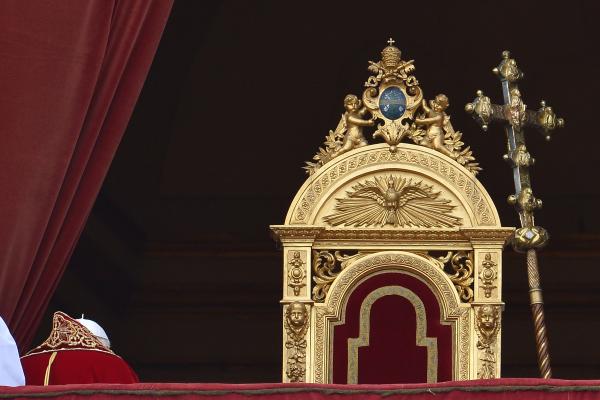
After nearly eight years since being named to the chair of Peter, Pope Benedict XVI announced this morning that he is resigning at the end of February.
" ... in today’s world, subject to so many rapid changes and shaken by questions of deep relevance for the life of faith, in order to govern the bark of Saint Peter and proclaim the Gospel, both strength of mind and body are necessary, strength which in the last few months, has deteriorated in me to the extent that I have had to recognize my incapacity to adequately fulfill the ministry entrusted to me. For this reason, and well aware of the seriousness of this act, with full freedom I declare that I renounce the ministry of Bishop of Rome, Successor of Saint Peter, entrusted to me by the Cardinals on 19 April 2005, in such a way, that as from 28 February 2013, at 20:00 hours, the See of Rome, the See of Saint Peter, will be vacant and a Conclave to elect the new Supreme Pontiff will have to be convoked by those whose competence it is."