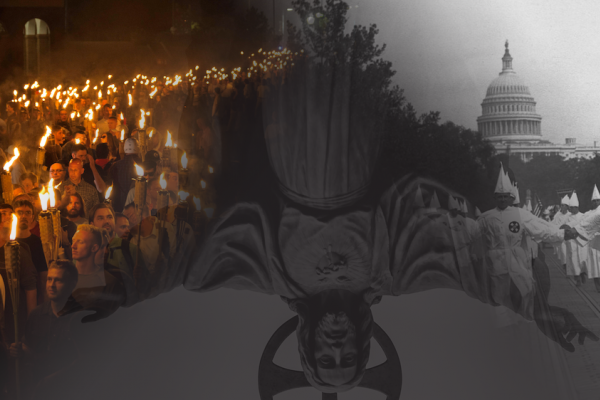
Anti-Christ is a very big word, very evocative of our deepest spiritual realties and feelings, and is seldom invoked without controversy. It’s been abused by those promoting bad “end times” and “left behind” theology. But it’s also a profoundly biblical concept, one we must take as seriously in our day as Jesus did in his. Jesus warned his followers to be on the lookout for “pseudo-christs,” those that claimed his name but were far from the true heart of God, and said, “Not everyone who says to me, ‘Lord, Lord,’ will enter the kingdom of heaven, but only the one who does the will of my Father who is in heaven.”
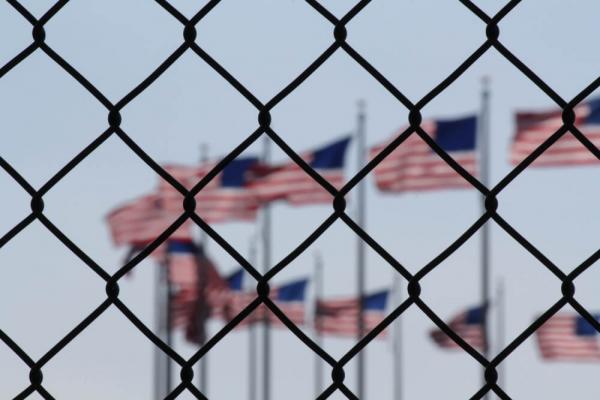
Regardless of the test result, an asylum seeker will have to attend a court hearing before an immigration judge. However, if she failed the test by not convincing the official that she has a “credible fear” of returning to her country, she has more to prove in the court hearing — or face deportation.

Contemplatives are people who seek the whole, and therefore, live in liminal spaces. So, what then does it look like for us to come up against systems that oppress? We stand against those systems, not because we are looking for a good versus evil duality, but because we recognize that oppressive systems do not see the whole, they themselves are working in dangerous dualities that dehumanize.
Are there fundamental truths of Jesus’s ministry that can help us find our way back to him, even and especially amid this fearful moment? Yes, I believe there are and that some of the key questions Jesus asked or provoked would help show us the way forward.
That is what my new book Christ in Crisis: Why We Need to Reclaim Jesus is all about.
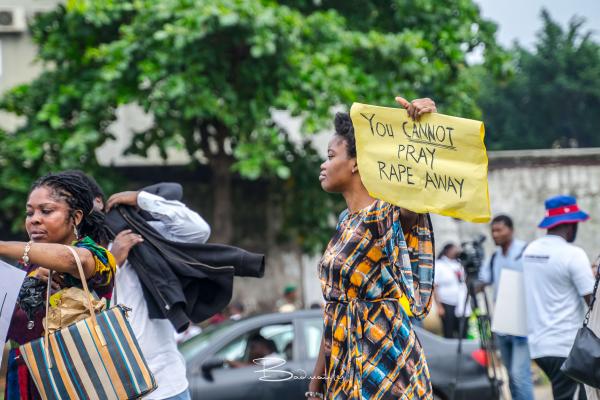
Amid drizzle, the protest started featuring young Nigerians, mostly Christians dressed in a uniform white shirt like Monago’s. They spilled across both sides of a major road reducing traffic almost to a snarl. To avoid protesters from gaining entrance into the church, COZA beckoned on the Nigerian police who gated the church entrance, a common strategy mostly deployed by authorities to intimidate protesters in Nigeria. But the protesters, undeterred, defied police on standby, chanting and hoisting placards, some of which read: “Pastor Step down”; “Say no to rape in the church.” Monago’s reads: “By attending COZA you are enabling rape.”

Dylan’s Christianity had less in common with Jesse Jackson’s and had more in common with Jerry Farwell’s. It fit comfortably within the perspectives of a reactionary Christianity that blamed liberalism and the Civil Rights movement for the nation’s religious, moral, and economic decline. The end times were near and the nation needed to prepare for God’s wrath.
Amazon fires split Brazilian Christians, church co-working spaces, reading Ursula Le Guin, and more.

As a result of the political, religious, and moral crises we face today, both the soul of the nation and the integrity of faith are now at stake. This crisis is fundamentally about our chance and our choice of whether those who call themselves Christians are ready to go back to the teachings of Jesus, and whether such a call might be taken up by others beyond the churches. Many of us share a deep hunger for reclaiming Jesus instead of falling into more political polarization — we want theology to trump politics.

The United States has a long history of blaming immigrants for our problems. This misplaced blame fuels the fears of “invasion” and creates a false image of a deadly war between innocent native-born populations and corrupting foreigners. Instead of “welcoming the stranger,” we project our problems on those who are vulnerable. We perpetuate scapegoating instead of investing in the transformation needed to save lives.
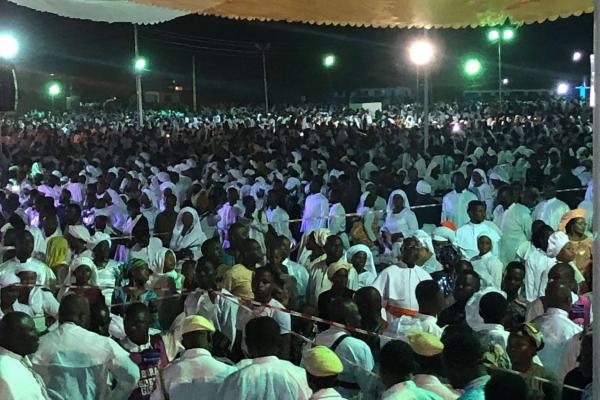
One year ago this week, I walked into the Cathedral in Santiago de Compostela, Spain, completing my pilgrimage there. This week I witnessed a different pilgrimage as about 100,000 people made their way to Mount Tabieorar, in Ogere Remo, Nigeria. They clothed themselves with white robes, took off their shoes, danced, sang, and prayed through the night and into the early morning with uninhibited joy. This was the 83rd time the Tabieorar celebration has gathered in this holy space.