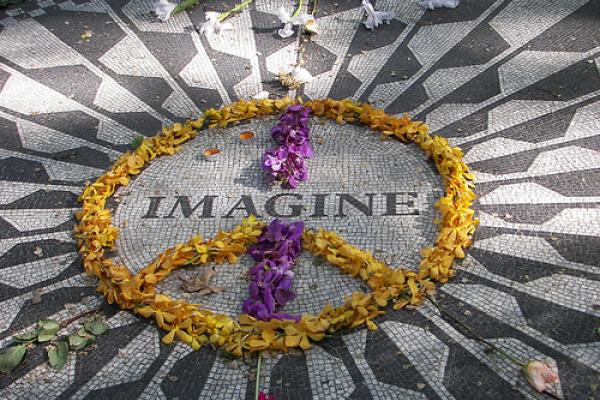
Cee Lo Green got himself in some pop-culture hot water on New Years Eve when he changed the lyrics to John Lennon's "Imagine." You would think he was changing the Bible or something, but no, it was much worse. He changed the lyrics to a John Lennon song. "No religions" became "all religions" and all hell broke loose....
Suffice it to say that people were put out. They defended Lennon's unchangeable artistic canon. Green's supporters suggested that all art can be reinterpreted...even John Lennon's. Personally, I didn't find it offensive at all. Instead, I thought it was a thoughtful (if momentary) update to the iconic pop song. Given the religious strife in the world, expressing a love for humanity through all the world's religion was generous and very appropriate for a New Year celebration.
Alas, no. We're beset by fundamentalisms of all kinds (Lennonists?) and on all sides in this nation of ours. We're sufficiently afraid of religiosity that we've turned anti-religiosity into a religion and musicians become gods and their three minute songs become scripture...unchangeable holy writ.
We're afraid and that fear strips us of our compassion.
"Do not lag in zeal, be ardent in spirit, serve the Lord. Rejoice in hope, be patient in suffering, persevere in prayer. Contribute to the needs of the saints; extend hospitality to strangers." - Romans 12:11-13
“Our present ecological crisis, the biggest single practical threat to our human existence in the middle to long term, has, religious people would say, a great deal to do with our failure to think of the world as existing in relation to the mystery of God, not just as a huge warehouse of stuff to be used for our convenience.” - Rowan Williams
God, we pray for our brothers and sisters in the Philippines who were affected by a landslide last week. Comfort all families, give strength to the rescue workers, and grant peace to the survivors. Amen.
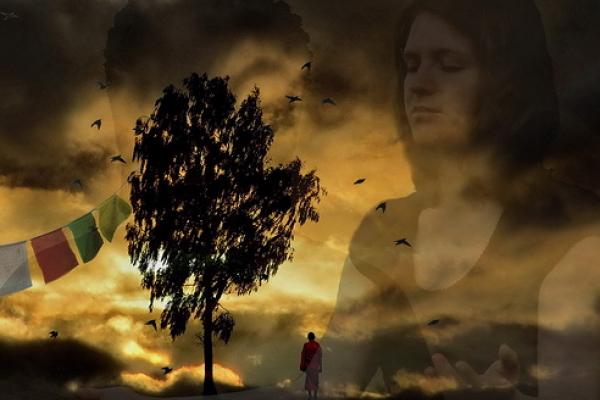
I know that for people of all faiths prayer is an incredibly important part of life, not only for one’s own sense of connecting to God, but also in order to stay connected to the people around them. As social media gets further embedded in our everyday lives, this sense of who is “around” us is changing, offering an opportunity to expand our understanding and experience of community. Prayer has always been a means to cross-over bounds of geography, personal experience and other divisions in order to lift up a common hope that God’s love, hope, peace and joy will be made known and Social Media, when used well, can be a powerful means of further crossing those bounds.
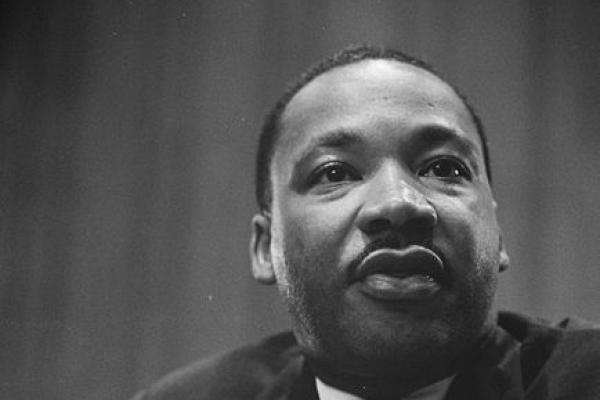
The Rev. Dr. Martin Luther King did not give his life just for Black Americans, but for all Americans. He knew America could be better. He knew the America that was birthed with the hope of “liberty for all” excluded hundreds of thousands of people.
As he said in his famous sermon that is so often referred to as the “I Have a Dream” speech,
In a sense we have come to our nation's capital to cash a check. When the architects of our republic wrote the magnificent words of the Constitution and the Declaration of Independence, they were signing a promissory note to which every American was to fall heir. This note was a promise that all men, yes, black men as well as white men, would be guaranteed the unalienable rights of life, liberty, and the pursuit of happiness....

Just after midnight Tuesday at The Balsams, an historic, grand hotel nestled in the foothills of the White Mountains, the entire population of tiny unincorporated town of Dixville Notch, N.H., cast the very first votes in the 2012 New Hampshire primary — all nine of them.
Former Massachusetts Gov. Mitt Romney tied former U.S. Ambassador to China Jon Huntsman with two votes each, while Ron Paul and Newt Gingrich both received a single vote. President Obama also won his first votes — three.

Activist theologian Bill Wylie-Kellermann wrote that the Epiphany season "begins and ends in light. From the heavenly star to the radiant robes of transfiguration, Epiphany is about revelation, the kind of sudden brightness that lights up the landscape of a mind or a community or a whole social order. The light reveals, but not passively; it summons and sends."
In popular understanding, of course, Epiphany is about the visit of the Magi, "wise men" from the East bearing gifts for the newborn Christ child. Since these Gentile visitors come from foreign lands, their search for Jesus and their homage to him have stood as sign and symbol that Christ's salvation knows no boundaries. (The parallels with our age, with the potential of digital media to transcend all boundaries, begin to suggest themselves.)
The story of the Magi has a dark side as well, mostly ignored in Christendom's celebration of Epiphany. On their way to find the babe, the travelers pay a visit first to Herod's court, where they're told to report back to him the location of the newborn. Fortunately, the wise men practice direct civil disobedience to the royal command, and thus they and the holy family escape Herod's wrath. But the children of Bethlehem, the "holy innocents," suffer the tragic consequences of Herod's duplicity. The lessons about relating to authority (i.e., the need to be "wise as serpents") are loud and clear.
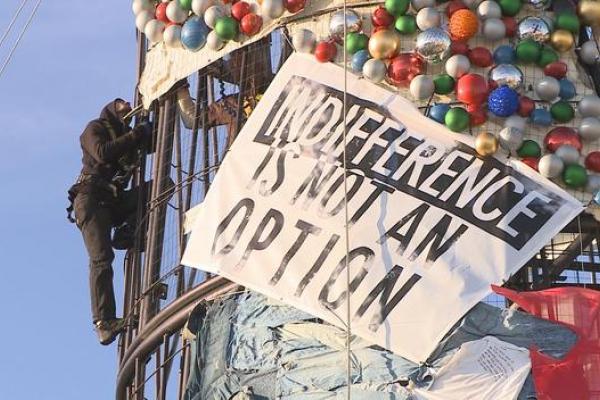
Is not this the fast that I choose: to loose the bonds of injustice, to undo the thongs of the yoke, to let the oppressed go free, and to break every yoke? – Isaiah 58:6 (NRSV)
A pervasive criticism of modern Christians, both from outsiders as well as concerned Christians, is that people of faith are not taking seriously Jesus’ call for us to serve “the least of these.”
Thankfully, we may be turning a corner.
Last week in Atlanta, more than 42,000 Christians packed the Georgia Dome for four days to participate in Passion 2012. Spearheaded by Passion Conferences founder Louie Giglio, Passion 2012 is another in an ongoing series of conferences intended to engage the “university moment” with Jeusus’ compelling message.
What made Passion 2012 so compelling for so many wasn’t the impressive list of popular Christian speakers, including Francis Chan, John Piper, and Beth Moore. It wasn’t the popular worship music of Chris Tomlin, the David Crowder Band, Charlie Hall, and Kristian Stanfill. Nor was it the presence of 2011 Daytona 500 winner Trevor Bayne.
It was the call to action — the invitation to make Jesus’ message of social justice a reality in this world.
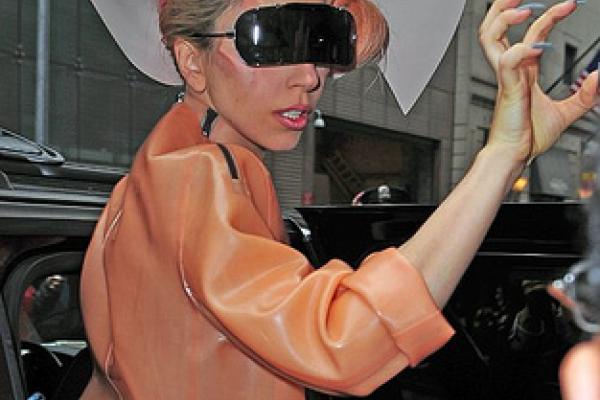
During all my reading about Robyn and Lady Gaga I came across some stuff about Lady Gaga that I found interesting, theologically speaking. As I told Jana over the summer, "I'm sort of developing a theological curiosity about Lady Gaga." Jana asked, "How so?"
Well, Lady Gaga calls her fans "monsters." Or "little monsters." And by that she means freaks--the odd, the weird, the lonely, the rejects, the nerds, the castoffs. And you can't help but wonder, in light of the gospels, about that demographic. In my book Unclean I have a chapter on monsters. And I've written about the theology of monsters on this blog. Consequently, Lady Gaga's use of the label "monsters" caught my attention.
Because as I've written, the category "monster" is charged with ambivalence. On the surface the monster is a normative threat--a defilement, a degradation, a location of moral and communal harm. Thus, monsters are expelled from community. And yet, most monster stories suggest that the monster is often a scapegoat. That the monster is more victim than victimizer. Underneath, if we could but see it, the monster is one of us.
So it's theologically apt that Lady Gaga uses the category monster for her fans. Because she's targeting a group that has been cast out of society. Again, she's explicitly embracing the freaks, weirdos and social outcasts. But Gaga, like in the monster stories, has flipped this and made the label "monster" a term of affection, welcome, embrace, community, inclusion and hospitality. (The diminutive "little" signals the playful affection.) This parallels my own interests in Unclean--Can we show hospitality toward monsters? So I'm intrigued by Gaga's community of "little monsters."